View methods side by side.
Choose up to four methods. Add them using the search and share the comparison by copying its link.
| Criterion |  UX Research Empathy Mapping |  Decision Making Pre-Mortem |  Operations Fishbone Diagram | 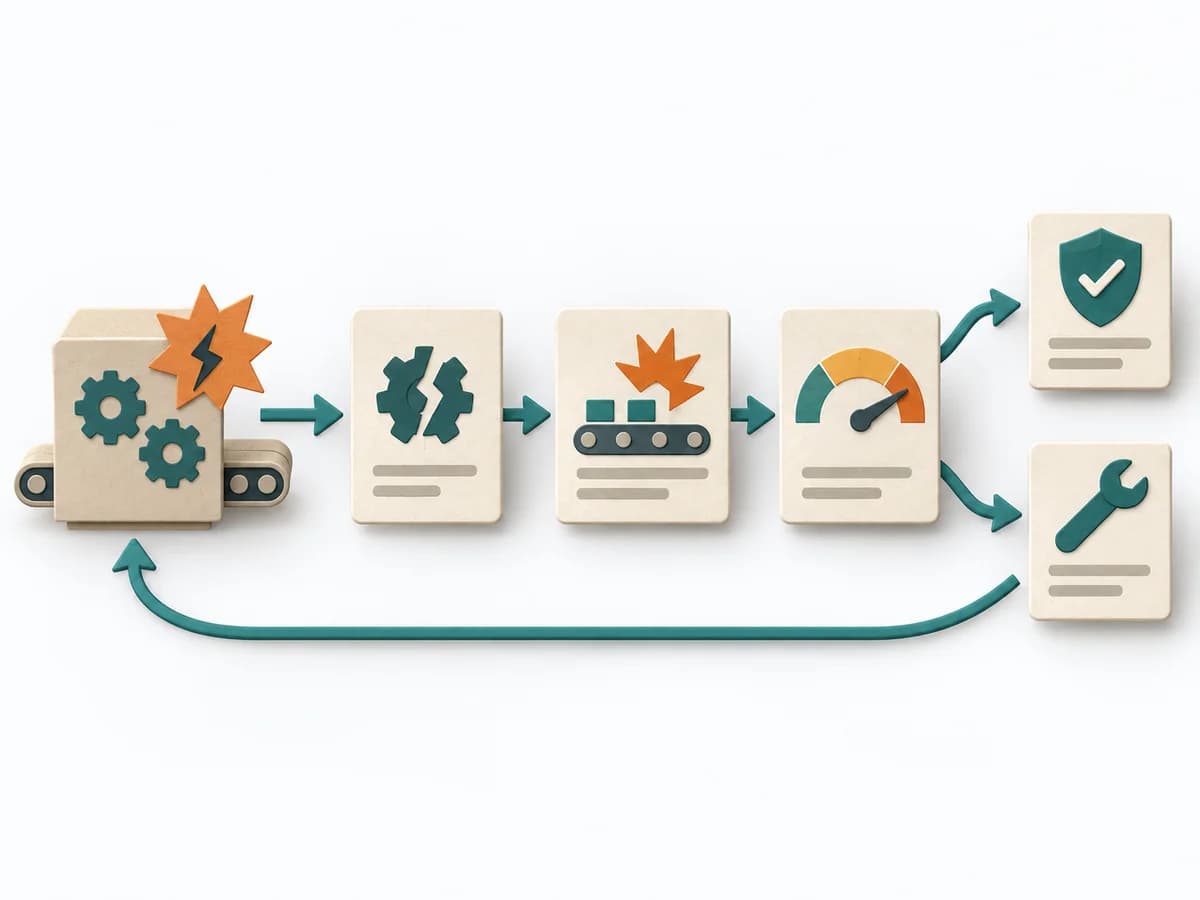 Operations Failure Mode and Effects Analysis |
|---|---|---|---|---|
Purposedifferent | When a lot is assumed about a target group but little is seen jointly, empathy mapping makes knowledge and gaps directly comparable. The picture also shows which assumptions hold up and where evidence is missing. | In early initiatives with many uncertainties, planning quickly turns too optimistic. A pre-mortem makes the expected failure visible in advance and sharpens the view of causes, gaps, and countermeasures. | When a problem has several possible contributing factors, the method sorts causes by cause areas. It prevents an initial hunch from blocking the view of other plausible drivers. | For a process, product, or service with noticeable failure risks, the method assesses possible failure modes in advance. It directs attention to combinations of occurrence, effect, and detectability. |
Complexitydifferent | Low | Low | Low | High |
Timedifferent | 30–60 min | 20–45 min | 30-60 min | 2-6 h |
Participantsdifferent | 4-8 | Small cross-functional group | 2-8 | 3-10 |
Formatsame | Workshop | Workshop | Workshop | Workshop |
Outputdifferent | Empathy Map, Assumptions List, Research Gaps | Risk list, Mitigation plan, Assumption log | Fishbone Diagram, Cause Categories, Investigation Backlog | FMEA Table, Risk Priority, Mitigation Actions |
Tagsno overlap | SynthesisQualitativeWorkshop | RiskDecisionFailurePlanning | Root causeQualityOperations | RiskQualityOperationsRoot cause |