View methods side by side.
Choose up to four methods. Add them using the search and share the comparison by copying its link.
| Criterion |  Innovation Double Diamond |  Systems Thinking System Dynamics Simulation |  Systems Thinking Current Reality Tree | 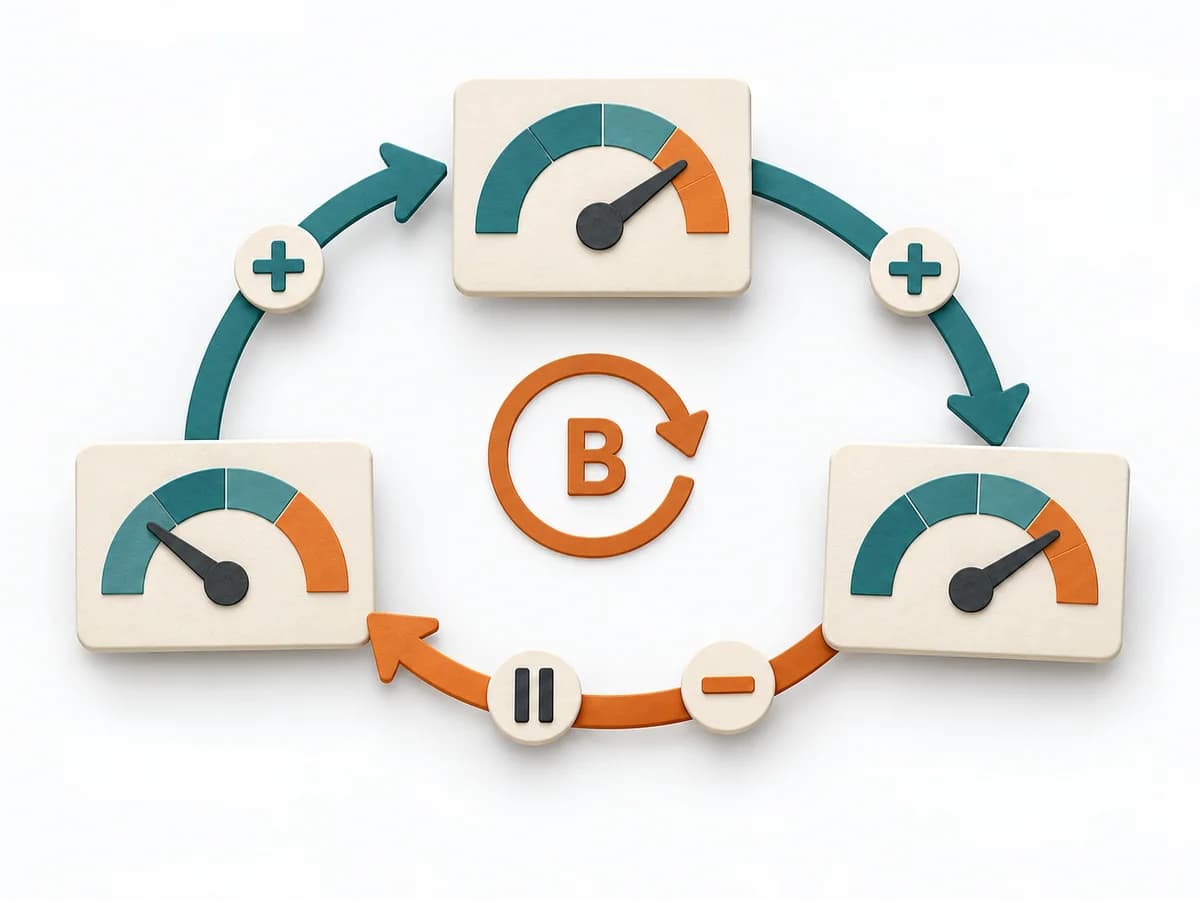 Systems Thinking Causal Loop Diagram |
|---|---|---|---|---|
Purposedifferent | For complex problems with a fuzzy situation, the method cleanly separates search space and decision. It first creates breadth in understanding and then focus in elaboration. This brings open questions, problem definition, and solution path into a traceable movement. | System Dynamics Simulation makes assumptions about time, delay, and feedback testable through experiments. It draws relationships, patterns, and feedback loops. The result is captured as a simulation model and scenario reports. | A Current Reality Tree condenses many symptoms into a few causal chains. The method makes visible which core problems drive several negative effects at once. | A Causal Loop Diagram makes feedback, reinforcement, and balance in a system legible. It uncovers side effects and self-reinforcement that stay hidden in linear explanations. |
Complexitydifferent | Medium | High | High | Medium |
Timedifferent | Wochen bis Monate | Mehrere Tage bis Wochen | 2-6 h | 1-3 h |
Participantsdifferent | 3-12 | 1-5 Modellierende, Stakeholder asynchron | 3-8 | 2-8 |
Formatdifferent | Workshop + async | Async | Workshop | Workshop |
Outputdifferent | Problem Statement, Solution Options, Prototypes, Deliverables per Phase | Simulation Model, Scenario Reports | Current Reality Tree, Core Problems, Intervention Ideas | Causal Loop Diagram, Feedback Notes, Leverage Points |
Tagsno overlap | ProcessDivergenceInnovation | Systems thinkingDynamicsSimulationAnalysis | Systems thinkingRoot causeConstraintsCausality | FeedbackSystems thinkingCausalityDynamics |