View methods side by side.
Choose up to four methods. Add them using the search and share the comparison by copying its link.
| Criterion |  Innovation Double Diamond | 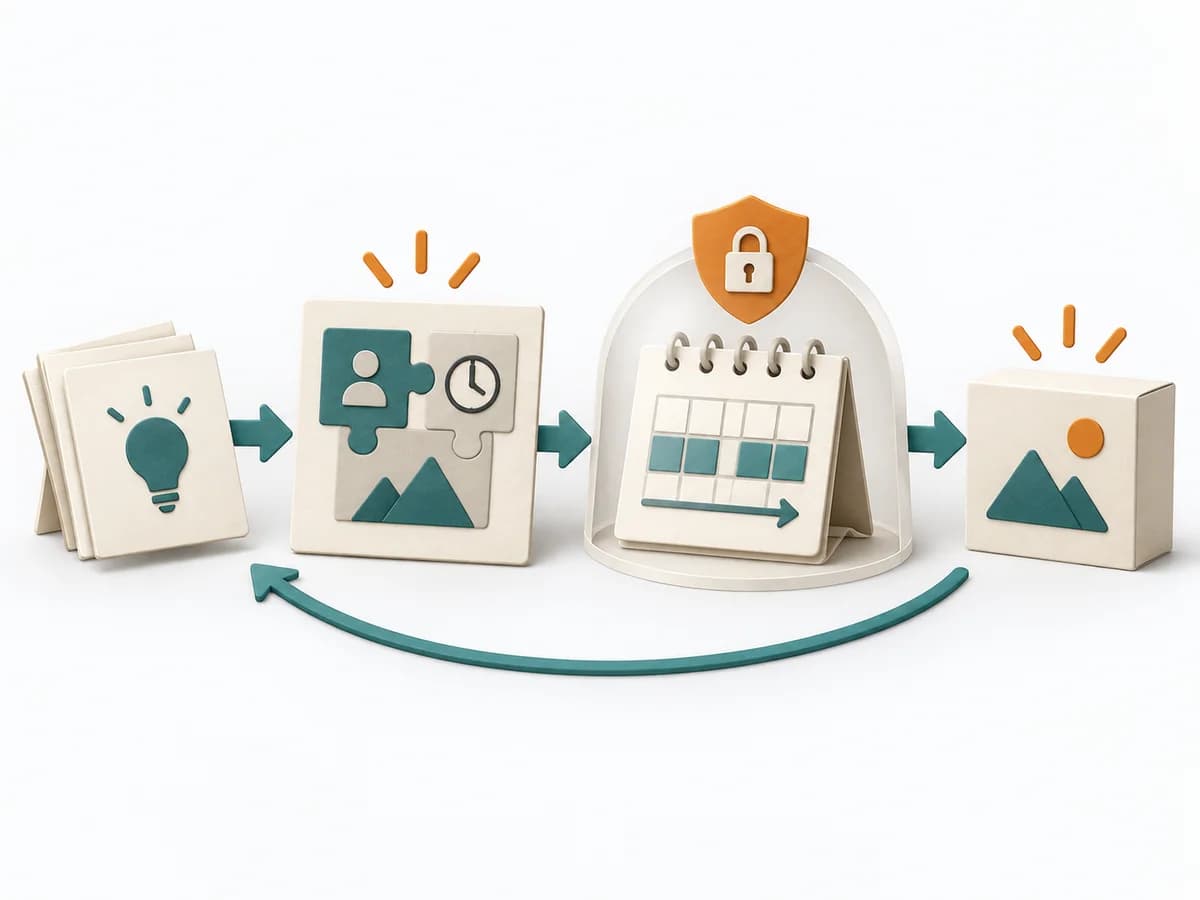 Delivery Shape Up |  Facilitation Stakeholder Salience Model |  Facilitation Stakeholder Mapping |
|---|---|---|---|---|
Purposedifferent | For complex problems with a fuzzy situation, the method cleanly separates search space and decision. It first creates breadth in understanding and then focus in elaboration. This brings open questions, problem definition, and solution path into a traceable movement. | Shape Up helps clarify scope, sequence, and delivery flow. It makes work boundaries and decisions explicit and captures results as pitches, bet-table decisions, and hill charts. | When stakeholders appear to matter very differently, the Stakeholder Salience Model rates their actual priority through power, legitimacy, and urgency. It turns individual contributions into a visible selection. The result is captured as a Salience diagram and a class-based strategy. | When an initiative depends on many people, interests, and power dynamics, Stakeholder Mapping systematically orders the environment. It shows who influences, who is affected, and where relationship management or safeguarding matters first. |
Complexitydifferent | Medium | Medium | Medium | Low |
Timedifferent | Wochen bis Monate | 6 Wochen Cycle + 2 Wochen Cool-Down | 60-90 min | 60–90 min |
Participantsdifferent | 3-12 | 2-4 pro Pitch | 3-6 | 2-8 |
Formatdifferent | Workshop + async | Workshop + async | Workshop | Workshop + async |
Outputdifferent | Problem Statement, Solution Options, Prototypes, Deliverables per Phase | Pitches, Bet-table decisions, Hill charts, Cooldown outcomes | Salience Diagram, Strategy per Class | Stakeholder Map, Engagement Plan, Risk Notes |
Tagsno overlap | ProcessDivergenceInnovation | PlanningDeliveryAutonomy | StakeholdersFacilitationAlignmentGovernance | StakeholdersAlignmentFacilitationChange |