View methods side by side.
Choose up to four methods. Add them using the search and share the comparison by copying its link.
| Criterion |  Innovation Double Diamond |  Operations PDCA Cycle | 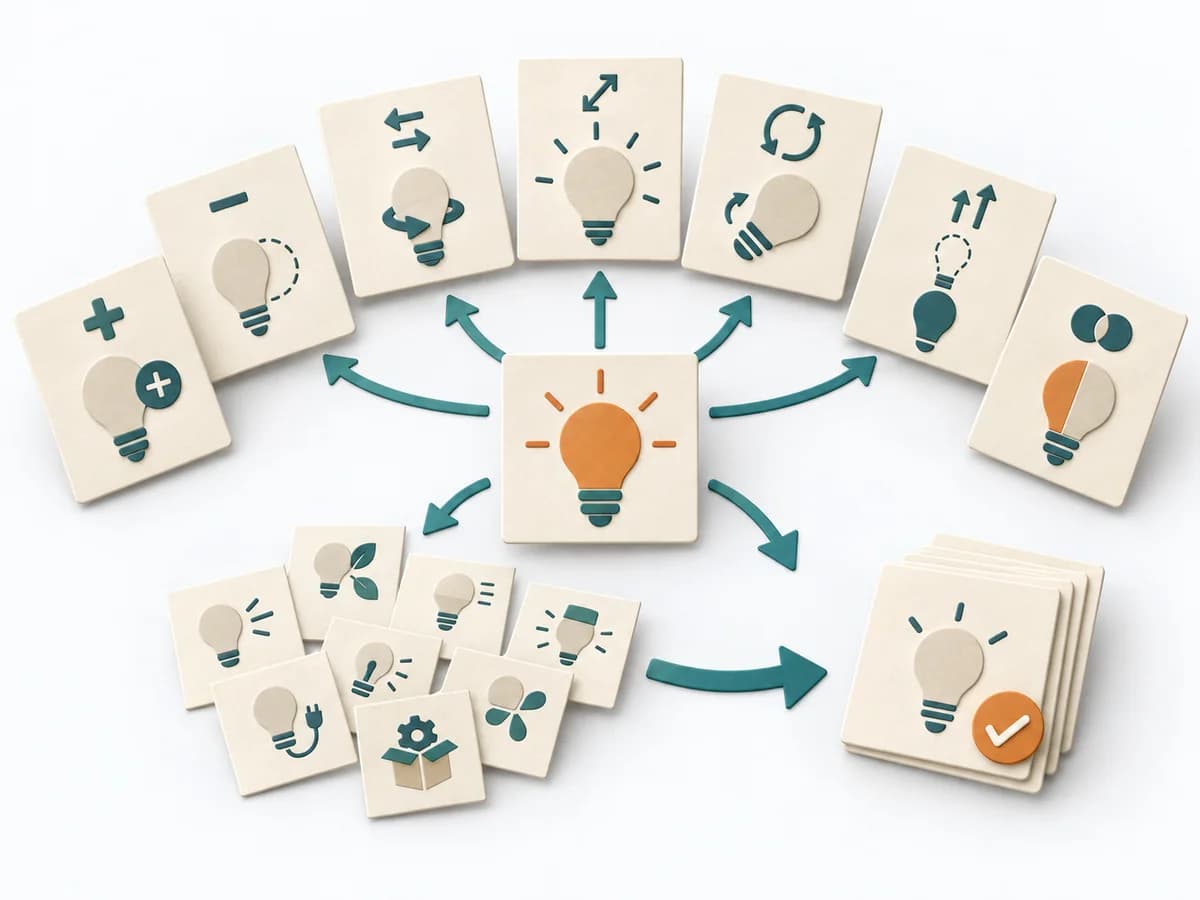 Innovation SCAMPER | 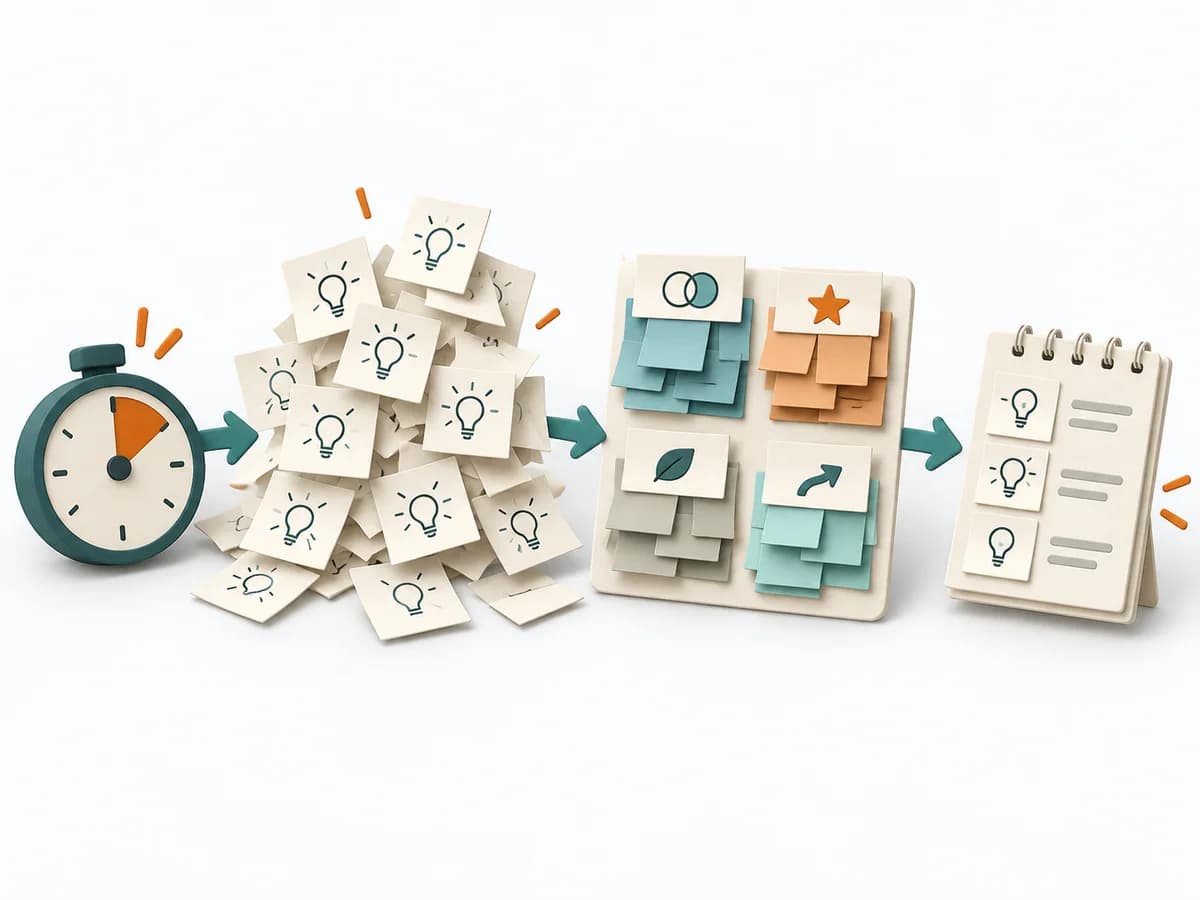 Innovation Rapid Ideation |
|---|---|---|---|---|
Purposedifferent | For complex problems with a fuzzy situation, the method cleanly separates search space and decision. It first creates breadth in understanding and then focus in elaboration. This brings open questions, problem definition, and solution path into a traceable movement. | For an improvement that still has to prove itself in everyday work, the method runs it through small learning loops. It connects planning, checking, and standardization into a repeatable learning mode. | For an existing solution under pressure to change, the method deliberately opens space for systematic variants. It directs attention to rebuilding, combining, and repurposing rather than only new basic ideas. This produces concrete evolution paths for products, offerings, or workflows. | When a decision needs to be prepared quickly, the method generates many solution-close variants in a short time. It deliberately relies on pace to undercut self-censorship and perfectionism. This quickly produces a usable field for prioritization and further work. |
Complexitydifferent | Medium | Low | Low | Low |
Timedifferent | Wochen bis Monate | 1 h bis mehrere Wochen | 30-60 min | 5-20 min |
Participantsdifferent | 3-12 | 1-8 | 2-10 | 1-20 |
Formatdifferent | Workshop + async | Workshop + async | Workshop | Workshop + async |
Outputdifferent | Problem Statement, Solution Options, Prototypes, Deliverables per Phase | PDCA Log, Experiment Plan, Learning Outcome, Standard Change | SCAMPER Idea List, Concept Shortlist, Variation Notes | Ideenpool, Roh-Shortlist, Cluster |
Tagsno overlap | ProcessDivergenceInnovation | Continuous improvementLeanExperiments | BrainstormingIdeationCreativityReframingInnovation | BrainstormingIdeationDivergenceSpeed |