View methods side by side.
Choose up to four methods. Add them using the search and share the comparison by copying its link.
| Criterion |  Innovation Double Diamond |  Product Discovery Outcome-Driven Innovation | 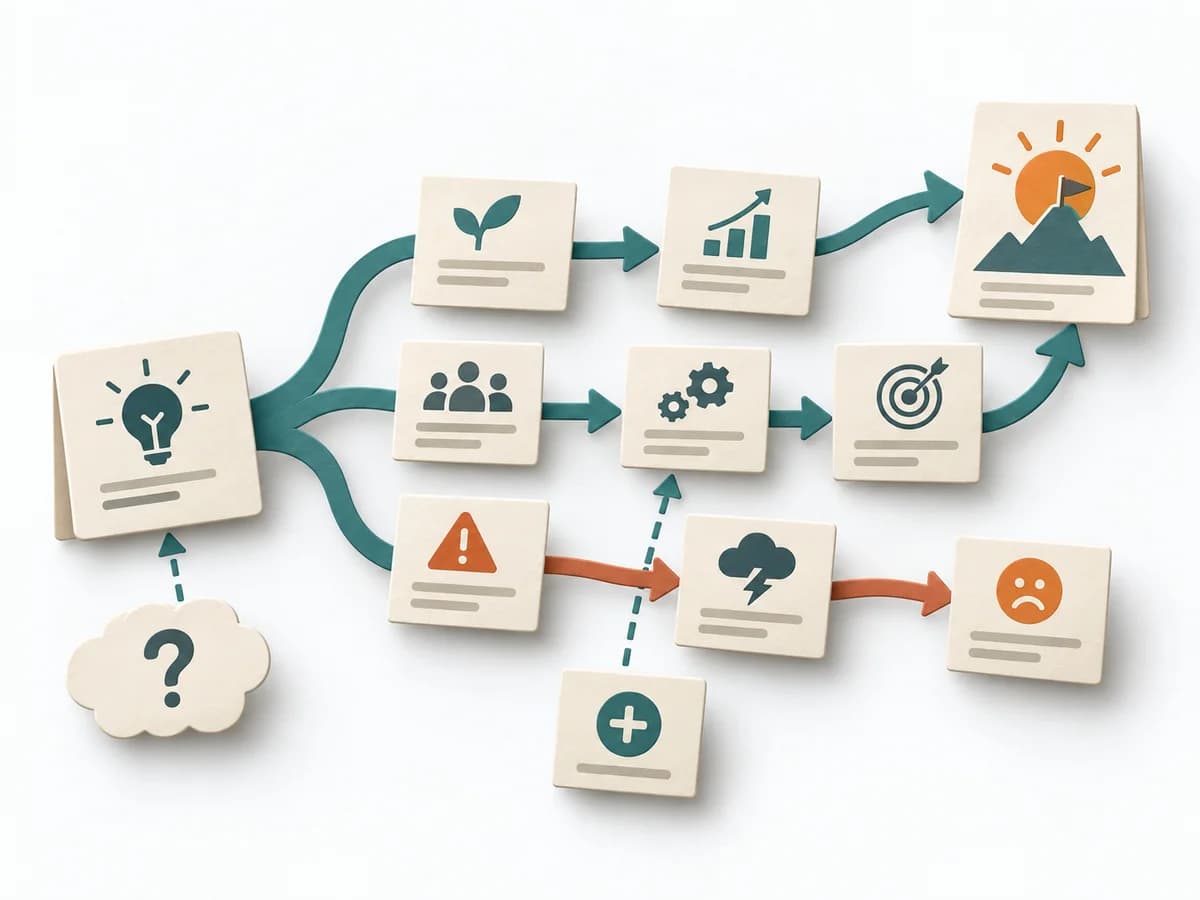 Systems Thinking Future Reality Tree | 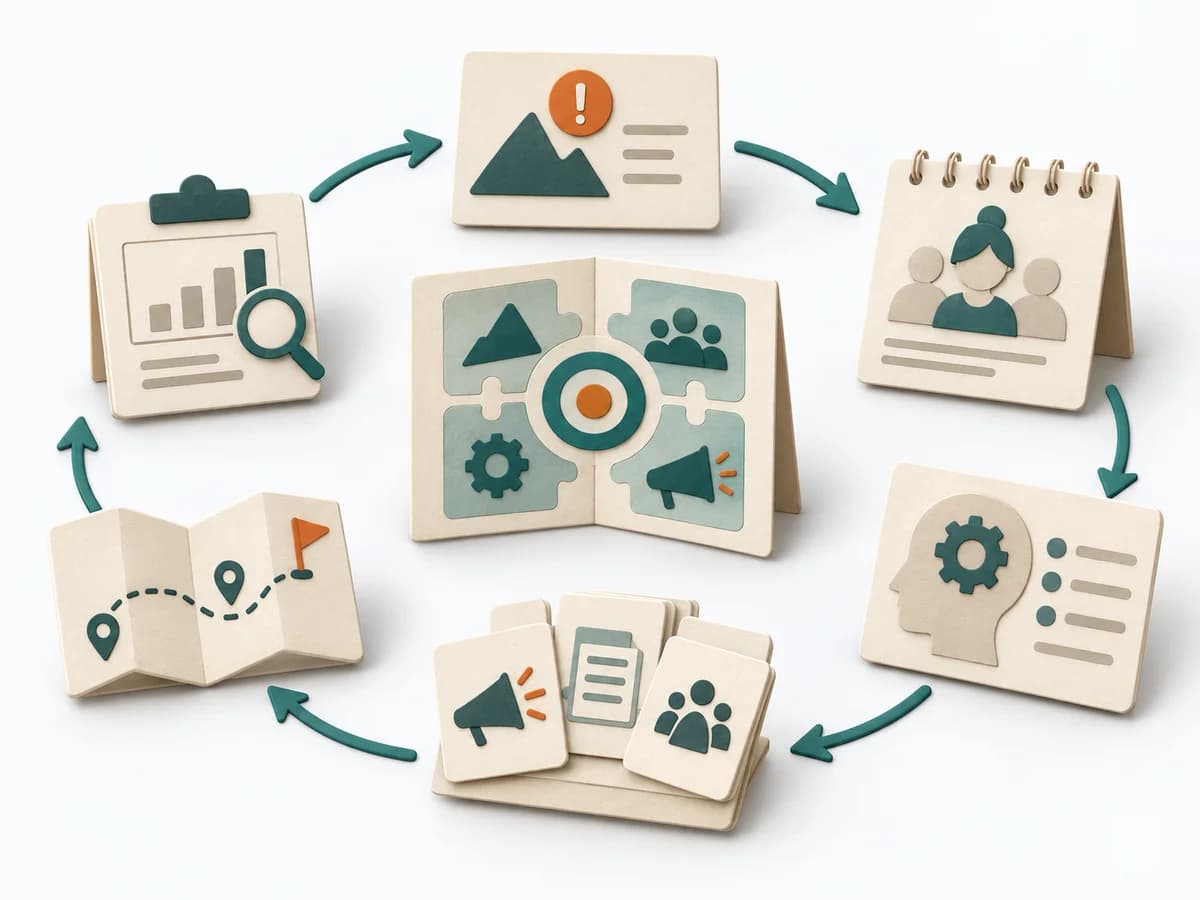 Systems Thinking Intervention Mapping |
|---|---|---|---|---|
Purposedifferent | For complex problems with a fuzzy situation, the method cleanly separates search space and decision. It first creates breadth in understanding and then focus in elaboration. This brings open questions, problem definition, and solution path into a traceable movement. | Outcome-Driven Innovation clarifies customer problems, solution opportunities, and evidence. It separates jobs, desired outcomes, importance, satisfaction, and opportunity, and captures results as desired outcome statements, an opportunity landscape, and segments by underserved needs. | A Future Reality Tree shows how desired actions are meant to lead to a better system state. The method checks whether a path of change holds together logically before time flows into implementation. | Intervention Mapping translates a need for change into a planned, evaluable program. The method connects target group, determinants, actions, and measurement into a traceable chain. |
Complexitydifferent | Medium | High | High | High |
Timedifferent | Wochen bis Monate | Mehrere Wochen | 2-4 h | 1-5 Tage |
Participantsdifferent | 3-12 | 2-6 researchers plus sample | 3-8 | 4-12 |
Formatdifferent | Workshop + async | Workshop + async | Workshop | Workshop + async |
Outputdifferent | Problem Statement, Solution Options, Prototypes, Deliverables per Phase | Desired outcome statements, Opportunity landscape, Segmentation by underserved needs, Innovation hypotheses | Future Reality Tree, Negative Branches, Assumption List, Improved Injections | Logic Model, Change Objectives, Intervention Components, Evaluation Plan |
Tagsno overlap | ProcessDivergenceInnovation | OutcomesInnovationResearchQuantitative | Theory of ConstraintsSystems thinkingChange | ChangeSystems thinkingCapability |