View methods side by side.
Choose up to four methods. Add them using the search and share the comparison by copying its link.
| Criterion |  Innovation Double Diamond |  Operations Fishbone Diagram |  Operations Barrier Analysis | 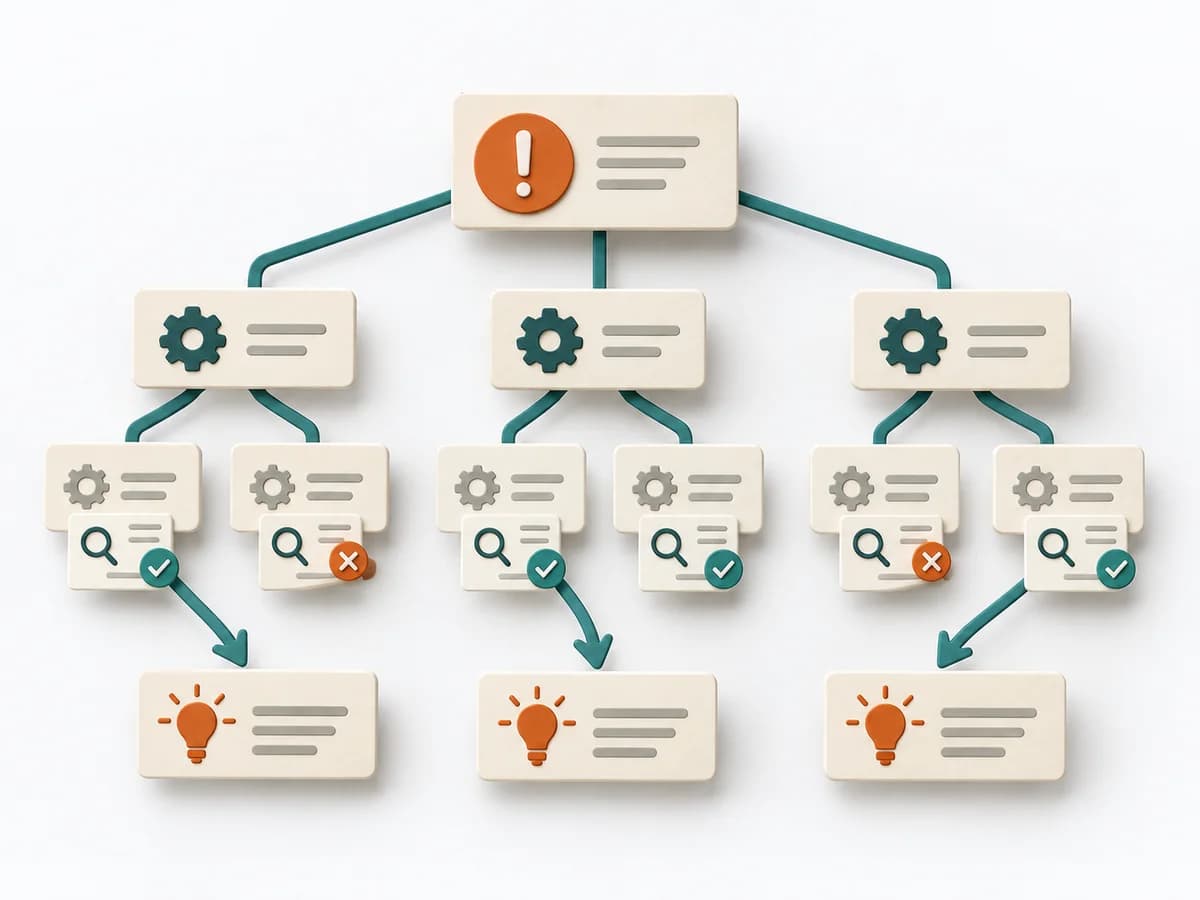 Operations Root Cause Tree Analysis |
|---|---|---|---|---|
Purposedifferent | For complex problems with a fuzzy situation, the method cleanly separates search space and decision. It first creates breadth in understanding and then focus in elaboration. This brings open questions, problem definition, and solution path into a traceable movement. | When a problem has several possible contributing factors, the method sorts causes by cause areas. It prevents an initial hunch from blocking the view of other plausible drivers. | For a risk that can only be managed through multiple layers of protection, the method examines the effectiveness of each barrier. It shows where safeguards are missing, too weak, or fail under real conditions. | For a problem with several suspected causes, the method builds a causal structure instead of a mere list. It makes visible how causes connect and where the strongest points of leverage lie. |
Complexitydifferent | Medium | Low | Medium | Medium |
Timedifferent | Wochen bis Monate | 30-60 min | 2-4 h | 1-3 h |
Participantsdifferent | 3-12 | 2-8 | 2-6 | 2-8 |
Formatdifferent | Workshop + async | Workshop | Workshop + async | Workshop |
Outputdifferent | Problem Statement, Solution Options, Prototypes, Deliverables per Phase | Fishbone Diagram, Cause Categories, Investigation Backlog | Barrier Inventory, Failure Analysis per Barrier, Action Backlog | Cause Tree, Evidence Notes, Countermeasures |
Tagsno overlap | ProcessDivergenceInnovation | Root causeQualityOperations | Root causeSafetyIncident | Root causeTreeIncidentQuality |