View methods side by side.
Choose up to four methods. Add them using the search and share the comparison by copying its link.
| Criterion |  Innovation Double Diamond | 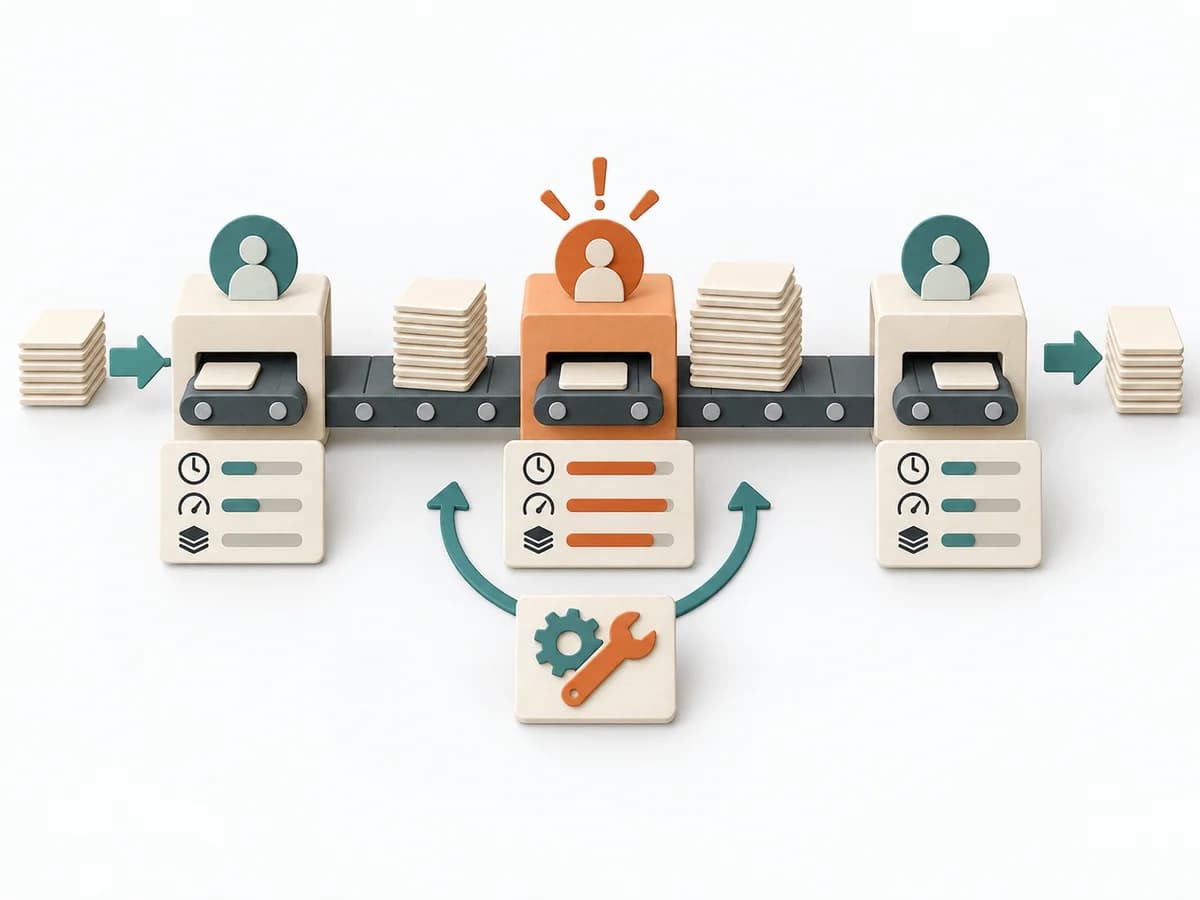 Operations Bottleneck Analysis | 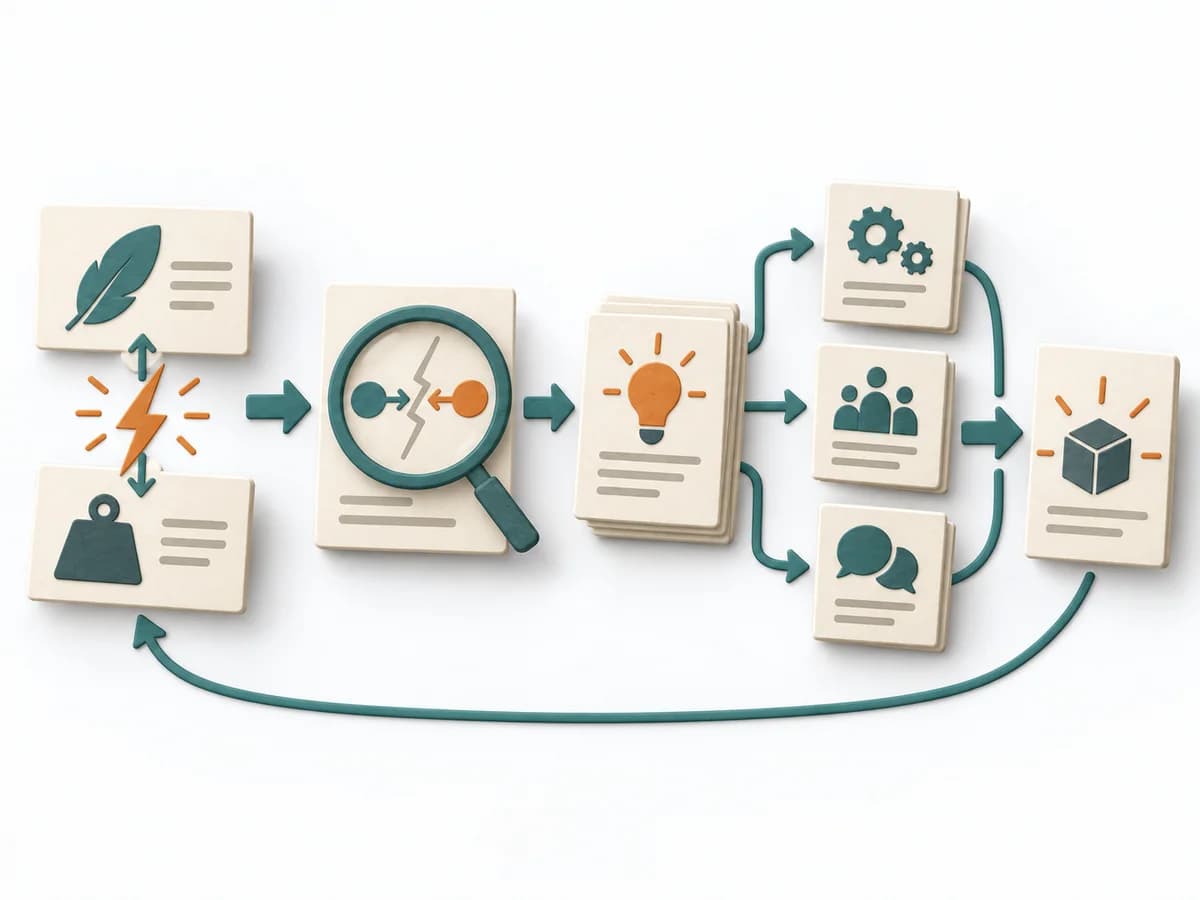 Innovation Contradiction Analysis | 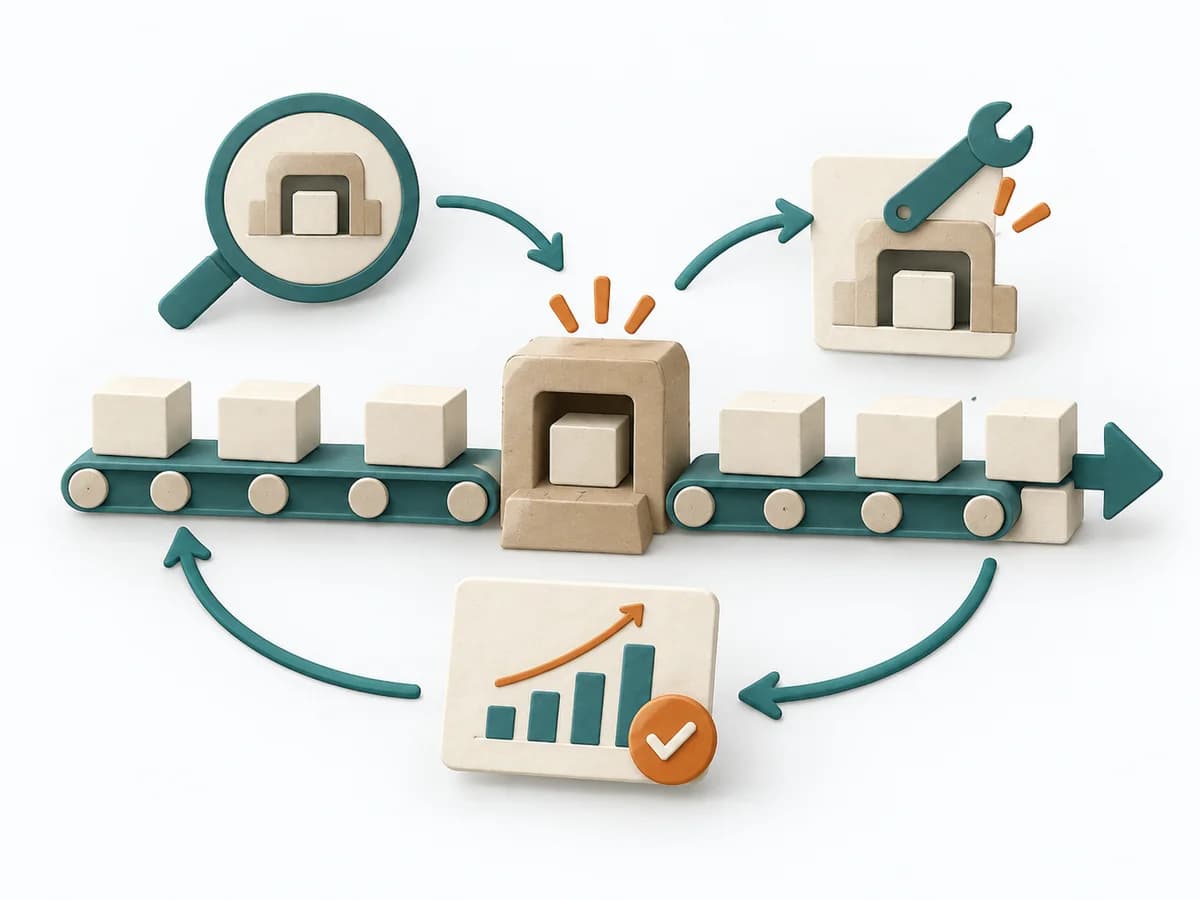 Operations Theory of Constraints |
|---|---|---|---|---|
Purposedifferent | For complex problems with a fuzzy situation, the method cleanly separates search space and decision. It first creates breadth in understanding and then focus in elaboration. This brings open questions, problem definition, and solution path into a traceable movement. | For a flow that backs up at one point, the method looks for the capacity limit with the greatest leverage. It explains why extra effort elsewhere barely improves throughput. | When a system should improve while another measure suffers as a result, the method makes the underlying conflict precisely formulable. It separates the desired effect from its side effect. This makes solutions possible that address the contradiction deliberately instead of half-heartedly. | For a system that does not get faster despite effort, the method directs attention to the bottleneck. It concentrates improvement on the point that actually limits throughput. |
Complexitydifferent | Medium | Medium | Medium | High |
Timedifferent | Wochen bis Monate | 1-3 h | 60-120 min | 2-4 h Analyse, laufend |
Participantsdifferent | 3-12 | 3-8 | 2-8 | 3-12 |
Formatdifferent | Workshop + async | Workshop + async | Workshop | Workshop + async |
Outputdifferent | Problem Statement, Solution Options, Prototypes, Deliverables per Phase | Bottleneck Map, Flow Metrics, Improvement Options, Follow-up Measures | Contradiction Statement, Abstraction Notes, Solution Principles, Concept Ideas | Constraint Map, Improvement Plan, Flow Metrics |
Tagsno overlap | ProcessDivergenceInnovation | FlowMeasurementConstraints | ContradictionsInnovationProblem solving | OperationsConstraintsFlowImprovement |