View methods side by side.
Choose up to four methods. Add them using the search and share the comparison by copying its link.
| Criterion |  Facilitation Dot Voting |  Facilitation Six Thinking Hats | 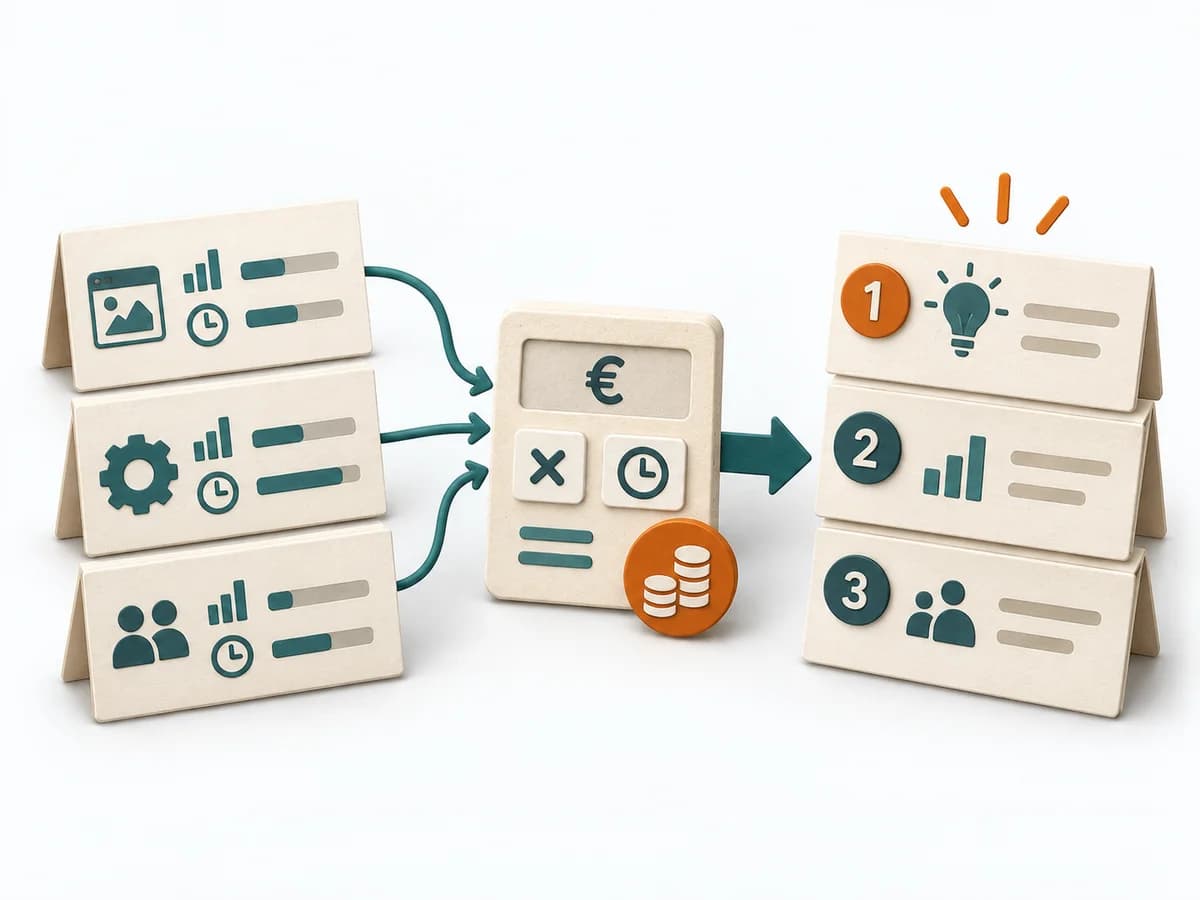 Delivery Cost of Delay |  Facilitation Nominal Group Technique |
|---|---|---|---|---|
Purposedifferent | When a workshop has produced too many options and the group needs to condense quickly, dot voting makes preferences visible in a short time. It bundles individual votes into a solid signal for the next selection. | When a topic gets stuck too quickly in the same thinking mode, Six Thinking Hats deliberately separates the perspectives. This means facts, risks, creativity, and emotional signals get worked through one after another instead of mixed together. | Helps clarify scope, order, and delivery flow in concrete terms. It makes work, constraints, and sequence manageable. The result is captured as a Cost of Delay table and prioritization sequence. | When loud voices could dominate a round, Nominal Group Technique protects individual thinking time from group effects. It collects ideas separately first and only then enables shared weighting. |
Complexitydifferent | Low | Medium | High | Medium |
Timedifferent | 5-15 min | 45-90 min | 90-180 min | 60-120 min |
Participantsdifferent | 3-20 | 4-12 | 3-8 | 5-12 |
Formatsame | Workshop | Workshop | Workshop | Workshop |
Outputdifferent | Ranked list, Consensus signal, Shortlist | Perspective Notes, Decision Inputs, Action Items | CoD Table, Prioritization Sequence | Ranked Ideas, Clarified Options, Group Priority |
Tagsno overlap | FacilitationVotingConsensusPrioritization | FacilitationOptionsDecision | PrioritizationDeliveryEconomicsDecision | FacilitationPrioritizationVotingInclusion |