View methods side by side.
Choose up to four methods. Add them using the search and share the comparison by copying its link.
| Criterion |  Facilitation Dot Voting | 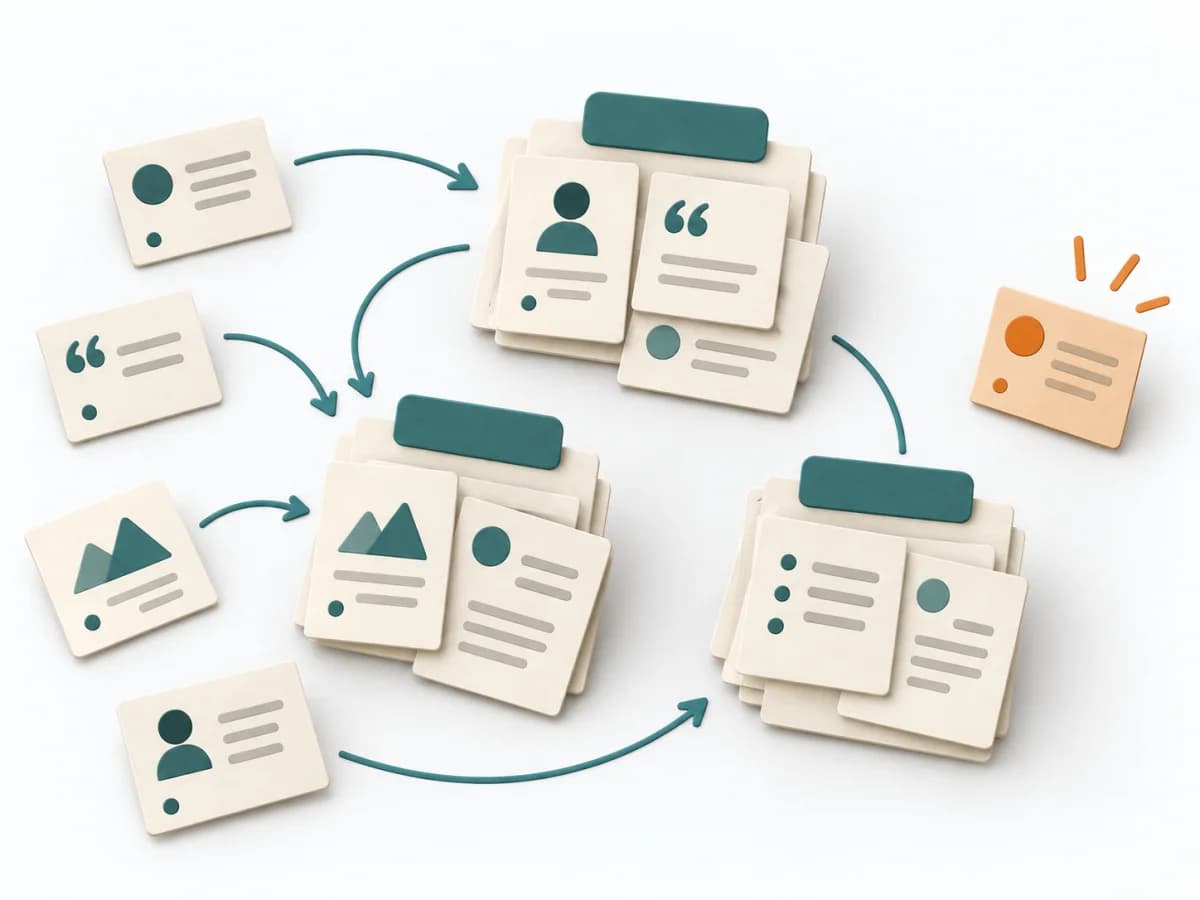 UX Research Affinity Diagramming | 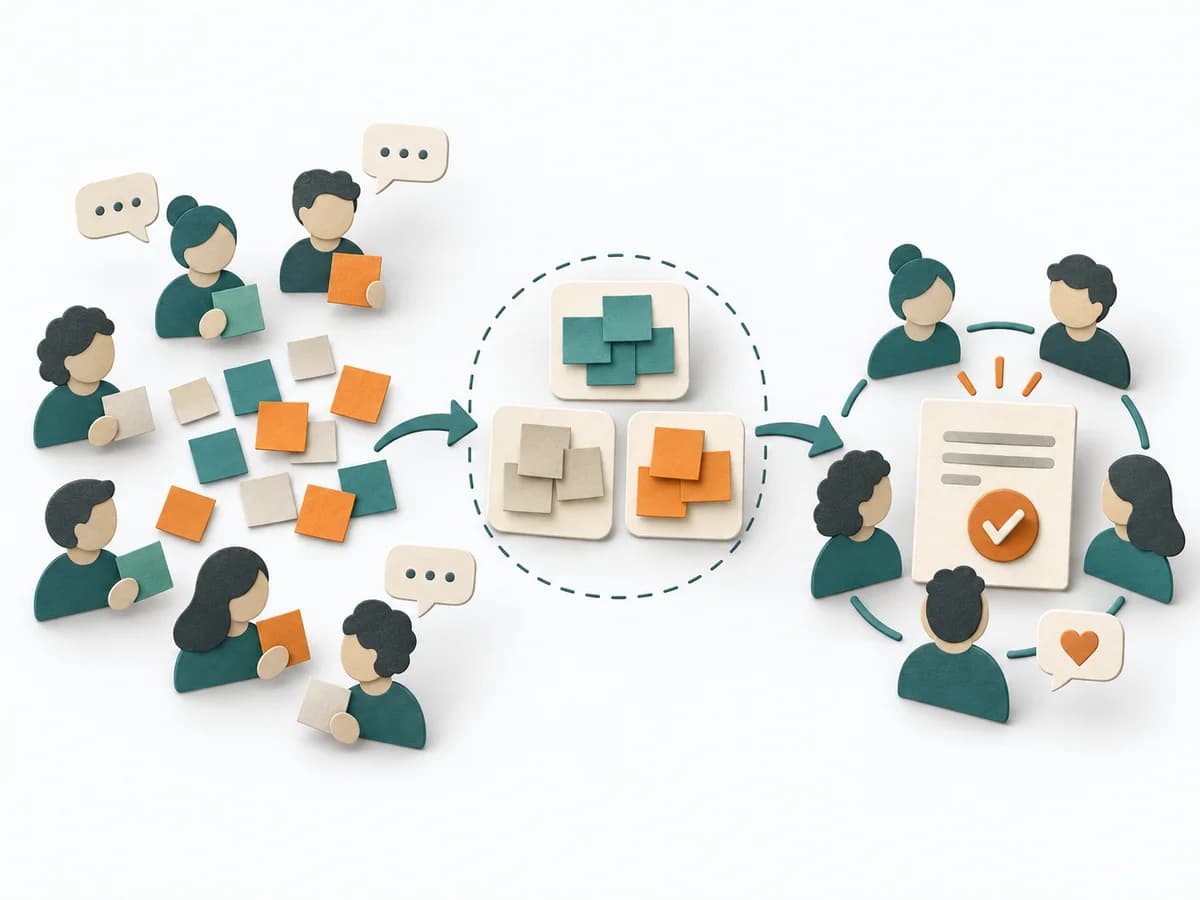 Facilitation Consensus Workshop |  Facilitation Nominal Group Technique |
|---|---|---|---|---|
Purposedifferent | When a workshop has produced too many options and the group needs to condense quickly, dot voting makes preferences visible in a short time. It bundles individual votes into a solid signal for the next selection. | When research notes, feedback, or observations sit unconnected side by side, affinity diagramming sorts the raw material into solid themes. Many individual points turn into patterns that make decisions and opportunities clearer. | When a group needs a solid decision without outvoting individual factions, a Consensus Workshop creates a negotiable common ground. It makes agreement, reservations, and open tensions discussable at the same time. | When loud voices could dominate a round, Nominal Group Technique protects individual thinking time from group effects. It collects ideas separately first and only then enables shared weighting. |
Complexitydifferent | Low | Low | Medium | Medium |
Timedifferent | 5-15 min | 45–90 min | 1-3 h | 60-120 min |
Participantsdifferent | 3-20 | 3-10 | 5-30 | 5-12 |
Formatsame | Workshop | Workshop | Workshop | Workshop |
Outputdifferent | Ranked list, Consensus signal, Shortlist | Theme clusters, Insight statements, Opportunity areas | Consensus Clusters, Theme Titles, Priority Areas | Ranked Ideas, Clarified Options, Group Priority |
Tagsno overlap | FacilitationVotingConsensusPrioritization | SynthesisQualitativeRoot cause | FacilitationConsensusWorkshopAlignment | FacilitationPrioritizationVotingInclusion |