View methods side by side.
Choose up to four methods. Add them using the search and share the comparison by copying its link.
| Criterion |  Facilitation Dot Voting |  Operations 5 Whys |  Facilitation Nominal Group Technique | 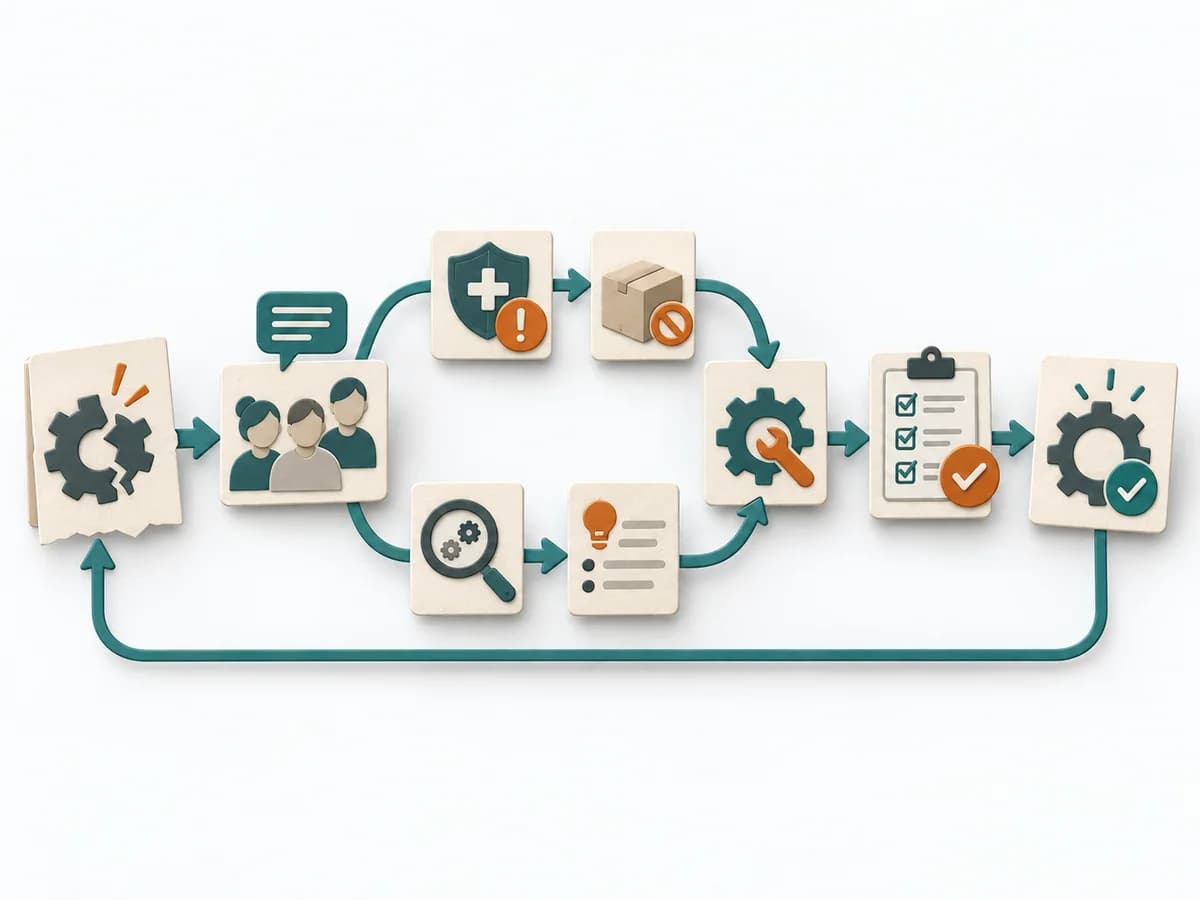 Operations 8D Problem Solving |
|---|---|---|---|---|
Purposedifferent | When a workshop has produced too many options and the group needs to condense quickly, dot voting makes preferences visible in a short time. It bundles individual votes into a solid signal for the next selection. | For a single, hard-to-explain deviation, the method exposes the causal chain behind the visible symptom. It keeps the cause open until a controllable condition emerges instead of a mere description. | When loud voices could dominate a round, Nominal Group Technique protects individual thinking time from group effects. It collects ideas separately first and only then enables shared weighting. | For an acute quality or delivery problem, the method structures immediate protection and root cause work together. It keeps the situation stable while the actual cause is investigated cleanly. |
Complexitydifferent | Low | Low | Medium | High |
Timedifferent | 5-15 min | 15-30 min | 60-120 min | 1-6 Wochen |
Participantsdifferent | 3-20 | 2-6 | 5-12 | 4-10 |
Formatdifferent | Workshop | Workshop | Workshop | Workshop + async |
Outputdifferent | Ranked list, Consensus signal, Shortlist | Root cause notes, Countermeasures | Ranked Ideas, Clarified Options, Group Priority | 8D Report, Containment Plan, Root Cause Evidence, Corrective Action Plan |
Tagsno overlap | FacilitationVotingConsensusPrioritization | Root causeIncidentLeanProblem solving | FacilitationPrioritizationVotingInclusion | QualityProblem solvingRoot cause |