View methods side by side.
Choose up to four methods. Add them using the search and share the comparison by copying its link.
| Criterion | 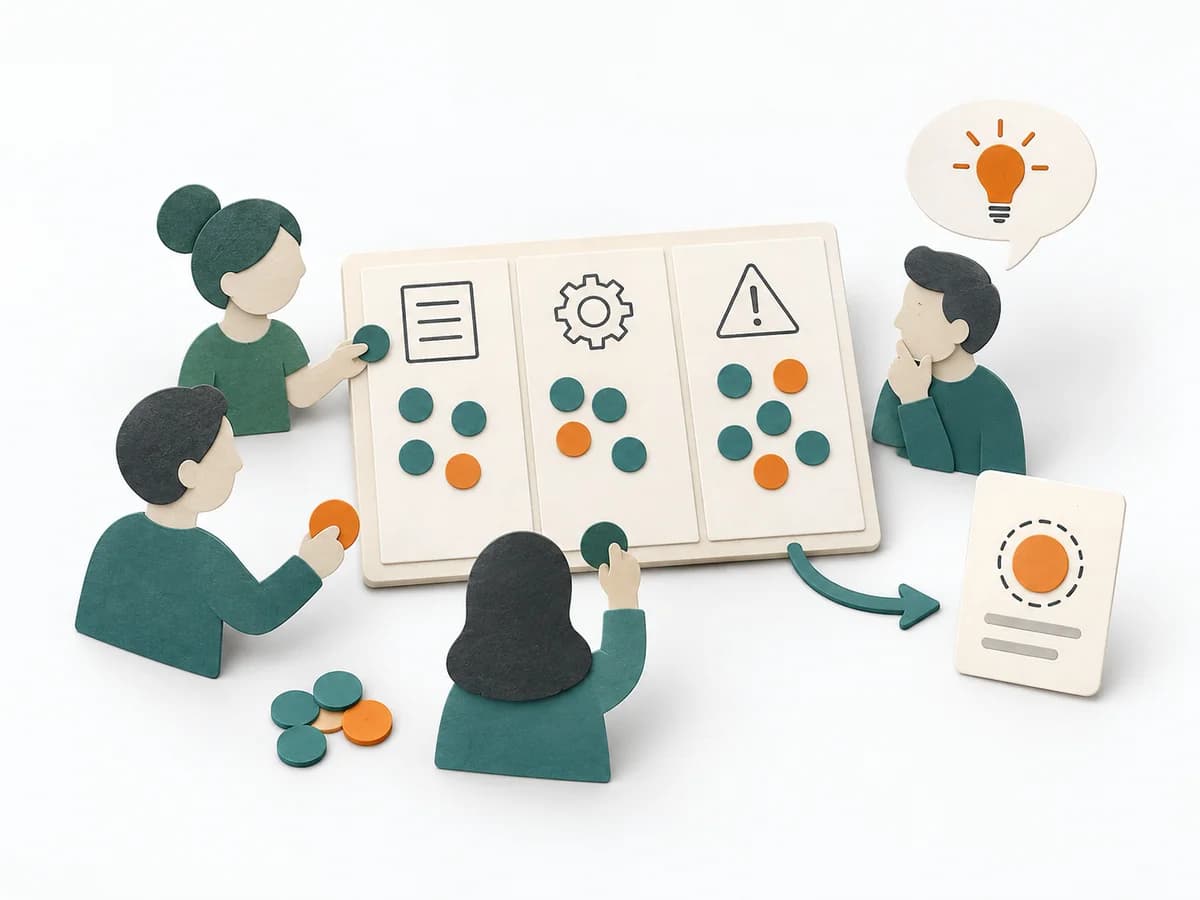 Facilitation Dot Estimation | 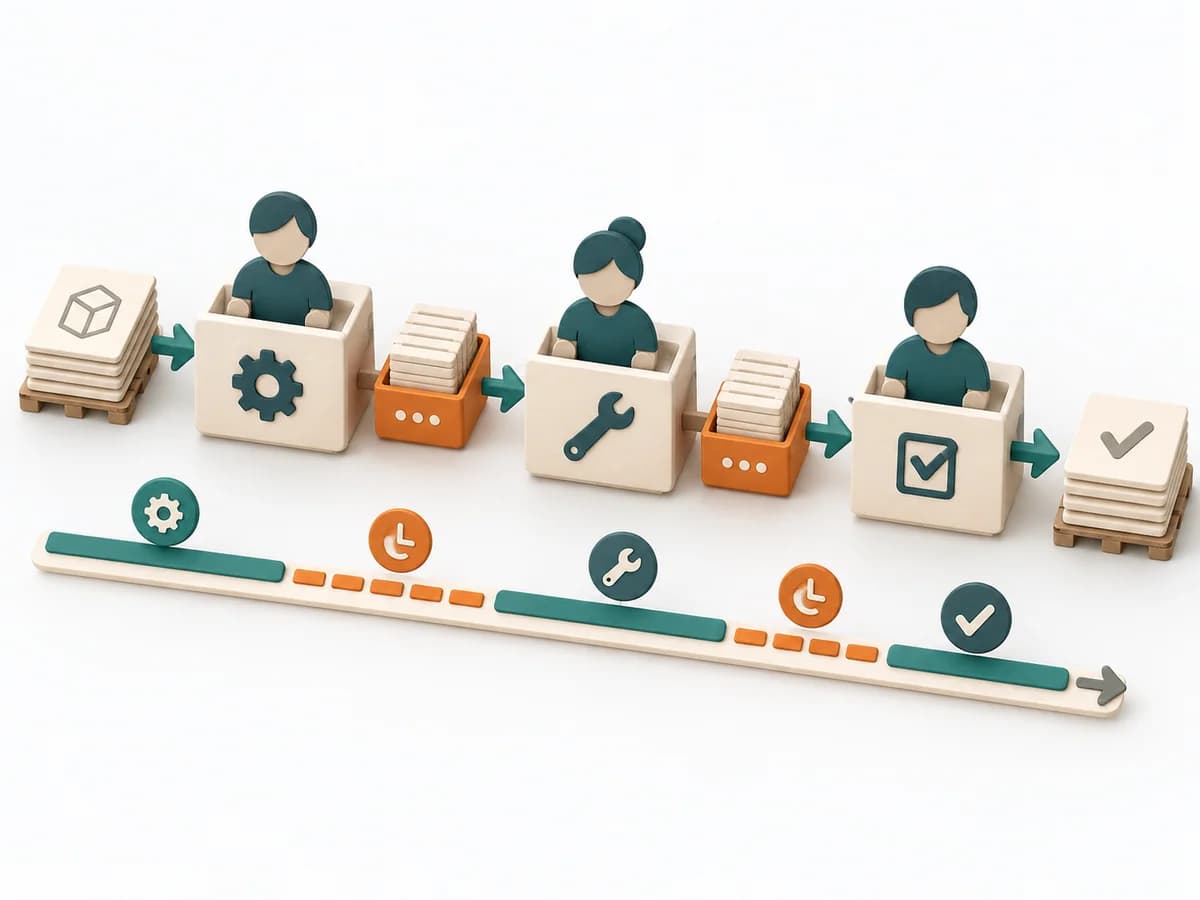 Delivery Value Stream Mapping |  Operations Gemba Walk | 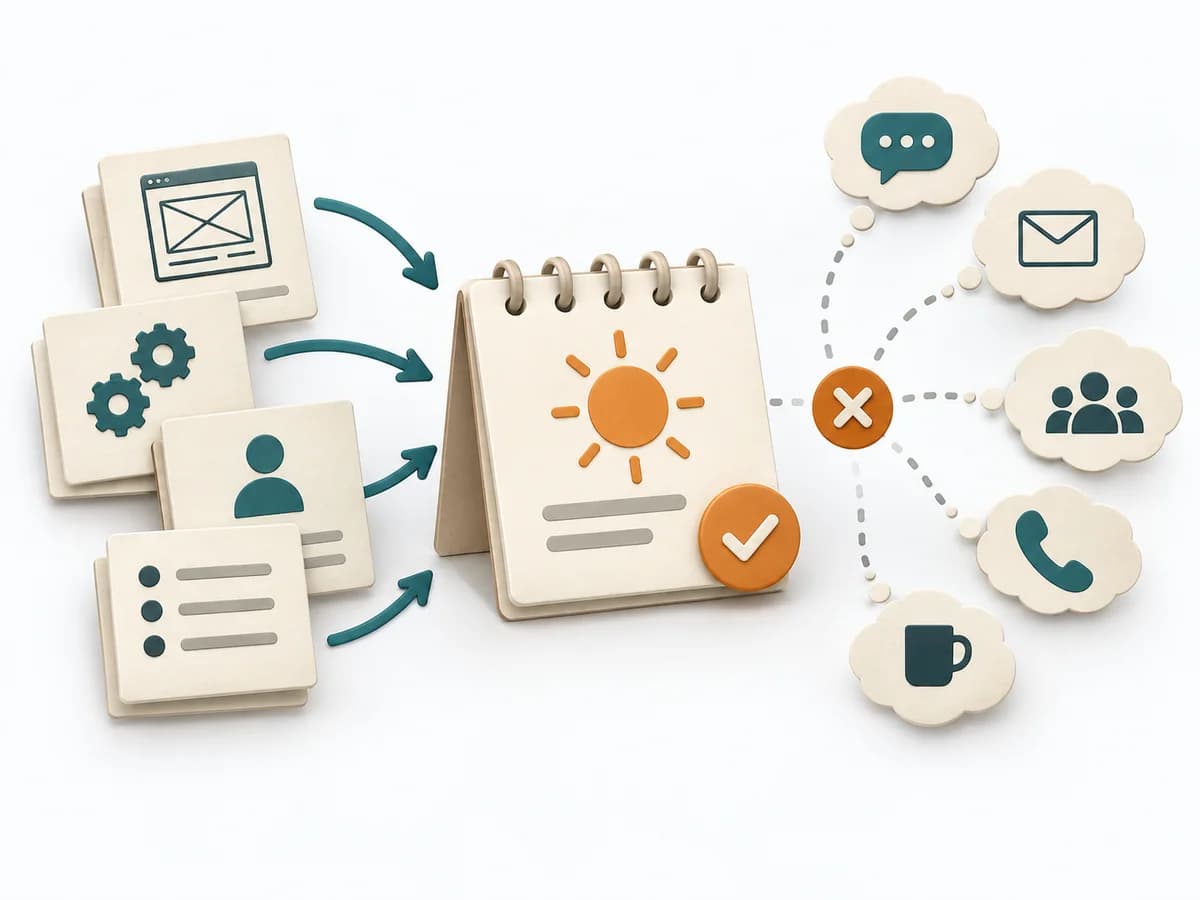 Agile Ideal Days |
|---|---|---|---|---|
Purposedifferent | When size or effort can only be estimated roughly, Dot Estimation condenses the group's experience into a quick range. It turns individual contributions into a visible selection. The result is captured as an Effort Heatmap, Risk Signals, and Discussion Targets. | When delivery work dissolves into wait times, handoffs, and hidden effort, Value Stream Mapping makes the actual flow visible. The method exposes bottlenecks, idle time, and feedback loops so lead time and improvement levers become tangible. | When there is uncertainty about the real course of a process, the method brings observation to the place where work happens. It combines perception, follow-up questions, and process knowledge so decisions rest on actual workflows instead of assumptions. | When effort needs to be thought of as real working time, it offers a simple common denominator for comparison. It sorts work by value, risk, and delivery ability. The result is captured as Ideal Day Estimates, Assumption Notes, and Capacity Caveats. |
Complexitydifferent | Low | Medium | Low | Low |
Timedifferent | 5-20 min | 1-3 h | 30-120 min | 15-60 min |
Participantsdifferent | 3-20 | 4-10 | 2-6 | 2-9 |
Formatdifferent | Workshop | Workshop | Workshop | Workshop + async |
Outputdifferent | Effort Heatmap, Risk Signals, Discussion Targets | Current-state map, Future-state map, Bottleneck list | Observation Notes, Improvement Ideas | Ideal Day Estimates, Assumption Notes, Capacity Caveats |
Tagsno overlap | EstimationEffortRisk | LeanFlowWasteDelivery | LeanObservationProcessOperations | EstimationEffortAgile |