View methods side by side.
Choose up to four methods. Add them using the search and share the comparison by copying its link.
| Criterion | 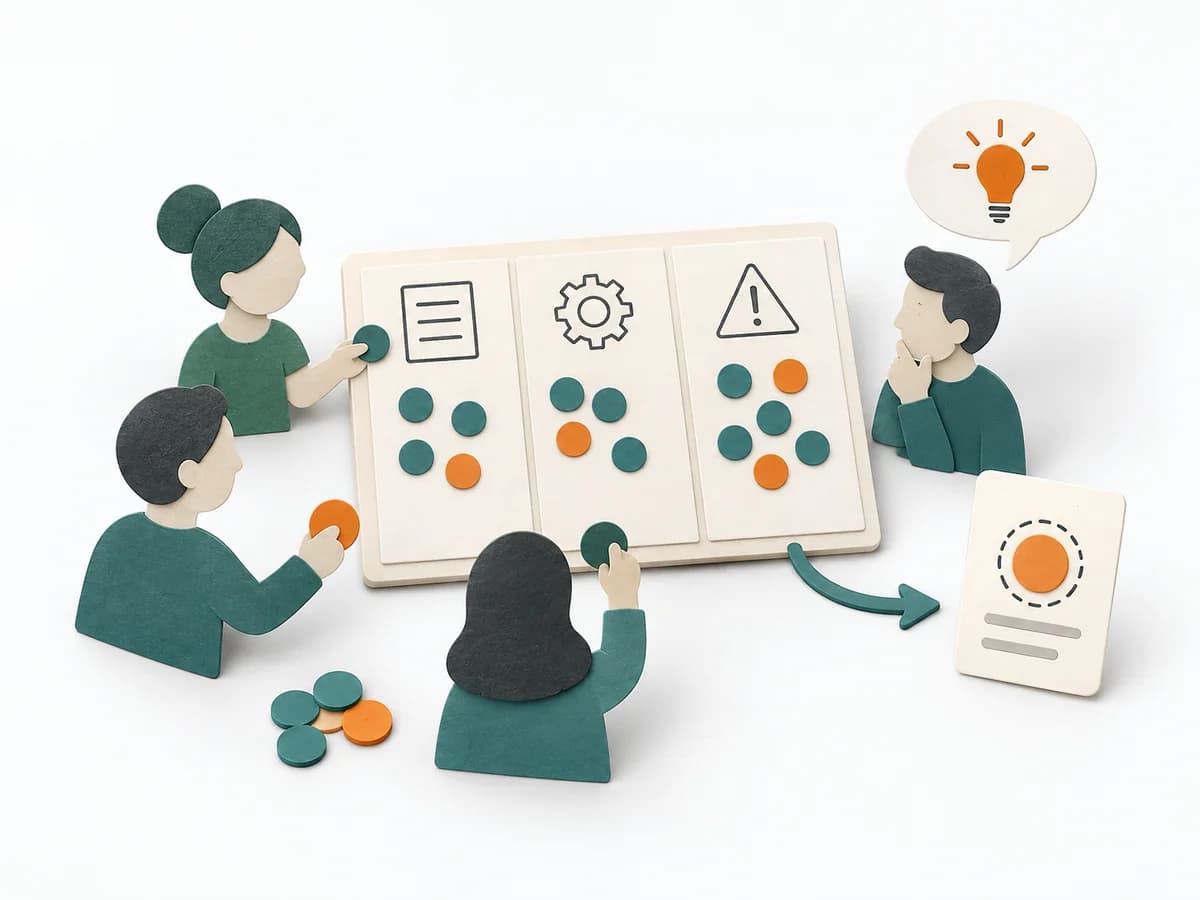 Facilitation Dot Estimation |  Facilitation Team Charter | 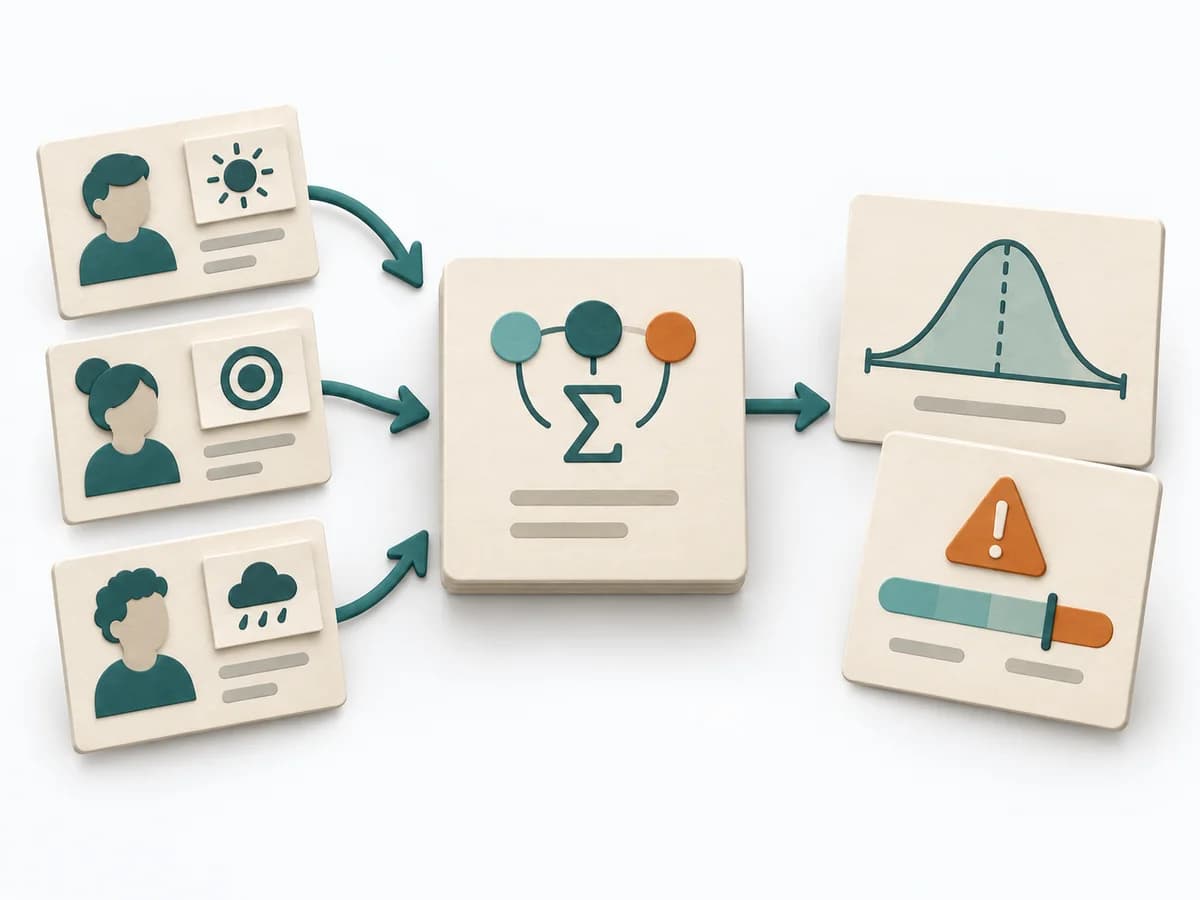 Decision Making PERT Estimation | 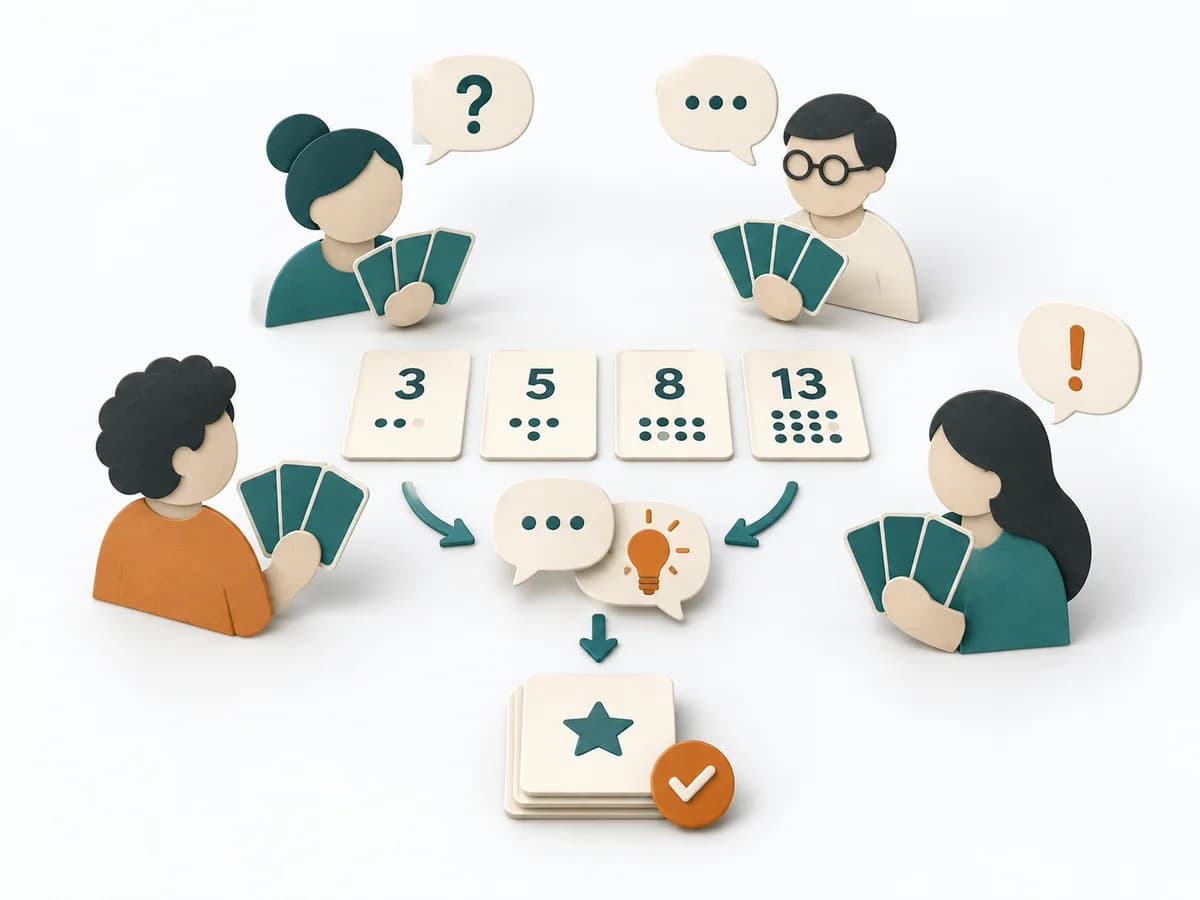 Agile Planning Poker |
|---|---|---|---|---|
Purposedifferent | When size or effort can only be estimated roughly, Dot Estimation condenses the group's experience into a quick range. It turns individual contributions into a visible selection. The result is captured as an Effort Heatmap, Risk Signals, and Discussion Targets. | When a team is starting fresh or working past each other, Team Charter clarifies the shared working basis. It visibly sets out how collaboration, decision paths, and mutual conduct should work day to day. | On complex initiatives, a plain average tends to understate just how uncertain the outcome really is. It separates options, evaluation criteria, and open risks. The result is captured as a PERT Estimate, Expected Value, and Risk Notes. | When estimates within the team diverge too much, it puts differing expectations on a common test bench. It separates rough complexity from unspoken assumptions. |
Complexitydifferent | Low | Medium | Medium | Low |
Timedifferent | 5-20 min | 2-4 h | 15-45 min | 2-5 min je Item |
Participantsdifferent | 3-20 | 3-12 | 1-8 | 3-9 |
Formatdifferent | Workshop | Workshop | Workshop + async | Workshop + async |
Outputdifferent | Effort Heatmap, Risk Signals, Discussion Targets | Team Charter, Working Norms, Role Notes | PERT Estimate, Expected Value, Risk Notes | Relative Estimates, Assumption Notes, Split Candidates |
Tagsno overlap | EstimationEffortRisk | TeamAlignmentCollaboration | EstimationUncertaintyRisk | EstimationAgileRelative sizingTeam |