View methods side by side.
Choose up to four methods. Add them using the search and share the comparison by copying its link.
| Criterion | 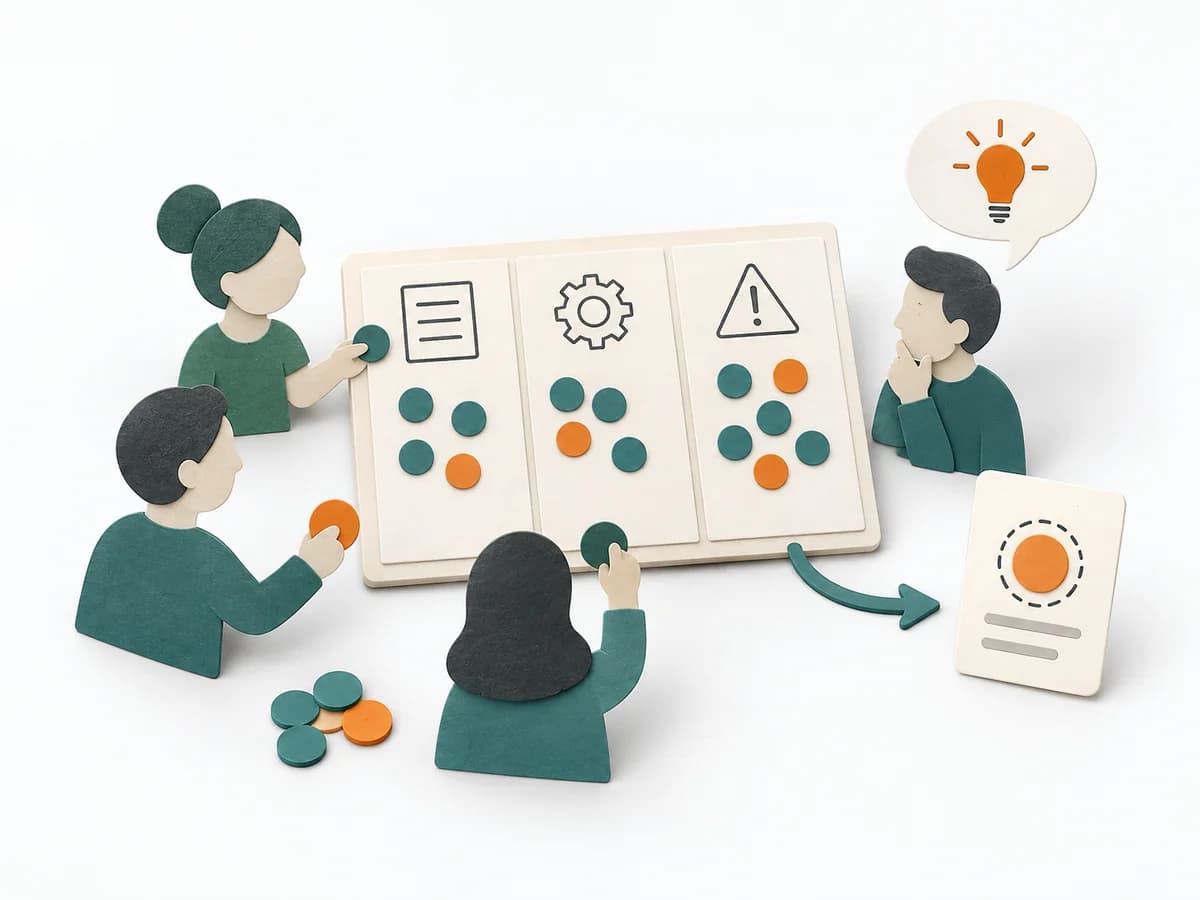 Facilitation Dot Estimation | 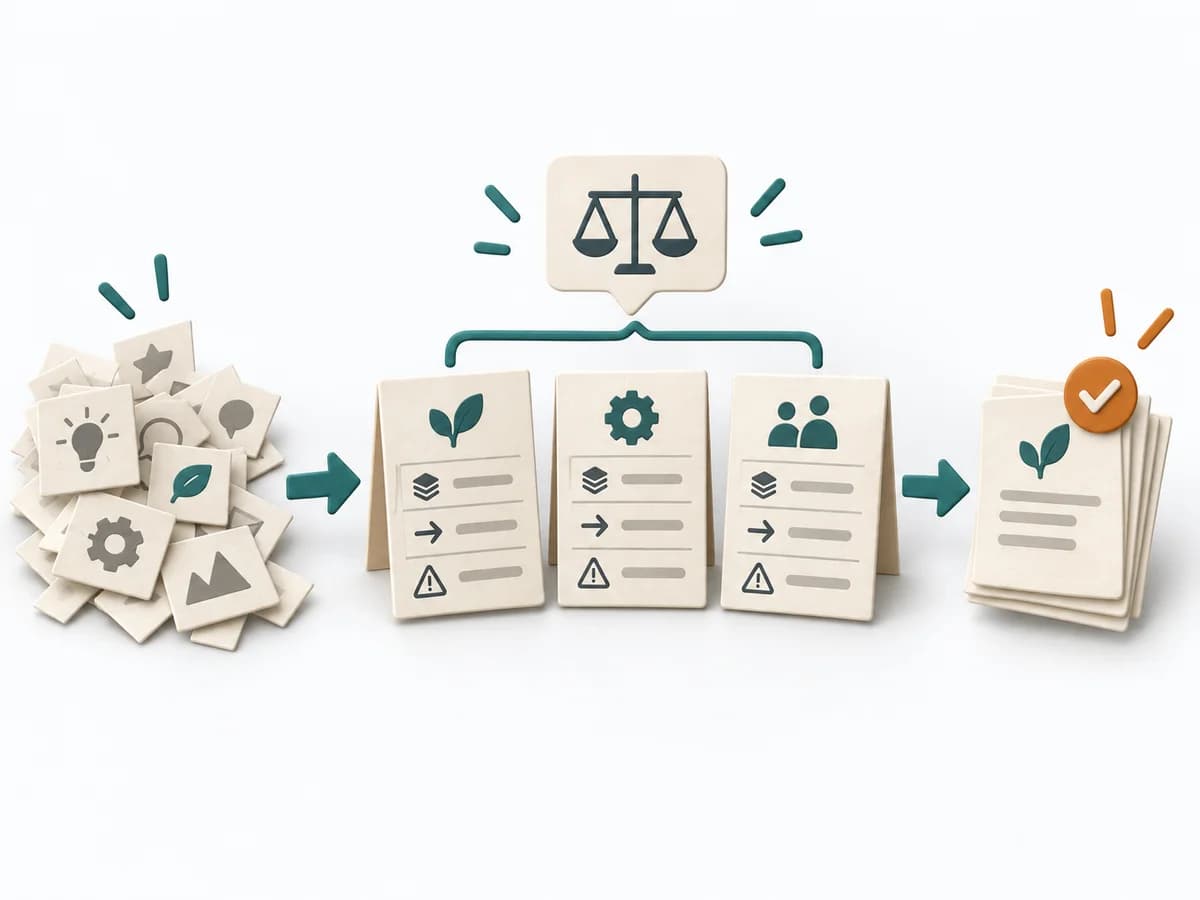 Decision Making Option Framing |  Facilitation Stakeholder Mapping |  Facilitation Alignment Mapping |
|---|---|---|---|---|
Purposedifferent | When size or effort can only be estimated roughly, Dot Estimation condenses the group's experience into a quick range. It turns individual contributions into a visible selection. The result is captured as an Effort Heatmap, Risk Signals, and Discussion Targets. | In early decisions, alternatives are often still vague, incomplete, or blended together. Option Framing brings every possibility into a comparable form and makes visible which variant actually fits the question. | When an initiative depends on many people, interests, and power dynamics, Stakeholder Mapping systematically orders the environment. It shows who influences, who is affected, and where relationship management or safeguarding matters first. | When several people work toward one goal but hold different mental maps, Alignment Mapping makes the discrepancies visible. It arranges goals, assumptions, and priorities so shared direction becomes verifiable. |
Complexitydifferent | Low | Medium | Low | Medium |
Timedifferent | 5-20 min | 45-120 min | 60–90 min | 1-2 h |
Participantsdifferent | 3-20 | 3-8 | 2-8 | 4-12 |
Formatdifferent | Workshop | Workshop + async | Workshop + async | Workshop |
Outputdifferent | Effort Heatmap, Risk Signals, Discussion Targets | Option Frames, Assumption Notes, Comparable Shortlist, Decision Inputs | Stakeholder Map, Engagement Plan, Risk Notes | Alignment Map, Open Issues, Decision Questions |
Tagsno overlap | EstimationEffortRisk | OptionsDecision framingStrategyComparison | StakeholdersAlignmentFacilitationChange | AlignmentStakeholdersStrategyFacilitation |