View methods side by side.
Choose up to four methods. Add them using the search and share the comparison by copying its link.
| Criterion | 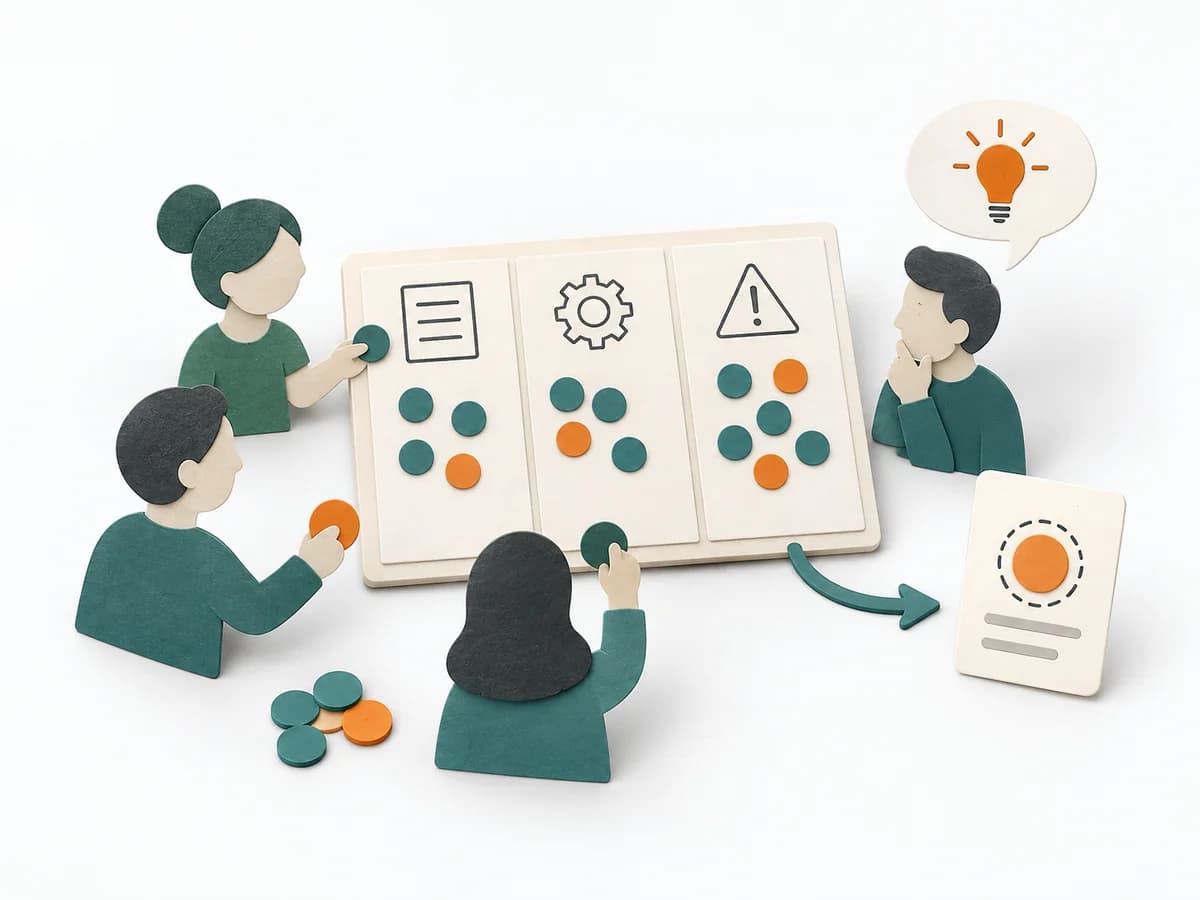 Facilitation Dot Estimation | 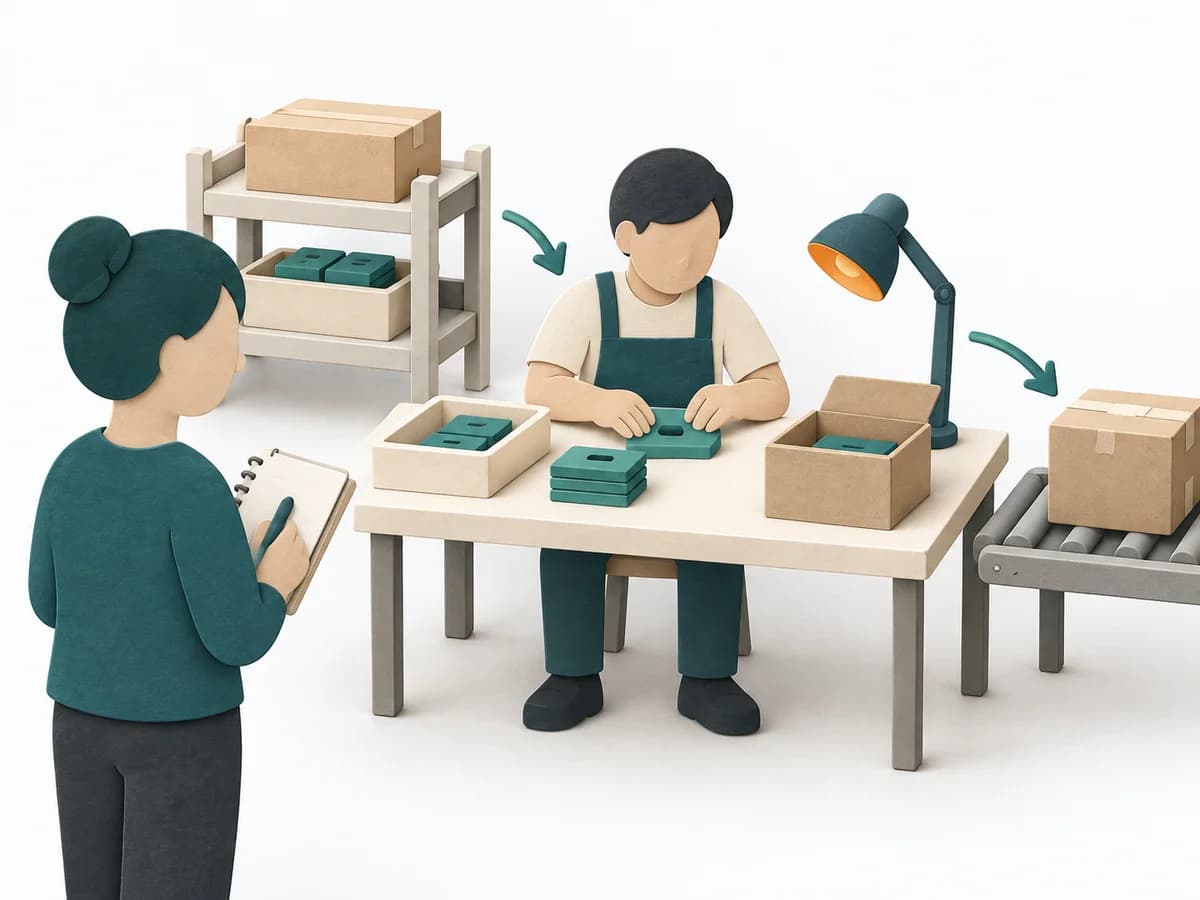 Operations Gemba Walk | 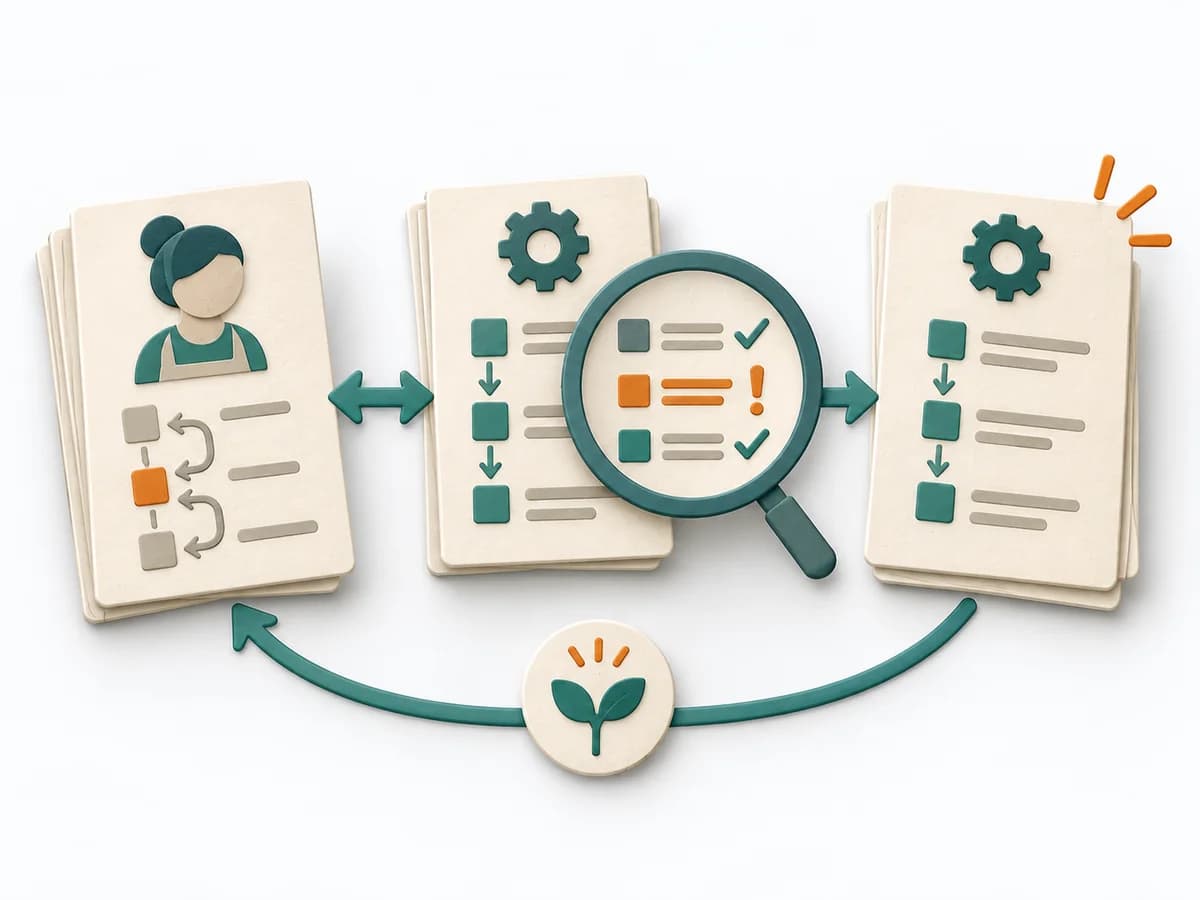 Operations Standard Work Analysis | 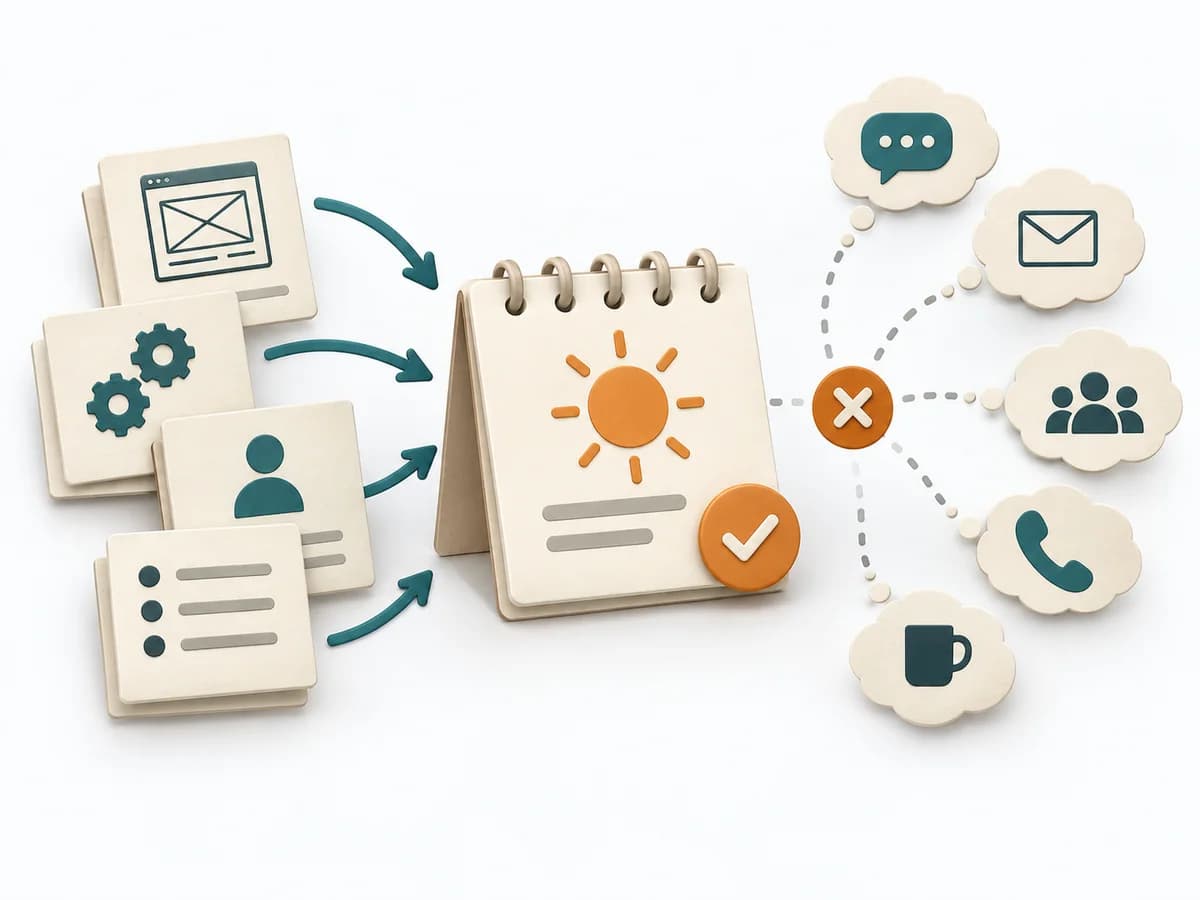 Agile Ideal Days |
|---|---|---|---|---|
Purposedifferent | When size or effort can only be estimated roughly, Dot Estimation condenses the group's experience into a quick range. It turns individual contributions into a visible selection. The result is captured as an Effort Heatmap, Risk Signals, and Discussion Targets. | When there is uncertainty about the real course of a process, the method brings observation to the place where work happens. It combines perception, follow-up questions, and process knowledge so decisions rest on actual workflows instead of assumptions. | When the same task is done differently depending on the person, the method exposes the reliable core. It creates comparability without unnecessarily choking off needed latitude. | When effort needs to be thought of as real working time, it offers a simple common denominator for comparison. It sorts work by value, risk, and delivery ability. The result is captured as Ideal Day Estimates, Assumption Notes, and Capacity Caveats. |
Complexitydifferent | Low | Low | Medium | Low |
Timedifferent | 5-20 min | 30-120 min | 1-3 h | 15-60 min |
Participantsdifferent | 3-20 | 2-6 | 2-6 | 2-9 |
Formatdifferent | Workshop | Workshop | Workshop | Workshop + async |
Outputdifferent | Effort Heatmap, Risk Signals, Discussion Targets | Observation Notes, Improvement Ideas | Standard Work Sheet, Deviation List, Improved Standard, Training Needs | Ideal Day Estimates, Assumption Notes, Capacity Caveats |
Tagsno overlap | EstimationEffortRisk | LeanObservationProcessOperations | LeanProcessQuality | EstimationEffortAgile |