View methods side by side.
Choose up to four methods. Add them using the search and share the comparison by copying its link.
| Criterion |  Facilitation Dot Estimation | 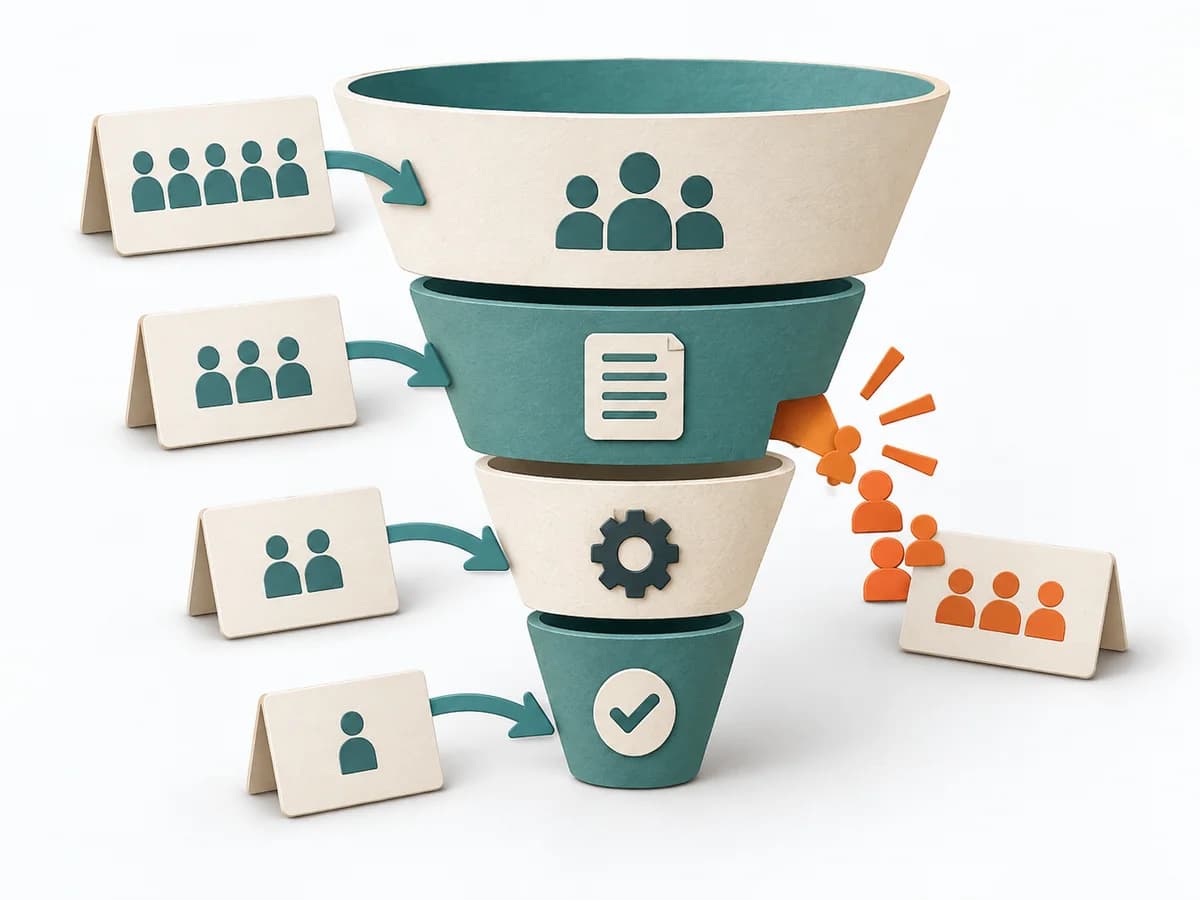 Growth Funnel Analysis |  Product Strategy DIBB | 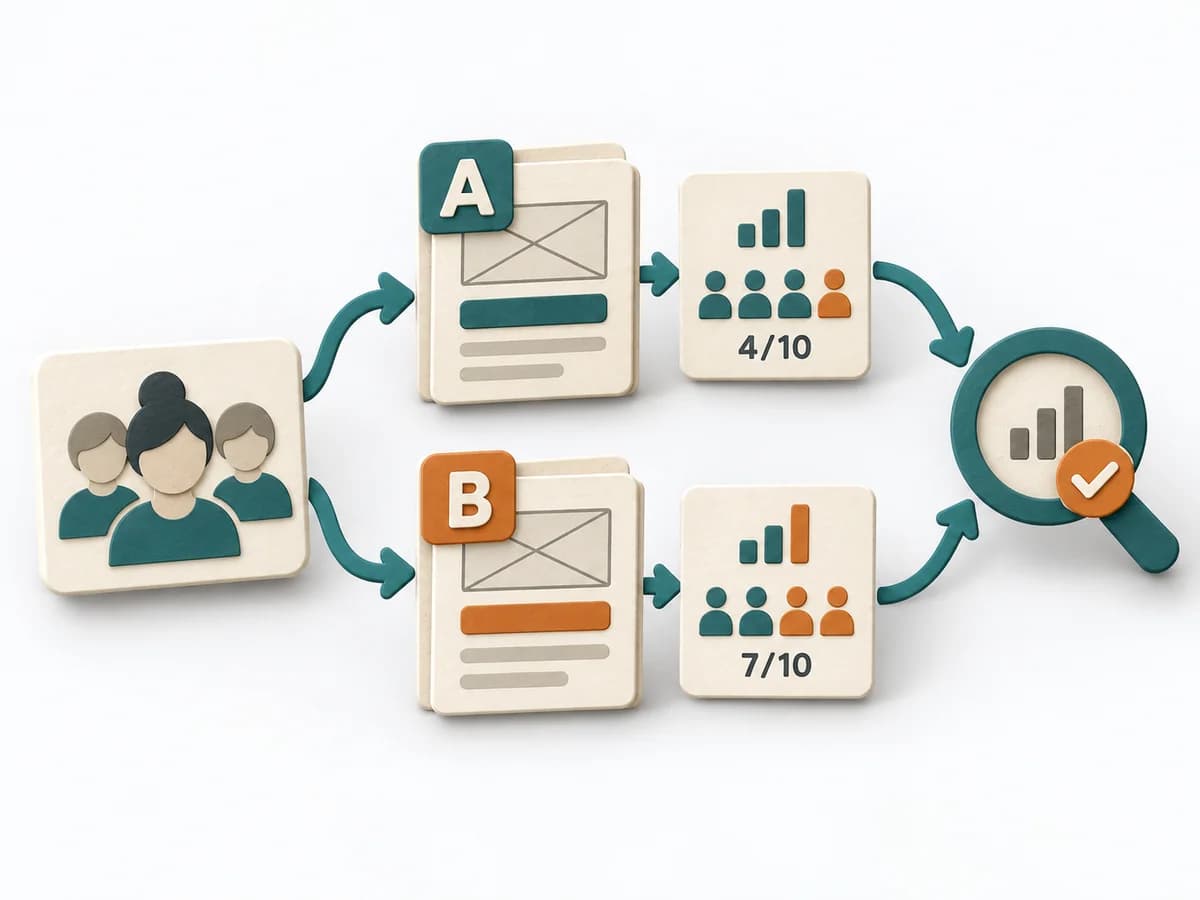 Growth A/B Testing |
|---|---|---|---|---|
Purposedifferent | When size or effort can only be estimated roughly, Dot Estimation condenses the group's experience into a quick range. It turns individual contributions into a visible selection. The result is captured as an Effort Heatmap, Risk Signals, and Discussion Targets. | When many visitors or users drop off along the way, the reason behind the number often stays hidden. Funnel Analysis exposes these transitions and makes visible exactly where the path collapses. | DIBB helps clarify target groups, value, goals, and priorities by making the logic behind a decision explicit. It captures results as a DIBB document, belief list, bet list, and learning report. | When two variants compete, discussions quickly decide by taste rather than effect. A/B Testing checks behavior under controlled conditions and separates real improvement from chance or expectation effects. |
Complexitydifferent | Low | Medium | Low | High |
Timedifferent | 5-20 min | 1-3 h | 1-2 h | 1-4 Wochen |
Participantsdifferent | 3-20 | 1-5 | 2-8 | 1-6 |
Formatdifferent | Workshop | Async | Workshop + async | Async |
Outputdifferent | Effort Heatmap, Risk Signals, Discussion Targets | Funnel report, Drop-off analysis, Optimization hypotheses | DIBB document, Belief list, Bet list, Learning report | Experiment results, Decision log, Learning summary |
Tagsno overlap | EstimationEffortRisk | AnalyticsConversionGrowth | StrategyDecisionAssumptionsHypothesis | ExperimentsGrowthAnalyticsValidation |