View methods side by side.
Choose up to four methods. Add them using the search and share the comparison by copying its link.
| Criterion | 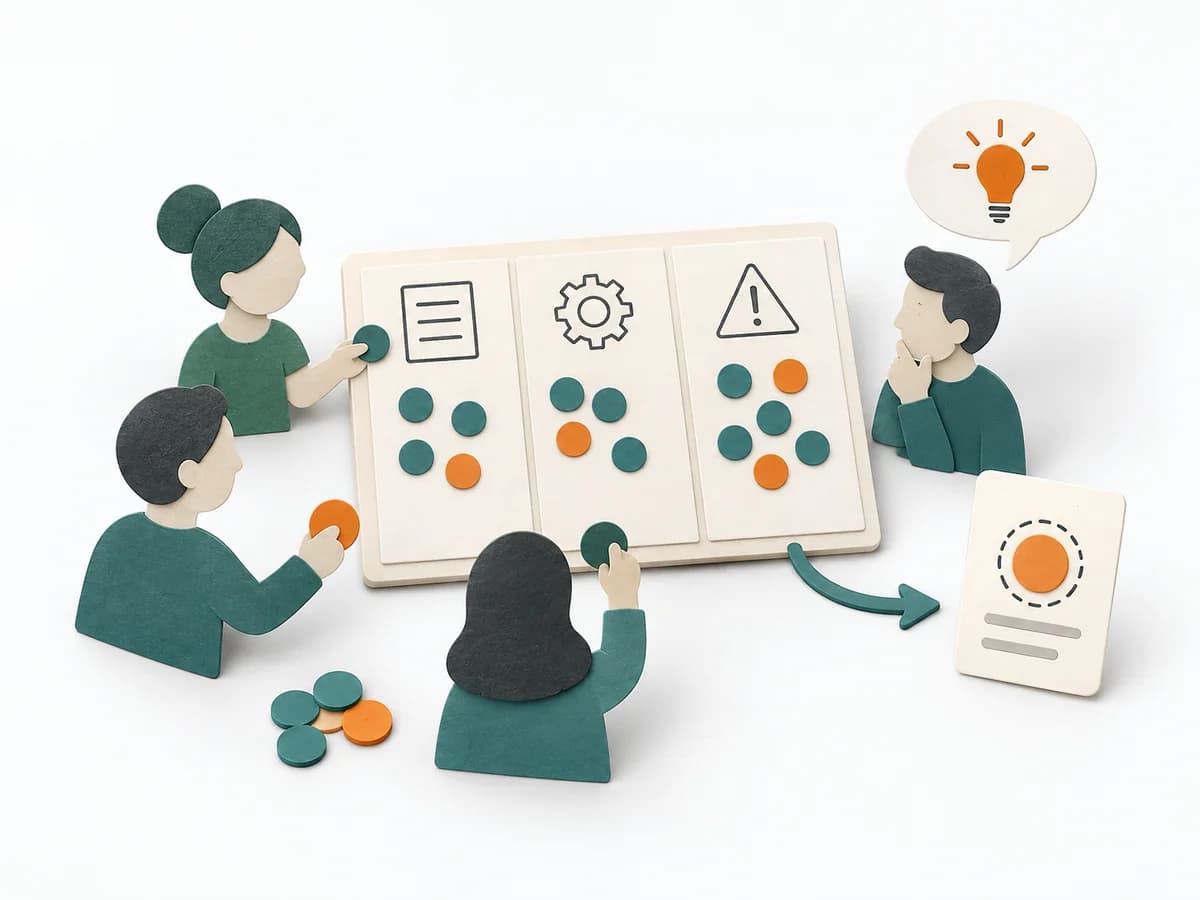 Facilitation Dot Estimation | 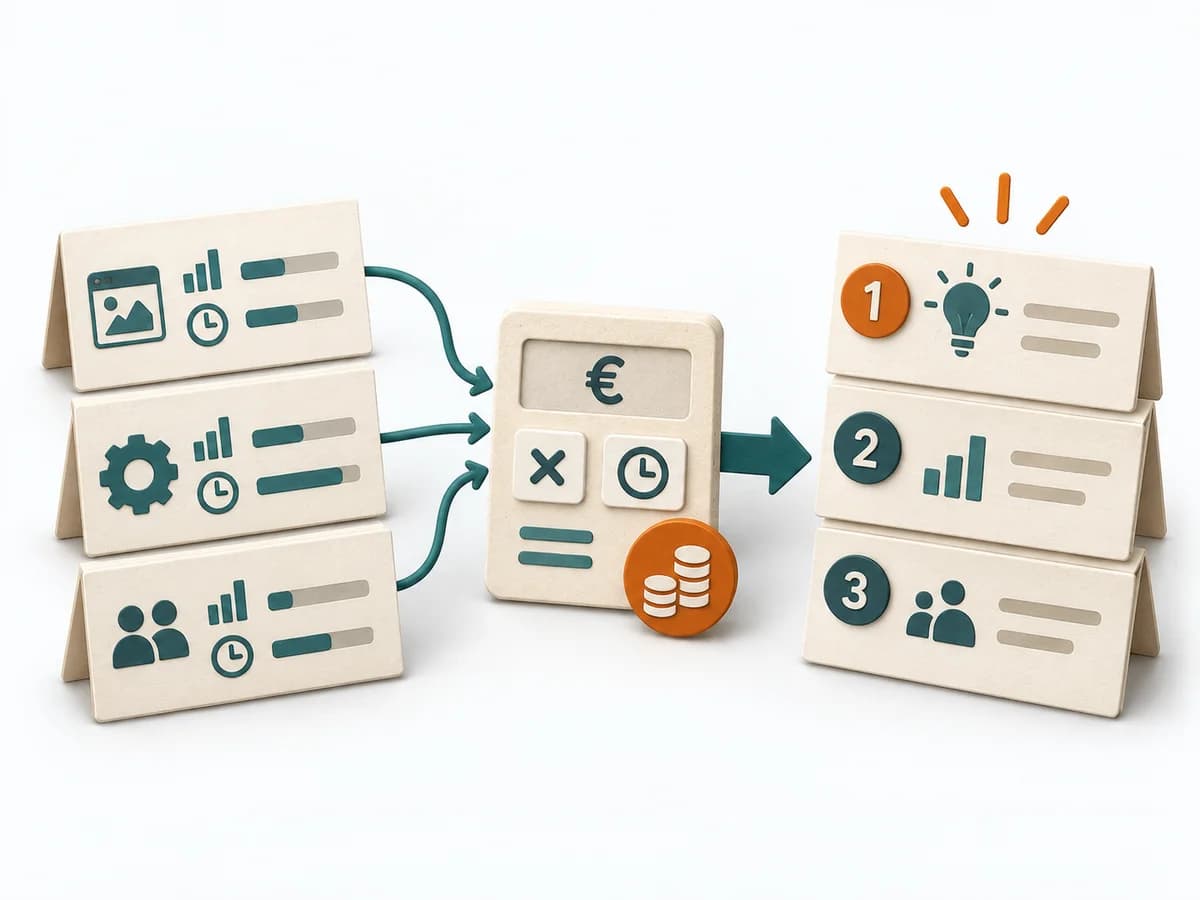 Delivery Cost of Delay | 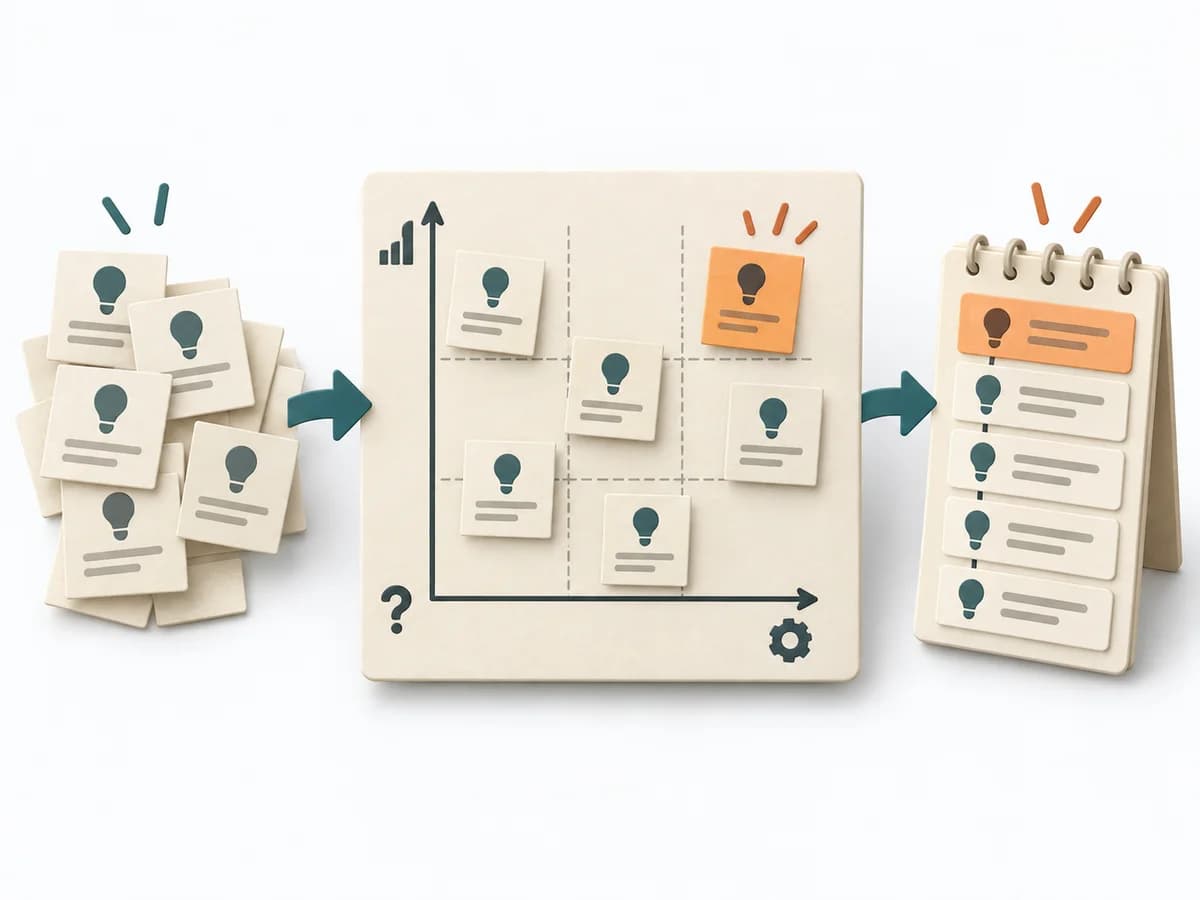 Product Discovery Hypothesis Prioritization Canvas | 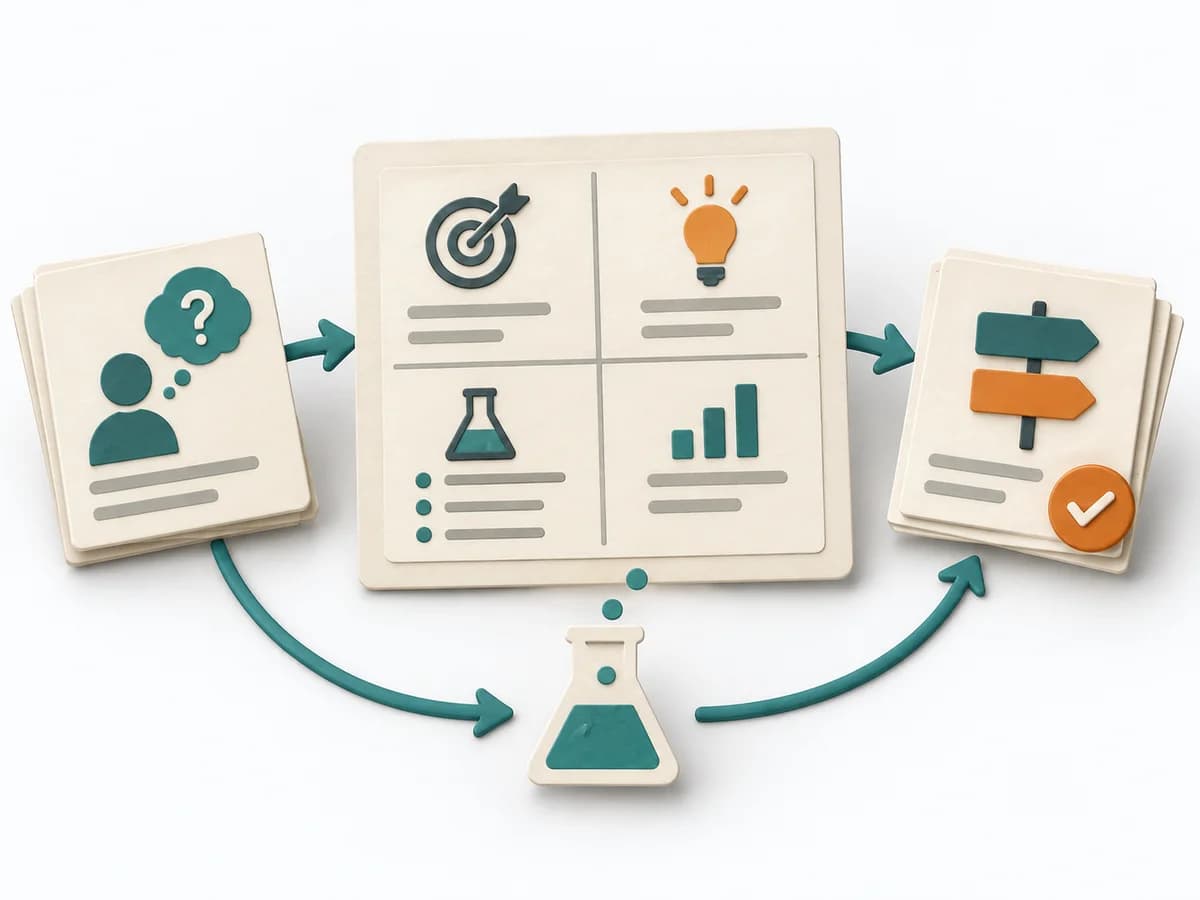 Product Discovery Experiment Canvas |
|---|---|---|---|---|
Purposedifferent | When size or effort can only be estimated roughly, Dot Estimation condenses the group's experience into a quick range. It turns individual contributions into a visible selection. The result is captured as an Effort Heatmap, Risk Signals, and Discussion Targets. | Helps clarify scope, order, and delivery flow in concrete terms. It makes work, constraints, and sequence manageable. The result is captured as a Cost of Delay table and prioritization sequence. | When many hypotheses compete for attention, it brings order to their learning sequence and importance. It separates problem, assumption, solution, and evidence. The result is captured as a prioritization canvas and a hypothesis backlog. | When experiments become unreadable after the fact, it arranges hypothesis, signal, and learning goal on a single canvas. It separates problem, assumption, solution, and evidence. The result is captured as a Completed Experiment Canvas and a Success Metric. |
Complexitydifferent | Low | High | Medium | Low |
Timedifferent | 5-20 min | 90-180 min | 60-90 min | 30-60 min |
Participantsdifferent | 3-20 | 3-8 | 3-8 | 1-5 |
Formatdifferent | Workshop | Workshop | Workshop | Workshop + async |
Outputdifferent | Effort Heatmap, Risk Signals, Discussion Targets | CoD Table, Prioritization Sequence | Prioritization Canvas, Hypothesis Backlog | Completed Experiment Canvas, Success Metric |
Tagsno overlap | EstimationEffortRisk | PrioritizationDeliveryEconomicsDecision | ExperimentsPrioritizationDiscoveryHypothesis | ExperimentsValidationDiscoveryHypothesis |