View methods side by side.
Choose up to four methods. Add them using the search and share the comparison by copying its link.
Selected:Domain StorytellingValue Stream MappingStandard Work AnalysisLASR (Lightweight Approach for Software Reviews)
| Criterion |  Knowledge Modeling Domain Storytelling | 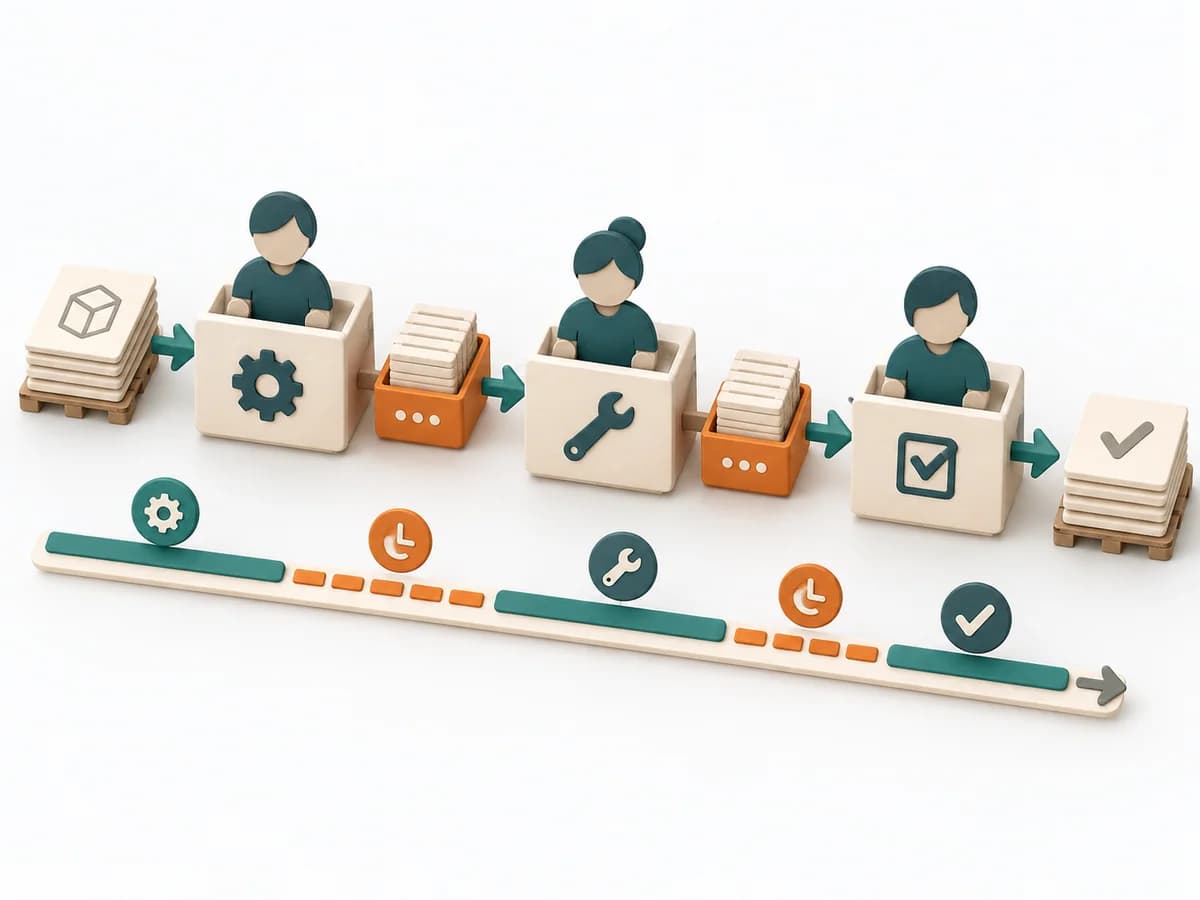 Delivery Value Stream Mapping | 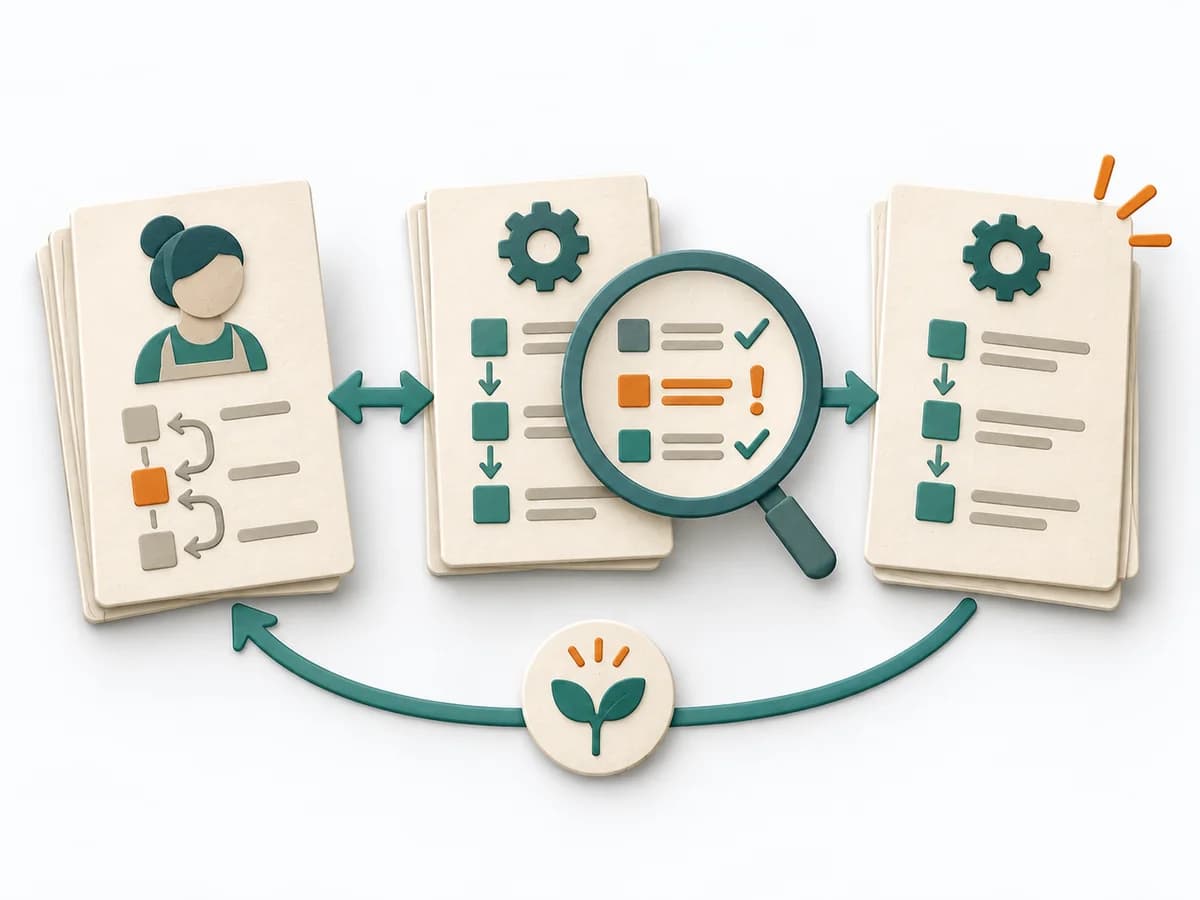 Operations Standard Work Analysis |  Architecture LASR (Lightweight Approach for Software Reviews) |
|---|---|---|---|---|
Purposedifferent | Domain Storytelling translates domain knowledge into a shared narrative of actors, objects, and workflows. It is especially useful when language, rules, and process understanding must be tightly connected. | When delivery work dissolves into wait times, handoffs, and hidden effort, Value Stream Mapping makes the actual flow visible. The method exposes bottlenecks, idle time, and feedback loops so lead time and improvement levers become tangible. | When the same task is done differently depending on the person, the method exposes the reliable core. It creates comparability without unnecessarily choking off needed latitude. | LASR helps development teams identify where their software falls short of important quality goals and which improvements to consider. A small group with existing system knowledge can make an initial assessment and investigate open questions in more detail. |
Complexitydifferent | Low | Medium | Medium | Medium |
Timedifferent | 1-2 h | 1-3 h | 1-3 h | 3–4 h for initial assessment; preparation and deeper analysis additional |
Participantsdifferent | 2-8 | 4-10 | 2-6 | 1 or a small team; particularly suitable for 3–4 people |
Formatdifferent | Workshop | Workshop | Workshop | Workshop + async |
Outputdifferent | Domain Story, Glossary Notes, Process Narrative | Current-state map, Future-state map, Bottleneck list | Standard Work Sheet, Deviation List, Improved Standard, Training Needs | Lean Mission Statement describing the software’s purpose, Prioritized quality goals and evaluation criteria, Risks and estimated gaps against quality goals, More closely examined findings and open checks |
Tagsno overlap | KnowledgeDomain-Driven DesignProcess | LeanFlowWasteDelivery | LeanProcessQuality | ArchitectureQualityRiskAssessmentLean |