View methods side by side.
Choose up to four methods. Add them using the search and share the comparison by copying its link.
| Criterion |  Knowledge Modeling Domain Storytelling | 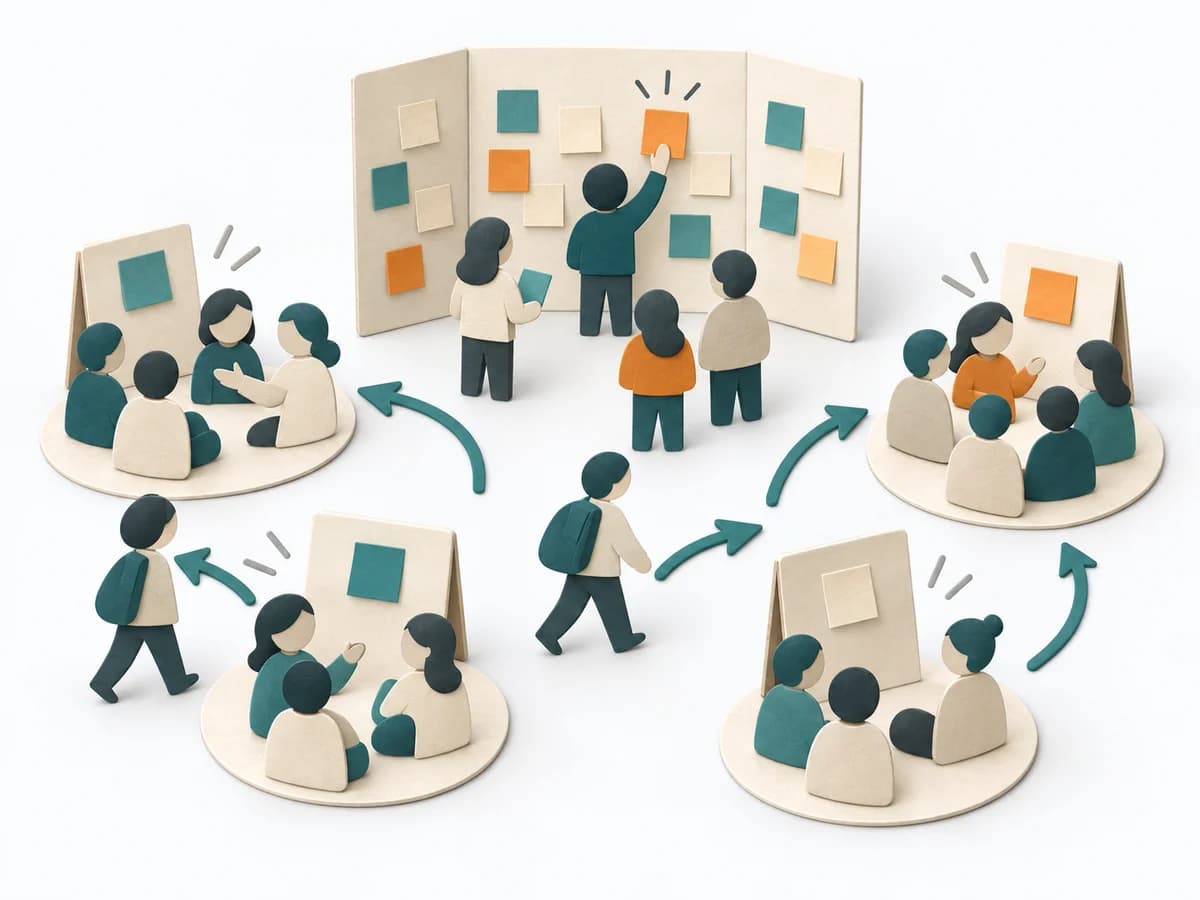 Facilitation Open Space Technology | 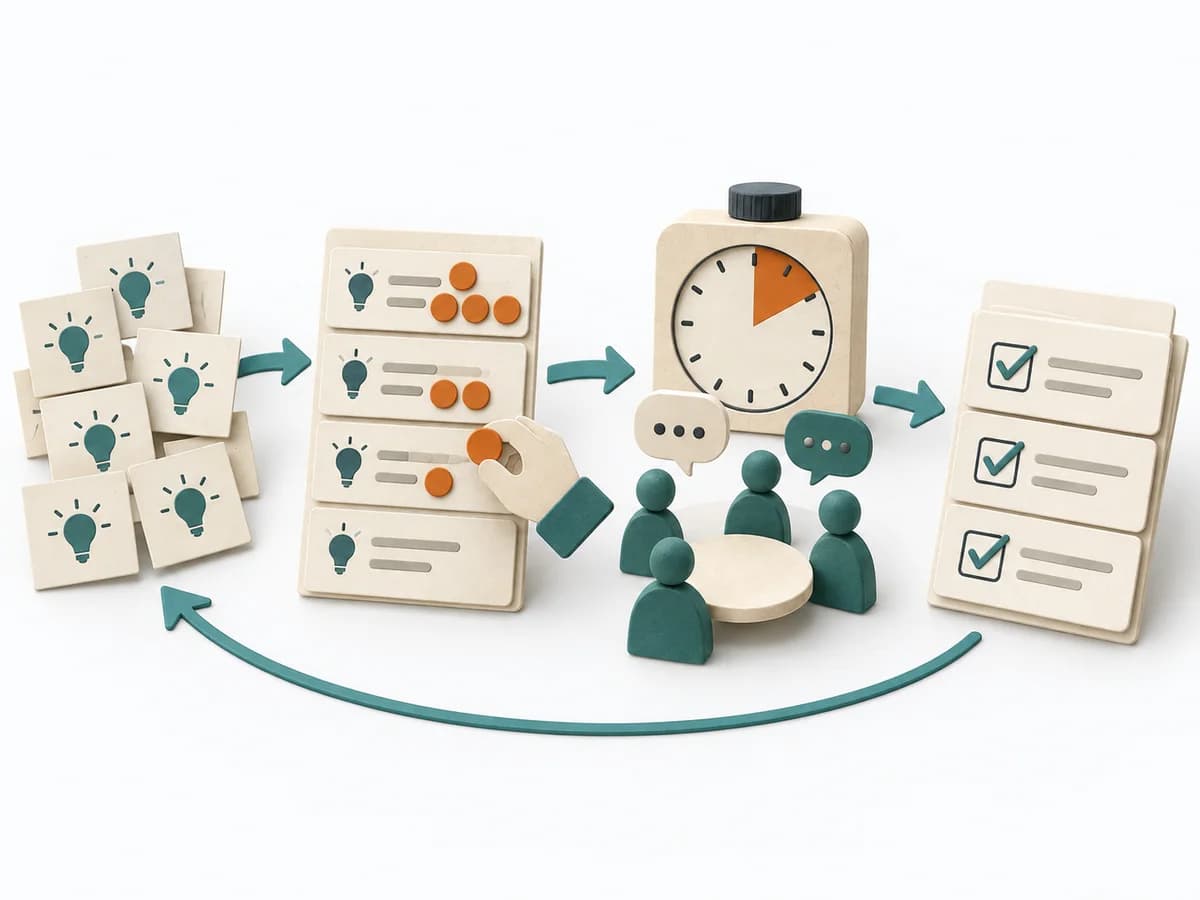 Facilitation Lean Coffee | 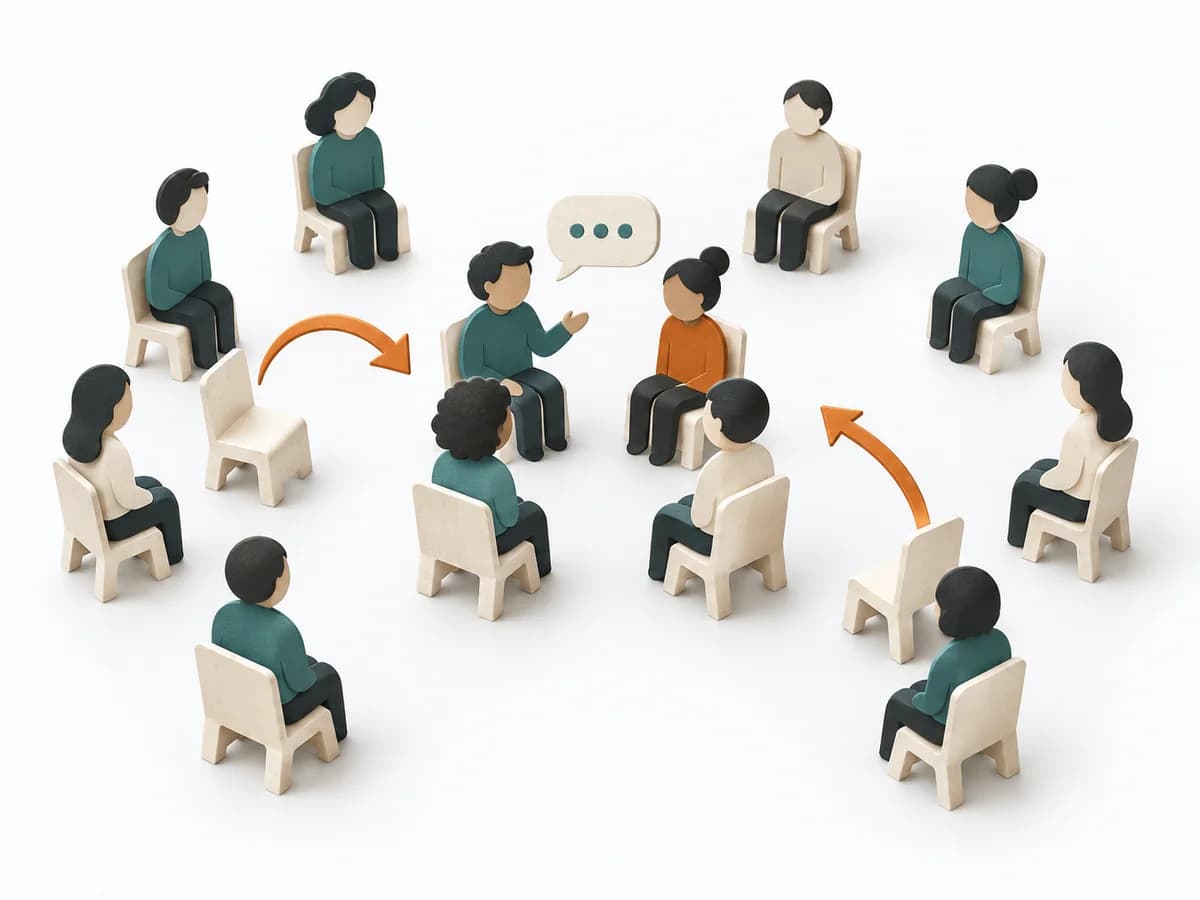 Facilitation Fishbowl Discussion |
|---|---|---|---|---|
Purposedifferent | Domain Storytelling translates domain knowledge into a shared narrative of actors, objects, and workflows. It is especially useful when language, rules, and process understanding must be tightly connected. | When a complex topic does not yet have a fitting agenda, Open Space Technology hands topic ownership back to the participants. The format suits questions that only move forward when real interest determines the order. | When a group without a fixed agenda needs to get into useful conversations quickly, Lean Coffee structures the start around interests rather than a presentation. The group itself negotiates which topics get time first and which wait. | When a controversial topic needs depth and discipline at the same time, Fishbowl Discussion makes the structure of the conversation transparent. The format keeps the core small enough for real dialogue and open enough for controlled turnover. |
Complexitydifferent | Low | High | Low | Medium |
Timedifferent | 1-2 h | 0.5-2 Tage | 30-90 min | 45-90 min |
Participantsdifferent | 2-8 | 20-500+ | 3-20 | 8-80 |
Formatsame | Workshop | Workshop | Workshop | Workshop |
Outputdifferent | Domain Story, Glossary Notes, Process Narrative | Session Marketplace, Proceedings, Action Topics | Prioritized Topics, Discussion Notes, Action Items | Discussion Insights, Observed Tensions, Follow-up Questions |
Tagsno overlap | KnowledgeDomain-Driven DesignProcess | FacilitationLarge groupAutonomy | FacilitationAutonomyDialogue | FacilitationDialogueLarge group |