View methods side by side.
Choose up to four methods. Add them using the search and share the comparison by copying its link.
| Criterion |  Knowledge Modeling Domain Storytelling | 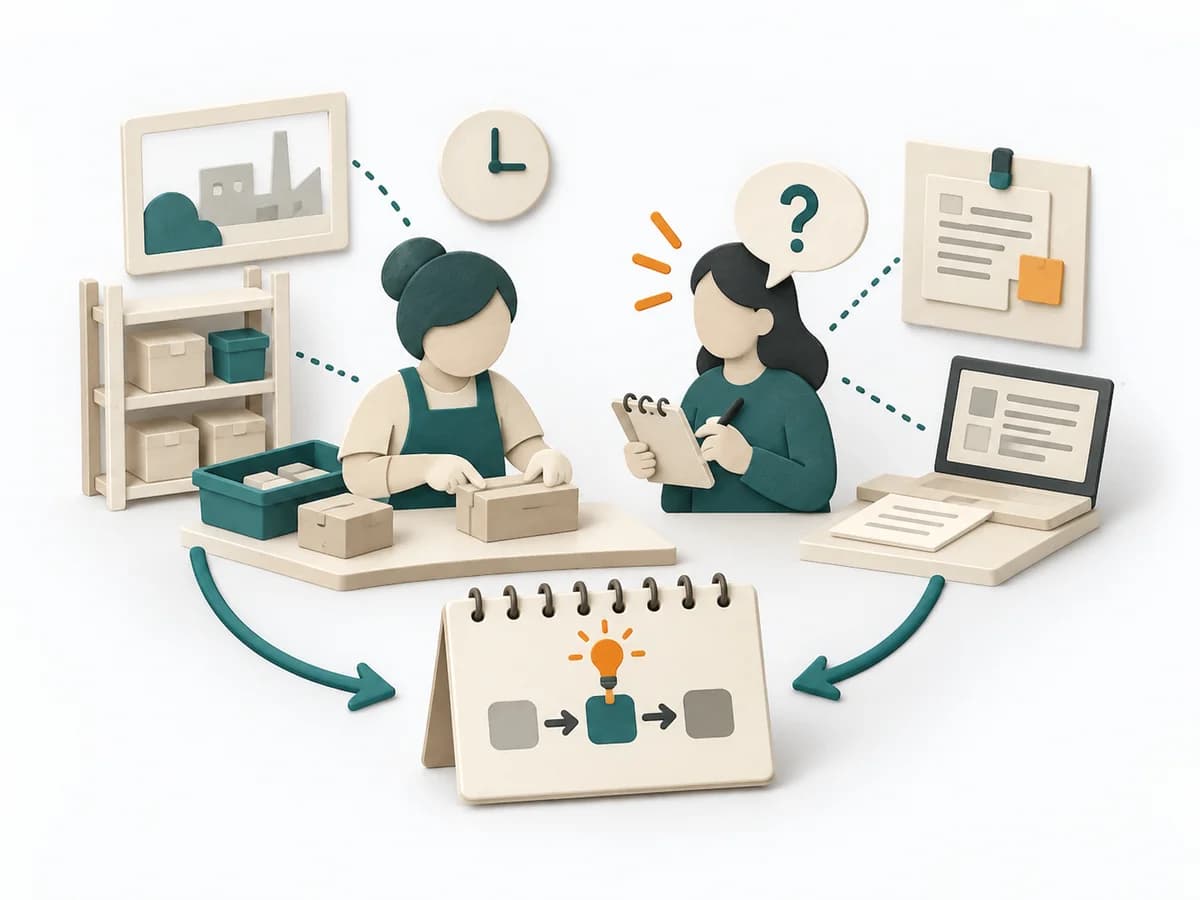 UX Research Contextual Inquiry |  Facilitation Stakeholder Mapping | 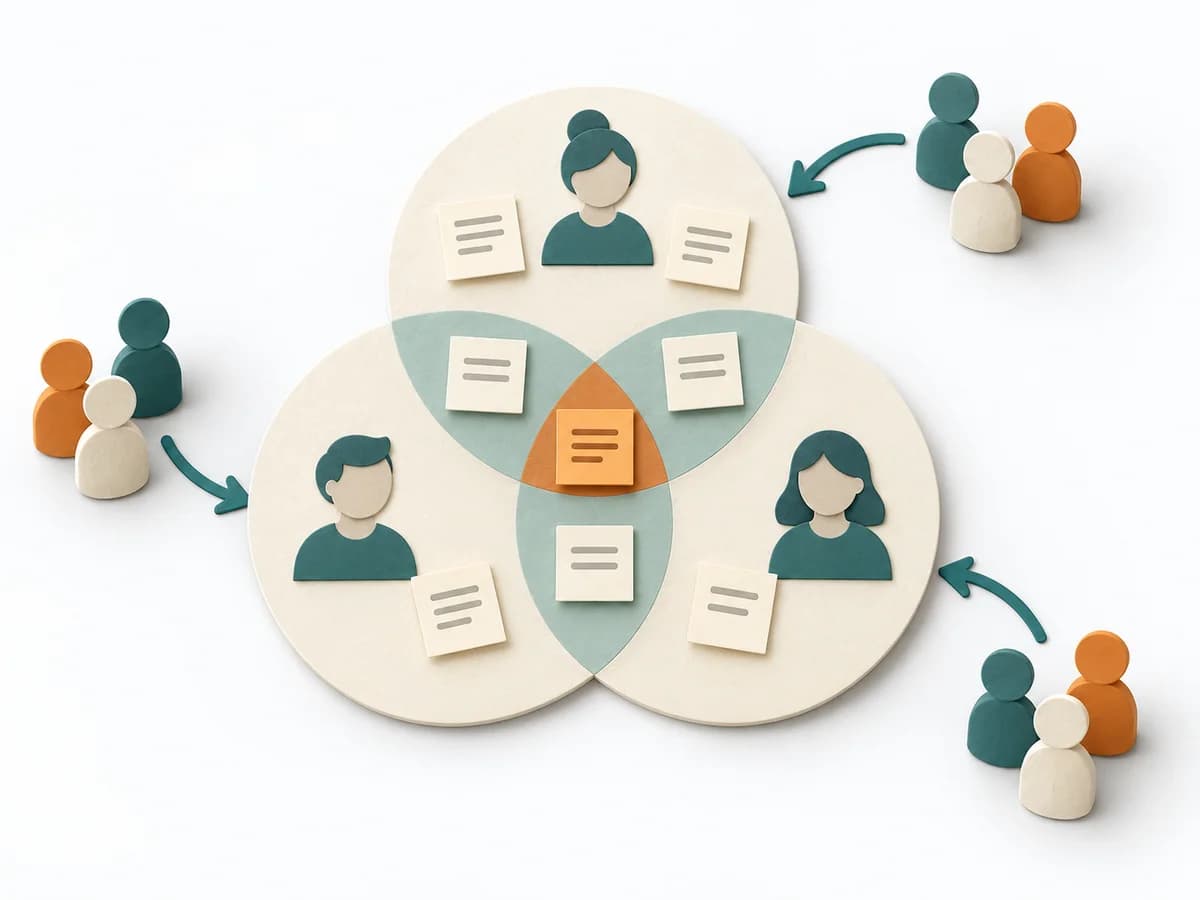 Facilitation 3-Circle Venn Diagram |
|---|---|---|---|---|
Purposedifferent | Domain Storytelling translates domain knowledge into a shared narrative of actors, objects, and workflows. It is especially useful when language, rules, and process understanding must be tightly connected. | When work processes are known only from accounts and the real context stays hidden, Contextual Inquiry makes behavior at the workplace visible. Observation and follow-up questions together show how people actually work, get interrupted, and improvise. | When an initiative depends on many people, interests, and power dynamics, Stakeholder Mapping systematically orders the environment. It shows who influences, who is affected, and where relationship management or safeguarding matters first. | When three perspectives matter at the same time, a Three-Circle Venn Diagram shows the overlaps and remainders precisely. It makes visible where shared effect arises and where only a partial perspective applies. |
Complexitydifferent | Low | Medium | Low | Low |
Timedifferent | 1-2 h | 1-3 Wochen | 60–90 min | 15-45 min |
Participantsdifferent | 2-8 | 4-12 Beobachtungen | 2-8 | 2-8 |
Formatdifferent | Workshop | Workshop + async | Workshop + async | Workshop + async |
Outputdifferent | Domain Story, Glossary Notes, Process Narrative | Field Notes, Workflow Insights, Pain Points | Stakeholder Map, Engagement Plan, Risk Notes | Venn Diagram, Overlap Notes, Differentiators |
Tagsno overlap | KnowledgeDomain-Driven DesignProcess | UX researchObservationContext | StakeholdersAlignmentFacilitationChange | ComparisonFacilitationAlignment |