View methods side by side.
Choose up to four methods. Add them using the search and share the comparison by copying its link.
| Criterion | 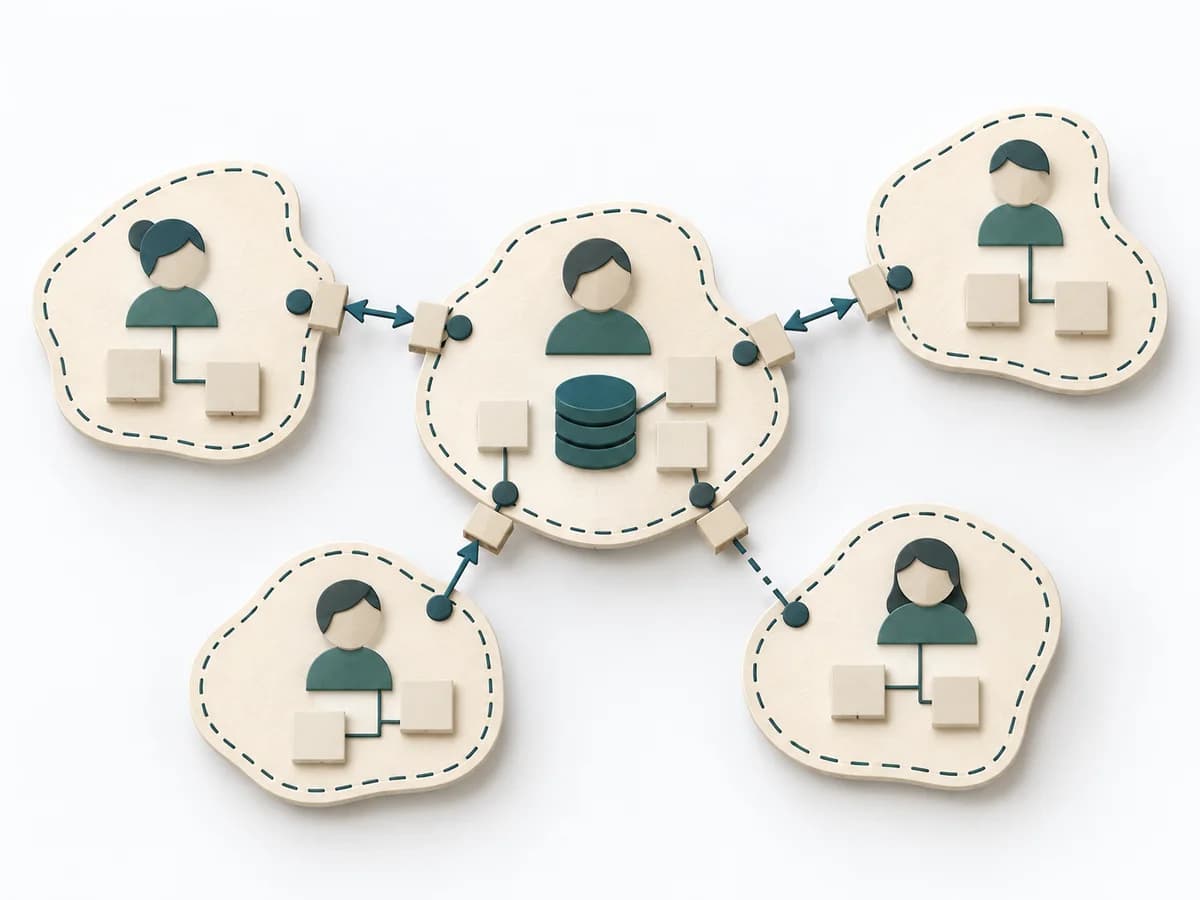 Domain Modeling Domain Context Map | 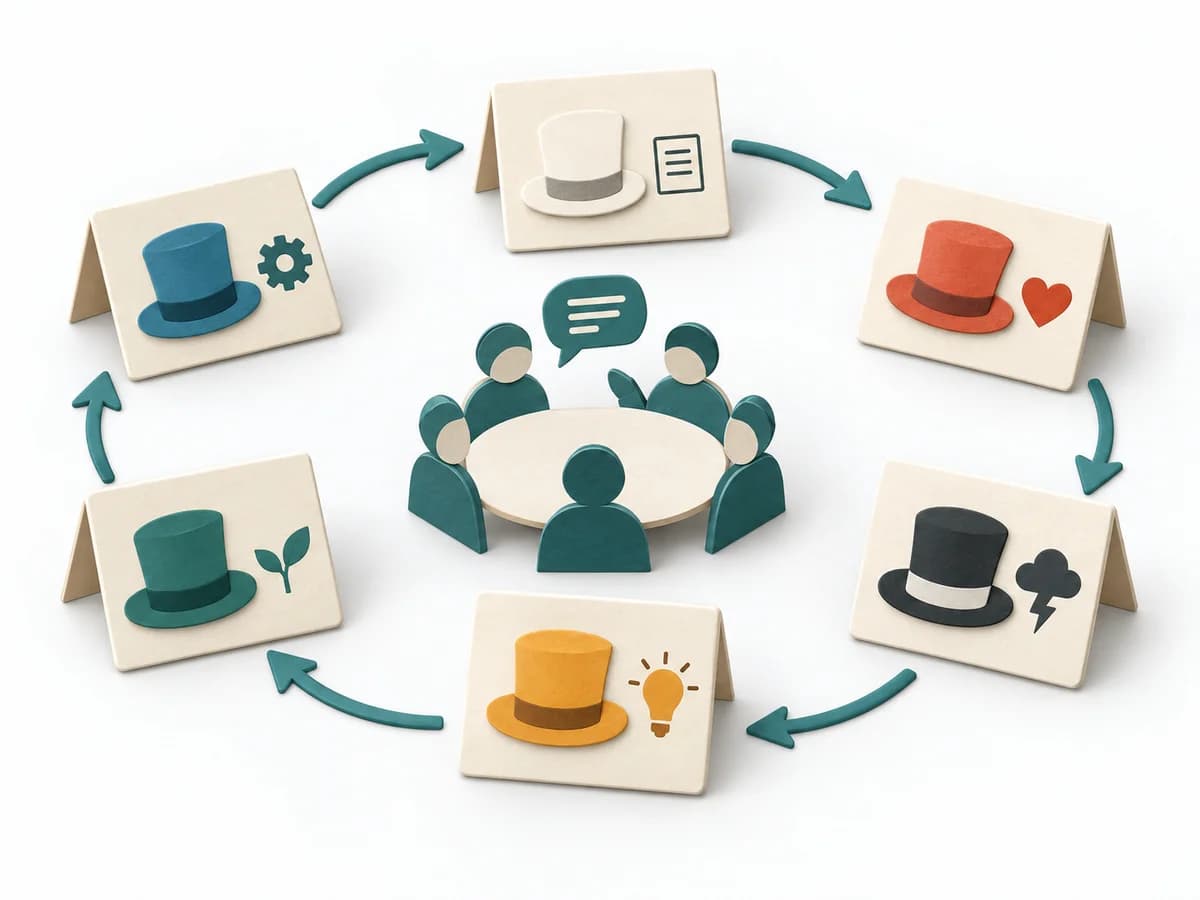 Facilitation Six Thinking Hats |  Domain Modeling Bounded Context Canvas |  Domain Modeling Context Map |
|---|---|---|---|---|
Purposedifferent | When a domain model and its associated contexts need to be thought through together, it creates a shared overview. It connects the business view and organizational boundary into a readable whole. | When a topic gets stuck too quickly in the same thinking mode, Six Thinking Hats deliberately separates the perspectives. This means facts, risks, creativity, and emotional signals get worked through one after another instead of mixed together. | When a business context is still loosely outlined, it shapes language, responsibility, and integration space. It clarifies what belongs together and where a boundary needs to hold. | When several contexts need to talk to each other, it makes their relationships and dependencies legible. It helps sort integration pressure and responsibilities across system boundaries. |
Complexitysame | Medium | Medium | Medium | Medium |
Timedifferent | 1-3 h | 45-90 min | 1-3 h | 1-3 h |
Participantsdifferent | 3-10 | 4-12 | 3-8 | 2-8 |
Formatdifferent | Workshop | Workshop | Workshop + async | Workshop + async |
Outputdifferent | Domain Context Map, Boundary Notes, Ownership Map | Perspective Notes, Decision Inputs, Action Items | Context Canvas, Glossary, Integration Notes | Context Map, Integration Patterns, Boundary Notes |
Tagsno overlap | Domain-Driven DesignContextBoundaries | FacilitationOptionsDecision | Domain-Driven DesignBoundariesModeling | Domain-Driven DesignBoundariesStrategy |