View methods side by side.
Choose up to four methods. Add them using the search and share the comparison by copying its link.
| Criterion | 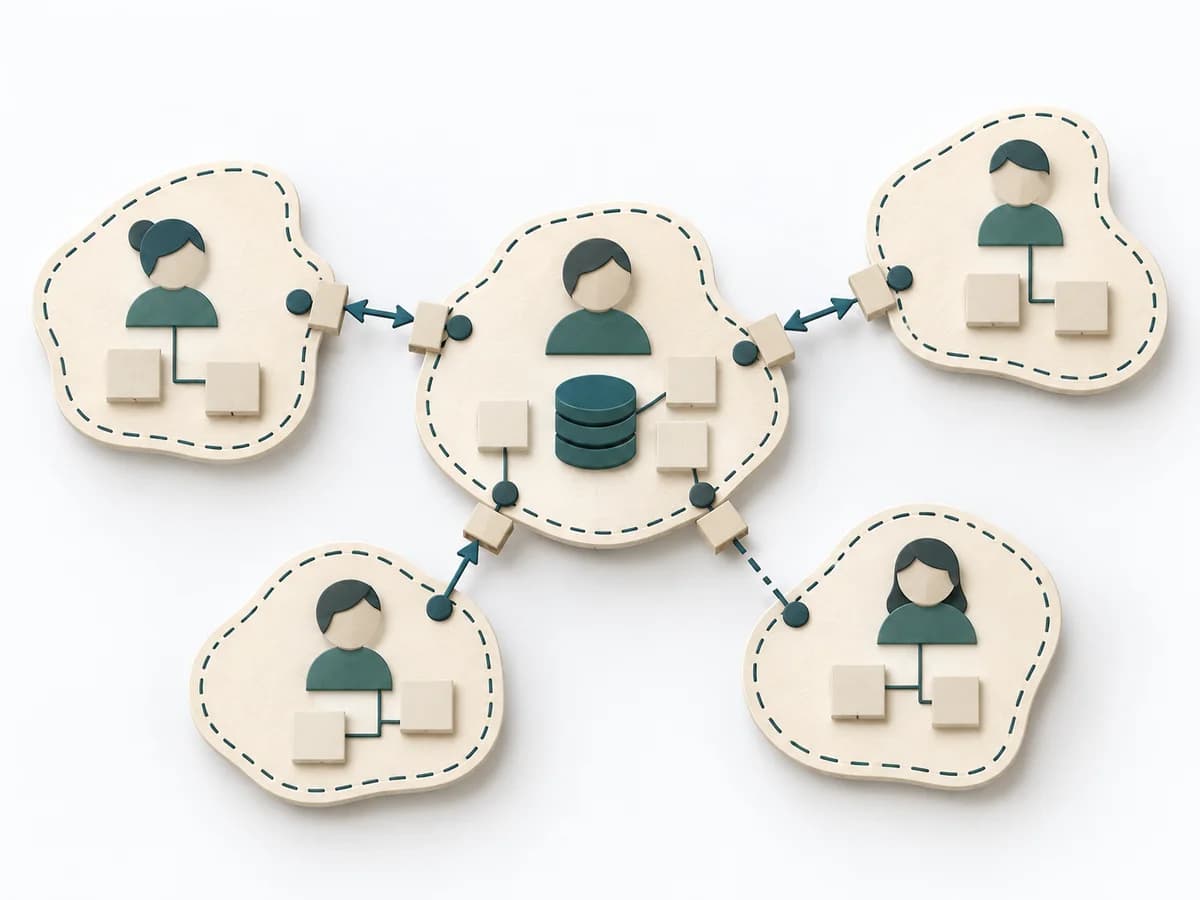 Domain Modeling Domain Context Map |  Business Strategy Scenario Planning | 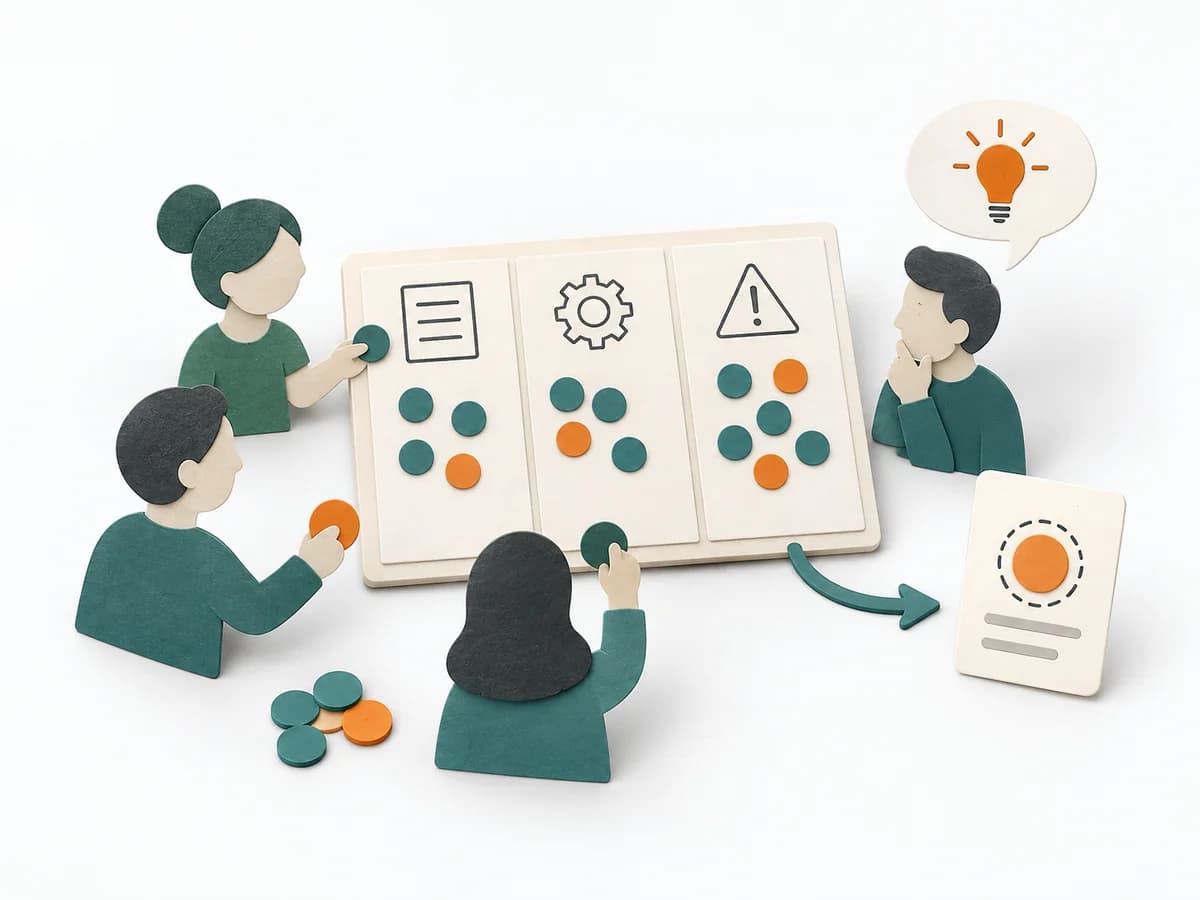 Facilitation Dot Estimation |  Domain Modeling Bounded Context Canvas |
|---|---|---|---|---|
Purposedifferent | When a domain model and its associated contexts need to be thought through together, it creates a shared overview. It connects the business view and organizational boundary into a readable whole. | Scenario Planning opens the view to several plausible futures instead of a single forecast. The method protects strategies from depending on too narrow an expected path. | When size or effort can only be estimated roughly, Dot Estimation condenses the group's experience into a quick range. It turns individual contributions into a visible selection. The result is captured as an Effort Heatmap, Risk Signals, and Discussion Targets. | When a business context is still loosely outlined, it shapes language, responsibility, and integration space. It clarifies what belongs together and where a boundary needs to hold. |
Complexitydifferent | Medium | High | Low | Medium |
Timedifferent | 1-3 h | 0.5-2 Tage | 5-20 min | 1-3 h |
Participantsdifferent | 3-10 | 4-12 | 3-20 | 3-8 |
Formatdifferent | Workshop | Workshop | Workshop | Workshop + async |
Outputdifferent | Domain Context Map, Boundary Notes, Ownership Map | Scenario Set, Strategic Implications, Robust Options | Effort Heatmap, Risk Signals, Discussion Targets | Context Canvas, Glossary, Integration Notes |
Tagsno overlap | Domain-Driven DesignContextBoundaries | StrategyUncertaintyPlanning | EstimationEffortRisk | Domain-Driven DesignBoundariesModeling |