View methods side by side.
Choose up to four methods. Add them using the search and share the comparison by copying its link.
| Criterion | 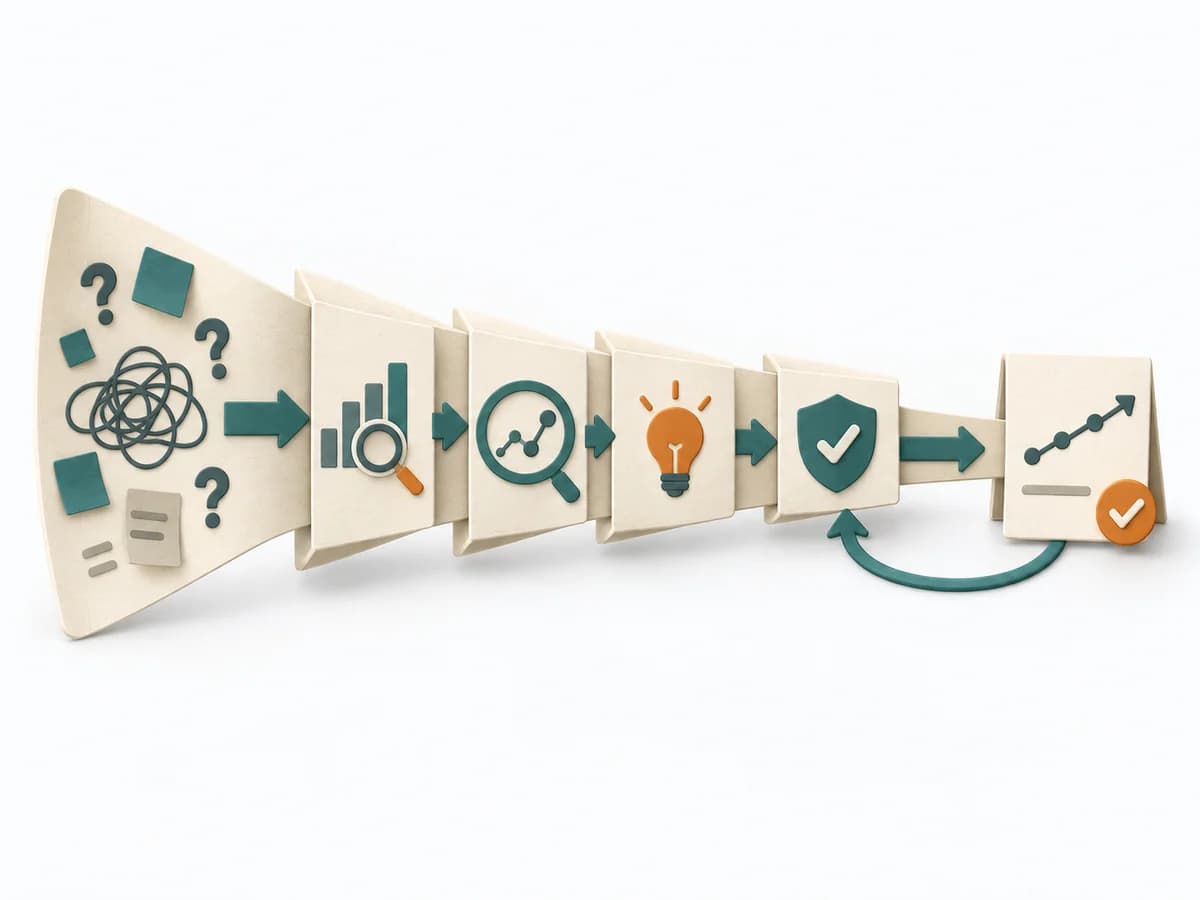 Operations DMAIC | 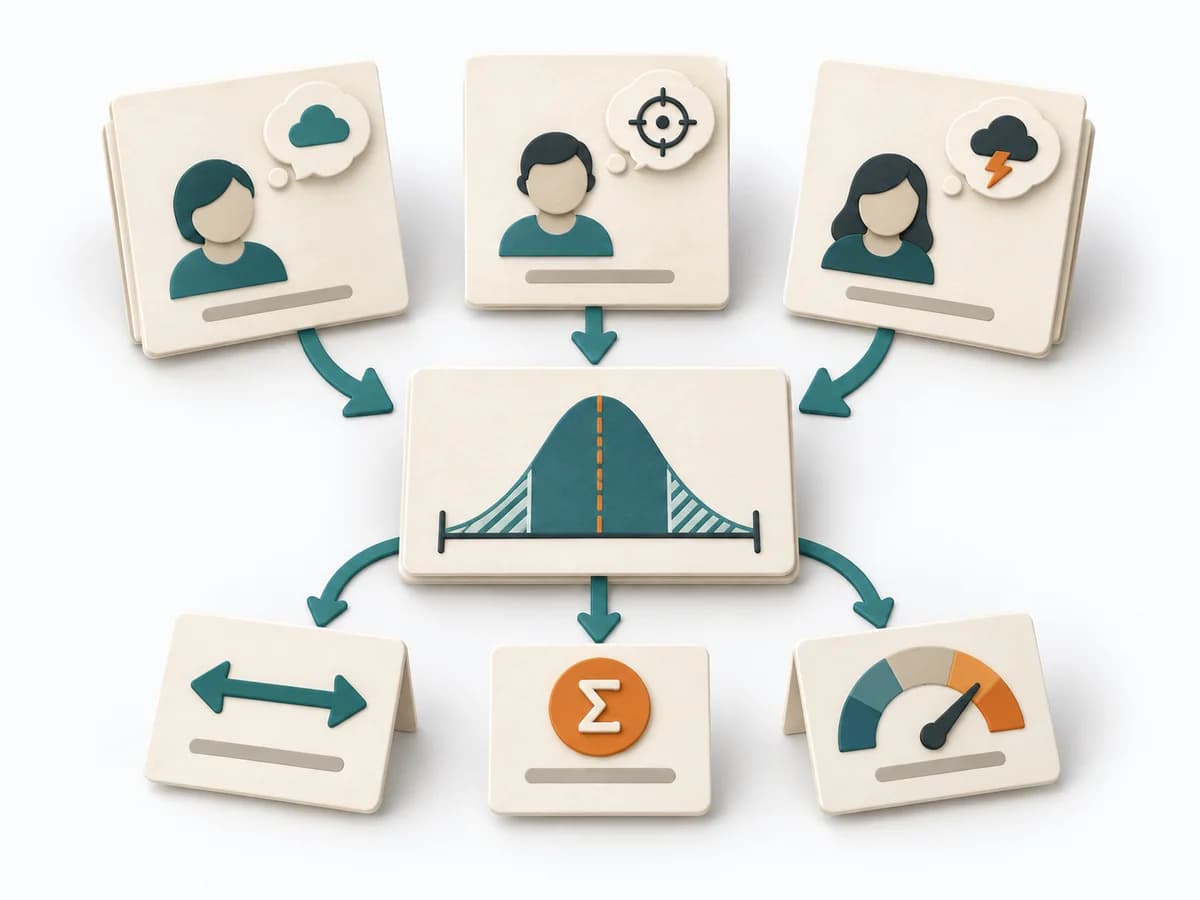 Decision Making Three-Point Estimation | 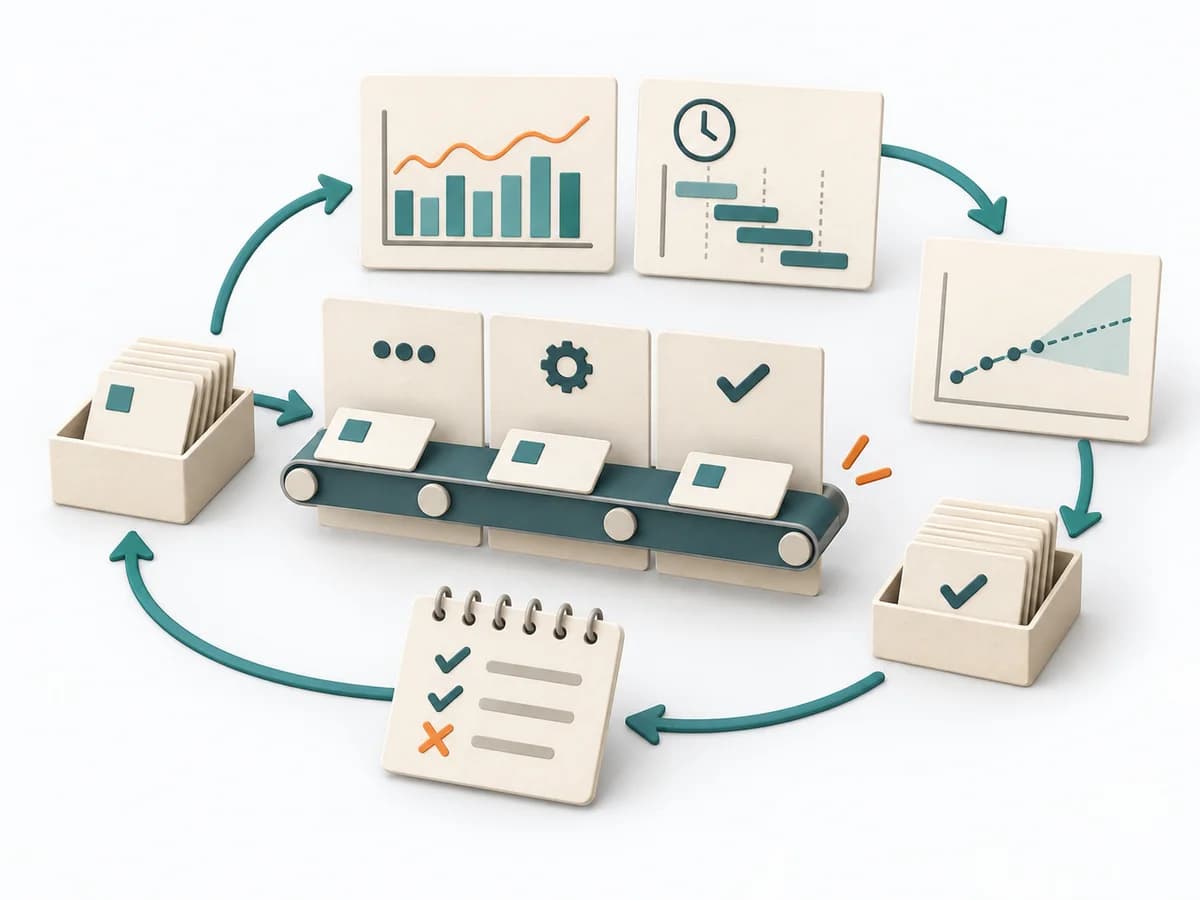 Agile NoEstimates | 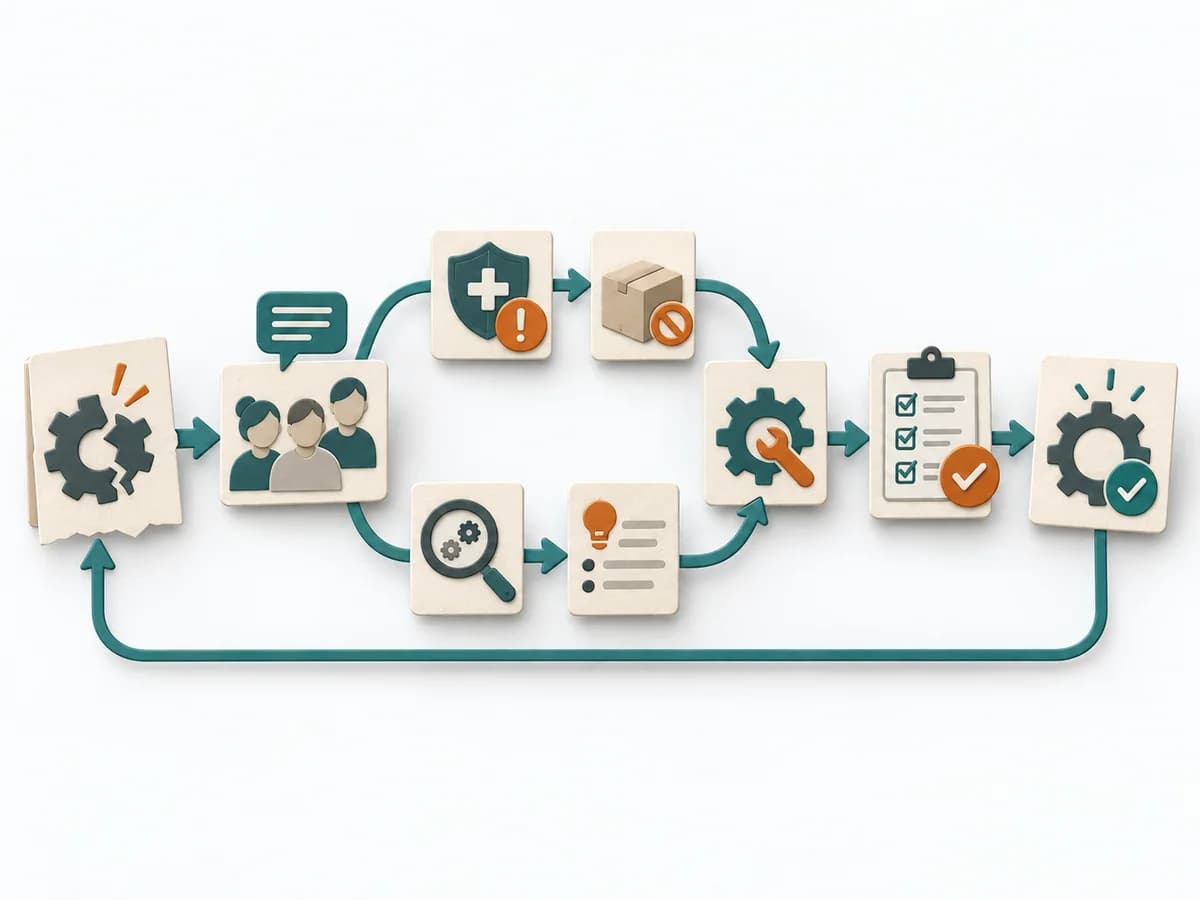 Operations 8D Problem Solving |
|---|---|---|---|---|
Purposedifferent | For a process problem with fluctuating performance, the method brings analysis and improvement into a disciplined sequence. It creates a framework in which numbers, causes, and control come together. | A single estimate for effort, time, or risk often looks too smooth for the real uncertainty behind it. It separates options, evaluation criteria, and open risks. The result is captured as a Three-Point Estimate, Risk Range, and Assumption Notes. | When estimating slows a team down more than it helps, it shifts the focus to flow, small slices, and real lead time. It sorts work by value, risk, and delivery ability. The result is captured as Throughput Data, Flow Forecast, and Slicing Rules. | For an acute quality or delivery problem, the method structures immediate protection and root cause work together. It keeps the situation stable while the actual cause is investigated cleanly. |
Complexitydifferent | High | Medium | Medium | High |
Timedifferent | 2-12 Wochen | 10-30 min je Item | laufend | 1-6 Wochen |
Participantsdifferent | 3-10 | 1-8 | 2-12 | 4-10 |
Formatsame | Workshop + async | Workshop + async | Workshop + async | Workshop + async |
Outputdifferent | Project Charter, Measurement Plan, Cause Analysis, Control Plan | Three-Point Estimate, Risk Range, Assumption Notes | Throughput Data, Flow Forecast, Slicing Rules | 8D Report, Containment Plan, Root Cause Evidence, Corrective Action Plan |
Tagsno overlap | Continuous improvementQualityProcess improvement | EstimationUncertaintyForecasting | EstimationForecastingFlow | QualityProblem solvingRoot cause |