View methods side by side.
Choose up to four methods. Add them using the search and share the comparison by copying its link.
| Criterion |  Operations DMAIC |  Facilitation Dot Voting |  Facilitation Mind Mapping | 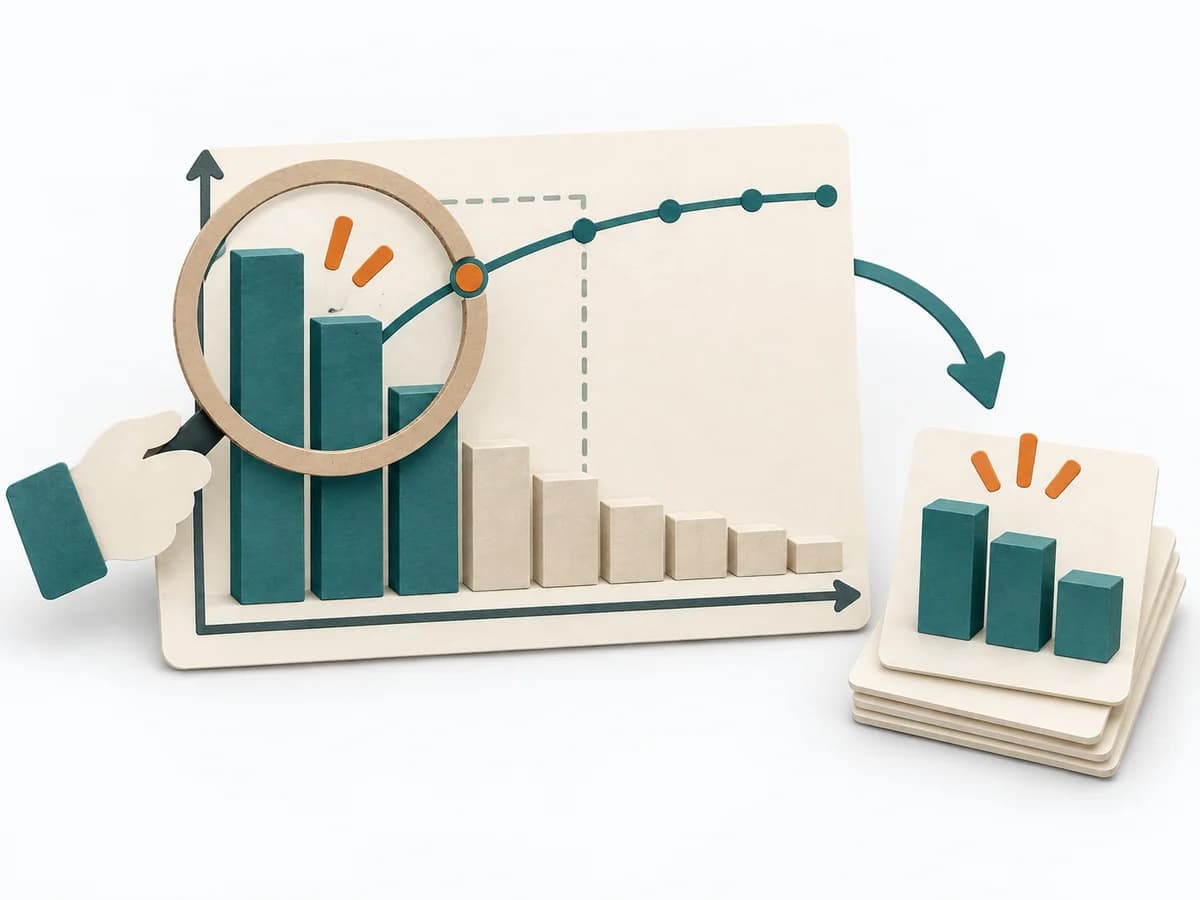 Decision Making Pareto Analysis |
|---|---|---|---|---|
Purposedifferent | For a process problem with fluctuating performance, the method brings analysis and improvement into a disciplined sequence. It creates a framework in which numbers, causes, and control come together. | When a workshop has produced too many options and the group needs to condense quickly, dot voting makes preferences visible in a short time. It bundles individual votes into a solid signal for the next selection. | When a topic is still unclear and too many thoughts surface at once, Mind Mapping creates an open surface for ordering them. It makes connections, subtopics, and starting points visible without fixing them too early. | In many problem situations, effect is distributed unequally across many causes. A Pareto Analysis separates the few drivers with high leverage from the long remainder and focuses attention on what measurably moves the needle. |
Complexitydifferent | High | Low | Low | Low |
Timedifferent | 2-12 Wochen | 5-15 min | 15-45 min | 30-60 min |
Participantsdifferent | 3-10 | 3-20 | 1-10 | 1-6 |
Formatdifferent | Workshop + async | Workshop | Workshop + async | Workshop + async |
Outputdifferent | Project Charter, Measurement Plan, Cause Analysis, Control Plan | Ranked list, Consensus signal, Shortlist | Mind Map, Topic Clusters, Open Questions | Pareto Chart, Top Causes, Focus List |
Tagsno overlap | Continuous improvementQualityProcess improvement | FacilitationVotingConsensusPrioritization | BrainstormingIdeasMappingStructureFacilitation | PrioritizationQualityFocusRoot cause |