View methods side by side.
Choose up to four methods. Add them using the search and share the comparison by copying its link.
| Criterion |  Product Strategy DIBB |  Decision Making Force Field Analysis | 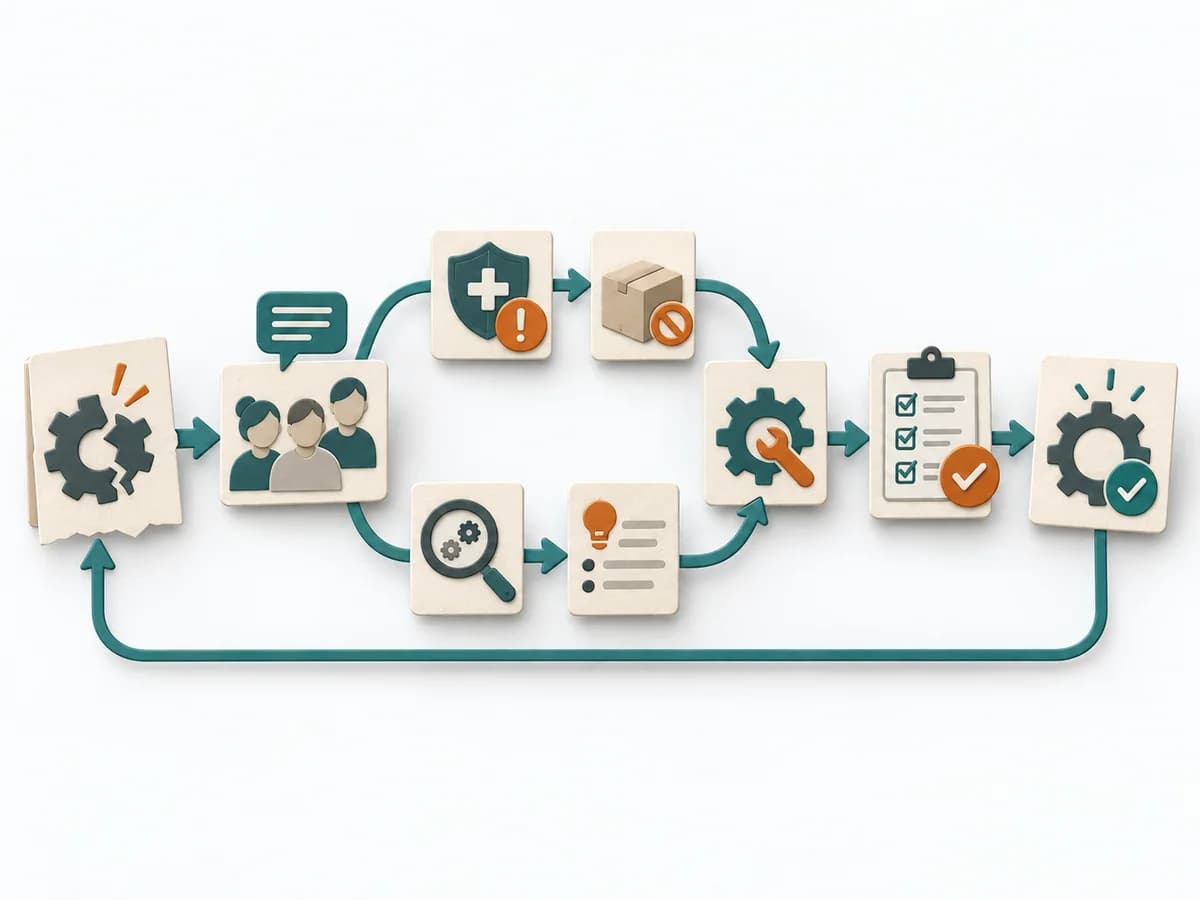 Operations 8D Problem Solving | 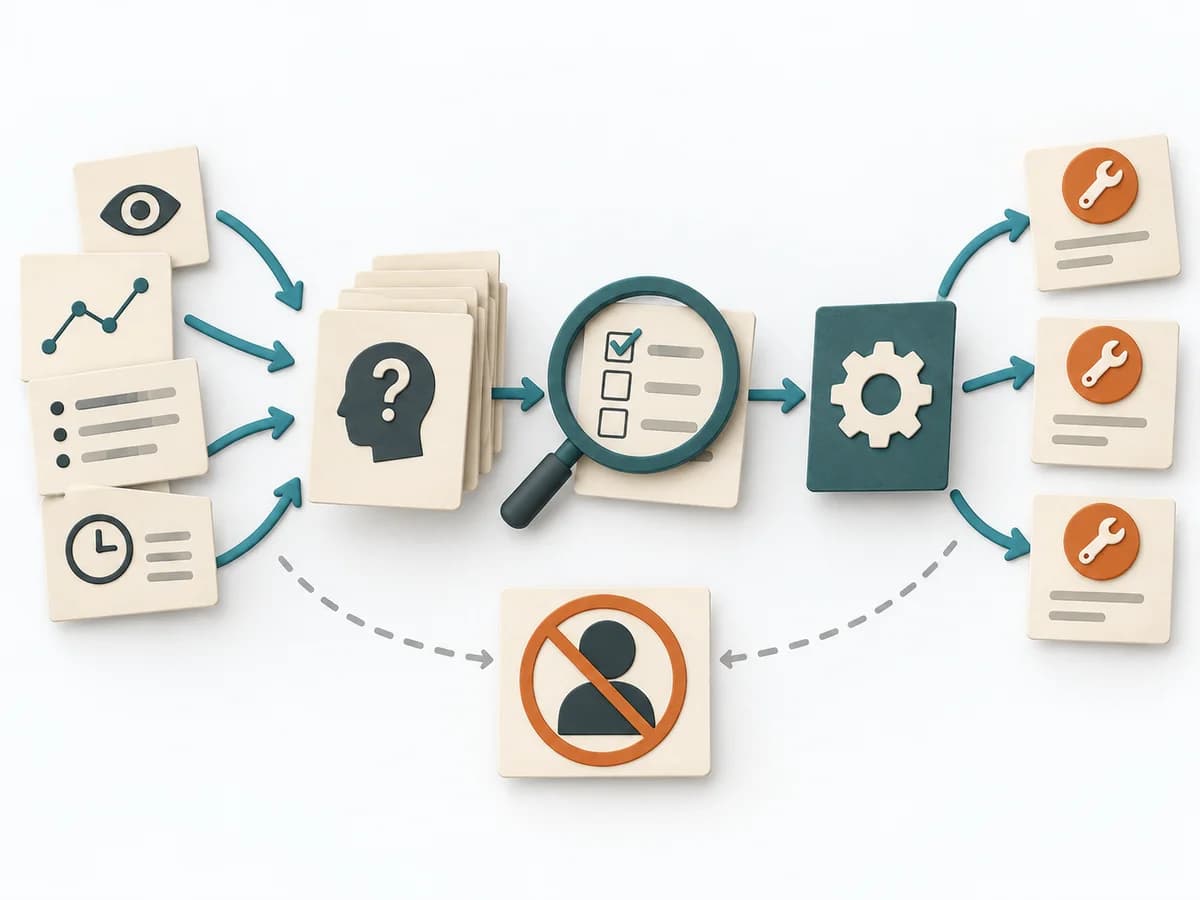 Operations Root Cause Analysis |
|---|---|---|---|---|
Purposedifferent | DIBB helps clarify target groups, value, goals, and priorities by making the logic behind a decision explicit. It captures results as a DIBB document, belief list, bet list, and learning report. | In change initiatives, supporting and restraining forces sit at the table at the same time. Force Field Analysis makes these tensions explicit and shows where change can be pushed forward by strengthening or relieving. | For an acute quality or delivery problem, the method structures immediate protection and root cause work together. It keeps the situation stable while the actual cause is investigated cleanly. | When a problem keeps recurring and the cause stays unclear, the method exposes the underlying mechanism. It separates symptom, guess, and robust explanation from one another. |
Complexitydifferent | Low | Low | High | Medium |
Timedifferent | 1-2 h | 45-90 min | 1-6 Wochen | 1-4 h |
Participantsdifferent | 2-8 | 3-12 | 4-10 | 3-8 |
Formatdifferent | Workshop + async | Workshop | Workshop + async | Workshop + async |
Outputdifferent | DIBB document, Belief list, Bet list, Learning report | Force Field Map, Change Levers, Risk Notes | 8D Report, Containment Plan, Root Cause Evidence, Corrective Action Plan | Problem Statement, Cause Hypotheses, Confirmed Causes, Action Plan |
Tagsno overlap | StrategyDecisionAssumptionsHypothesis | ChangeDecisionStrategy | QualityProblem solvingRoot cause | Root causeProblem solvingQualityIncident |