View methods side by side.
Choose up to four methods. Add them using the search and share the comparison by copying its link.
| Criterion |  Product Strategy DIBB | 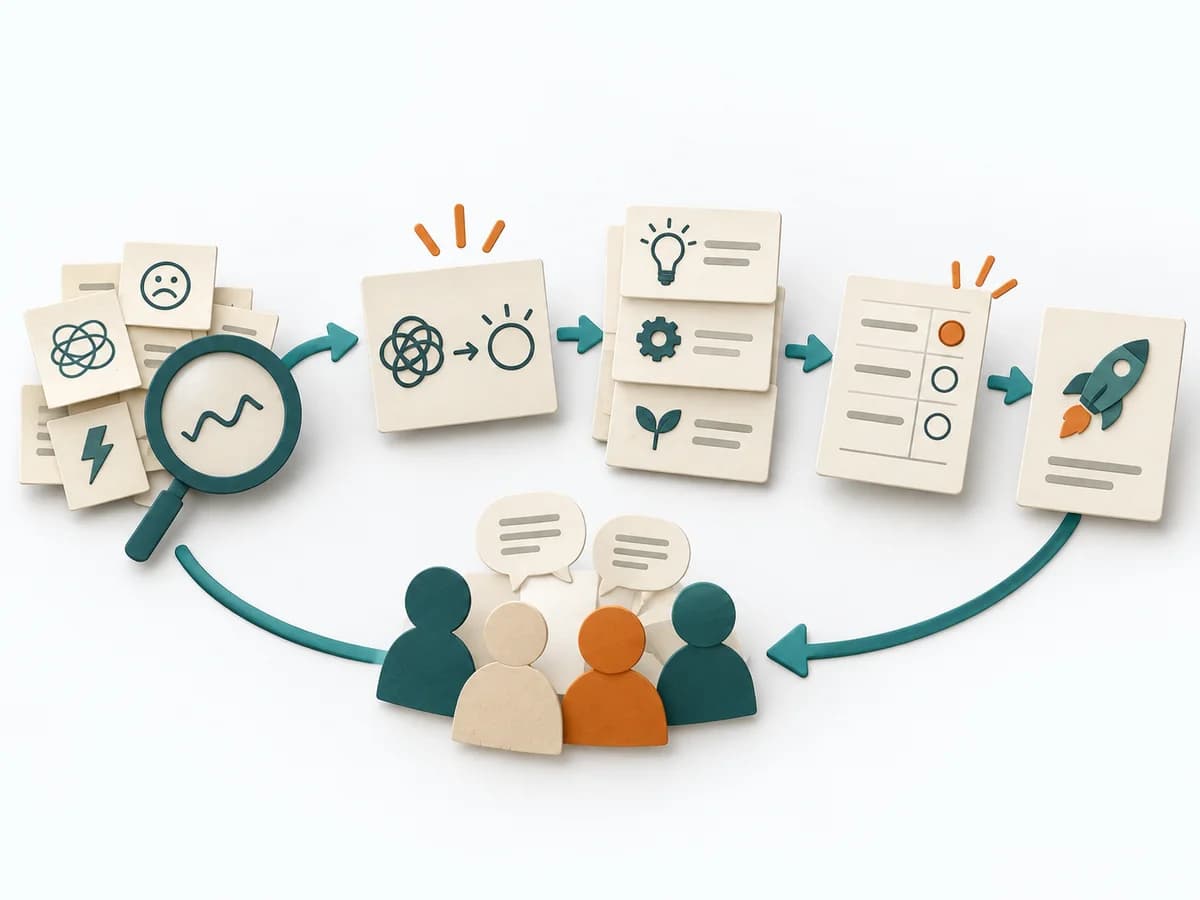 Facilitation Decision Jam | 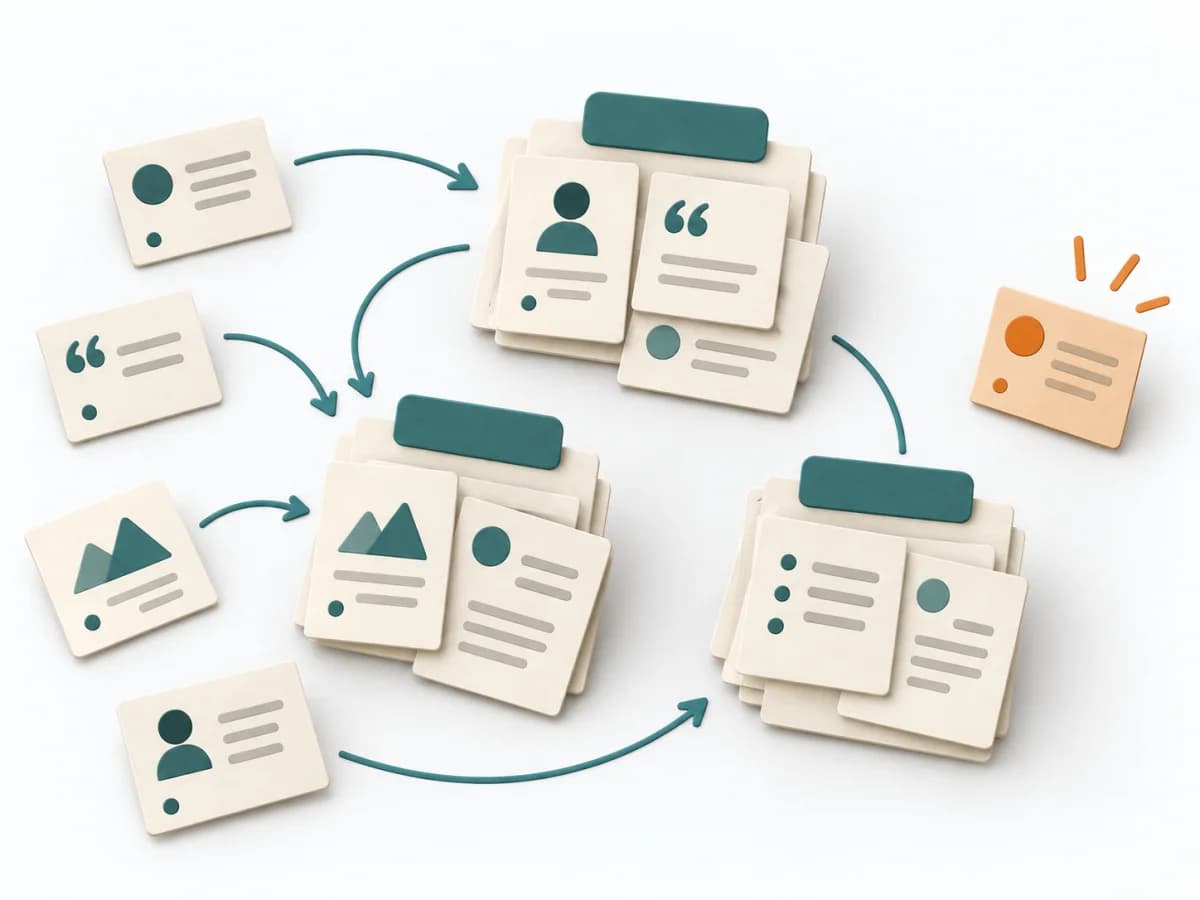 UX Research Affinity Diagramming |  Operations 5 Whys |
|---|---|---|---|---|
Purposedifferent | DIBB helps clarify target groups, value, goals, and priorities by making the logic behind a decision explicit. It captures results as a DIBB document, belief list, bet list, and learning report. | When a decision is stuck, Decision Jam loosens the knot through structured separation of problem, idea, and selection. The format creates movement without jumping prematurely at the first seemingly elegant answer. | When research notes, feedback, or observations sit unconnected side by side, affinity diagramming sorts the raw material into solid themes. Many individual points turn into patterns that make decisions and opportunities clearer. | For a single, hard-to-explain deviation, the method exposes the causal chain behind the visible symptom. It keeps the cause open until a controllable condition emerges instead of a mere description. |
Complexitysame | Low | Low | Low | Low |
Timedifferent | 1-2 h | 60-90 min | 45–90 min | 15-30 min |
Participantsdifferent | 2-8 | 4-10 | 3-10 | 2-6 |
Formatdifferent | Workshop + async | Workshop | Workshop | Workshop |
Outputdifferent | DIBB document, Belief list, Bet list, Learning report | Problem Cluster, Prioritized Challenge, Experiment | Theme clusters, Insight statements, Opportunity areas | Root cause notes, Countermeasures |
Tagsno overlap | StrategyDecisionAssumptionsHypothesis | FacilitationDecisionProblem solvingWorkshop | SynthesisQualitativeRoot cause | Root causeIncidentLeanProblem solving |