View methods side by side.
Choose up to four methods. Add them using the search and share the comparison by copying its link.
| Criterion |  UX Research Diary Study | 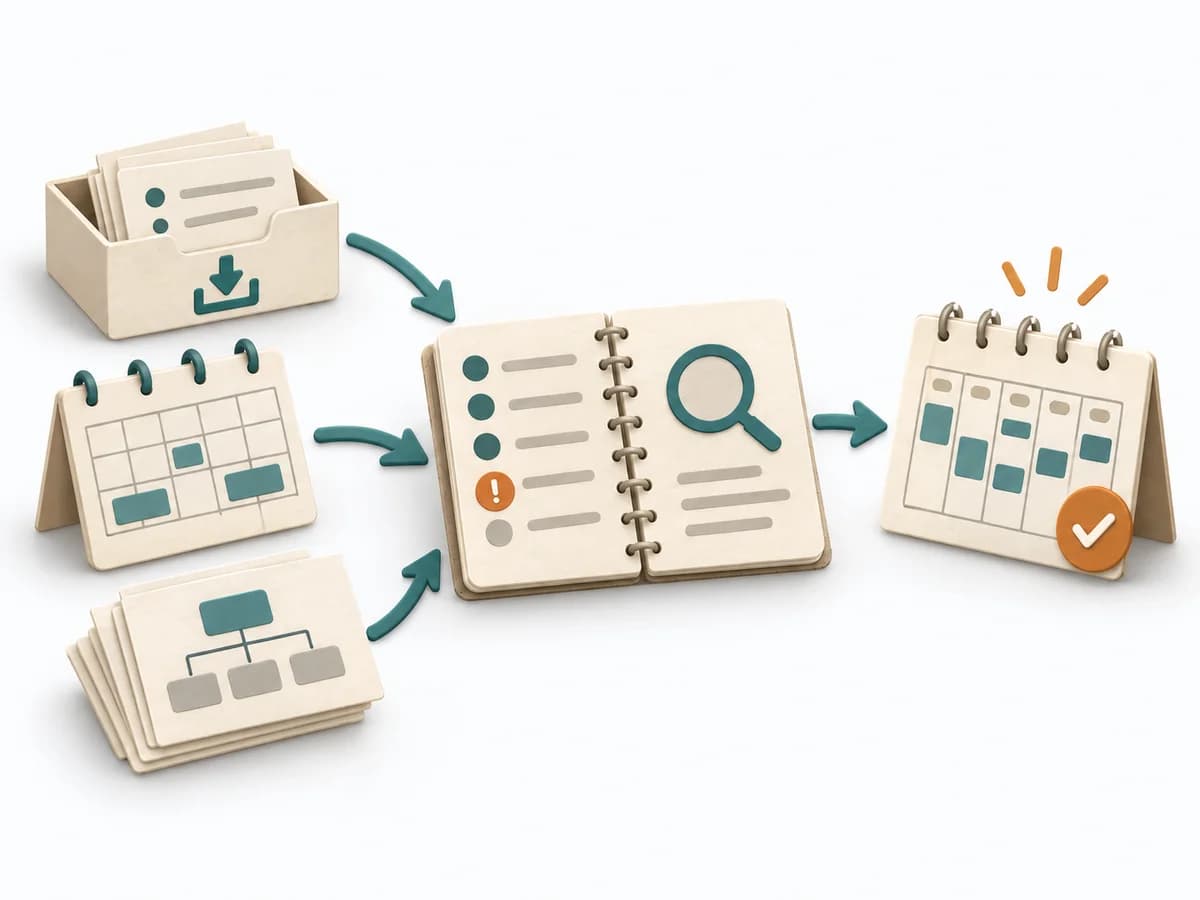 Operations Weekly Review | 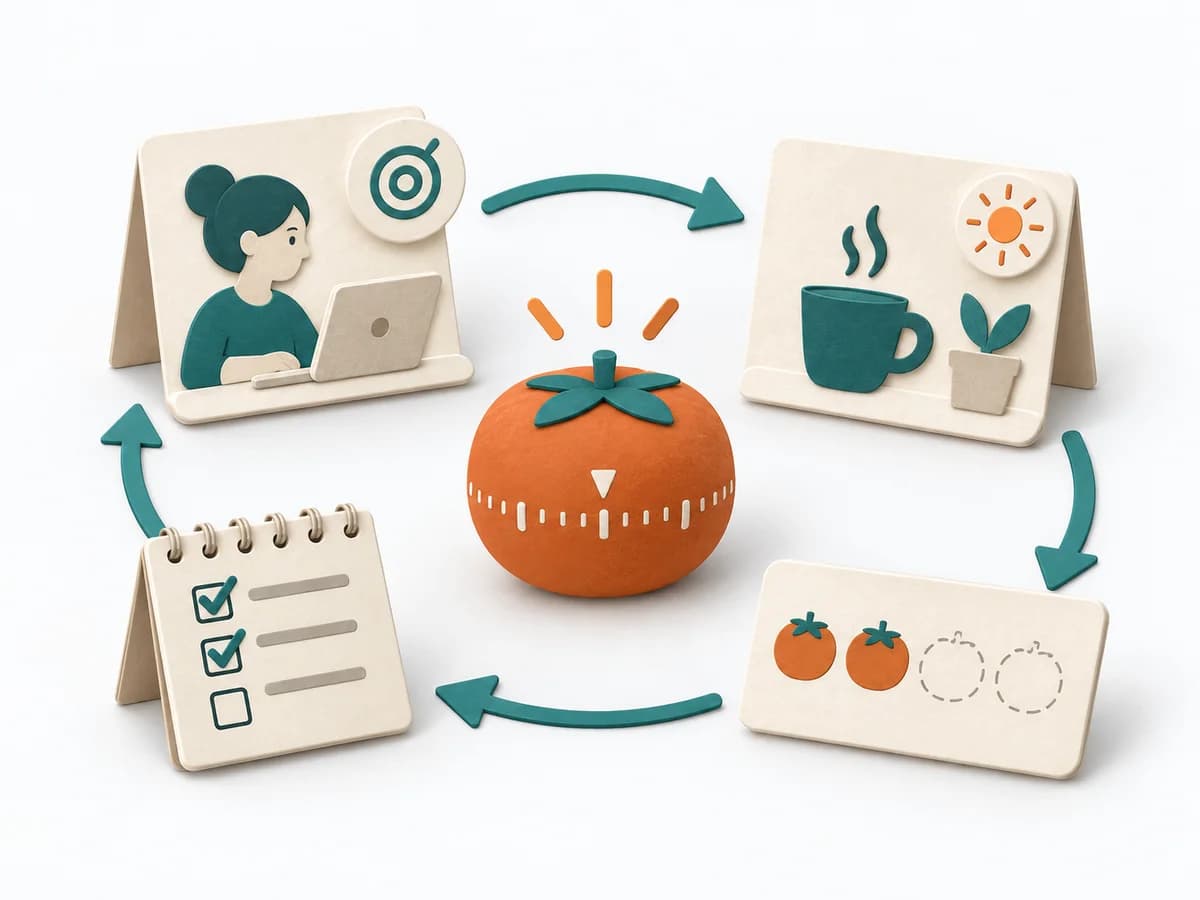 Operations Pomodoro Technique | 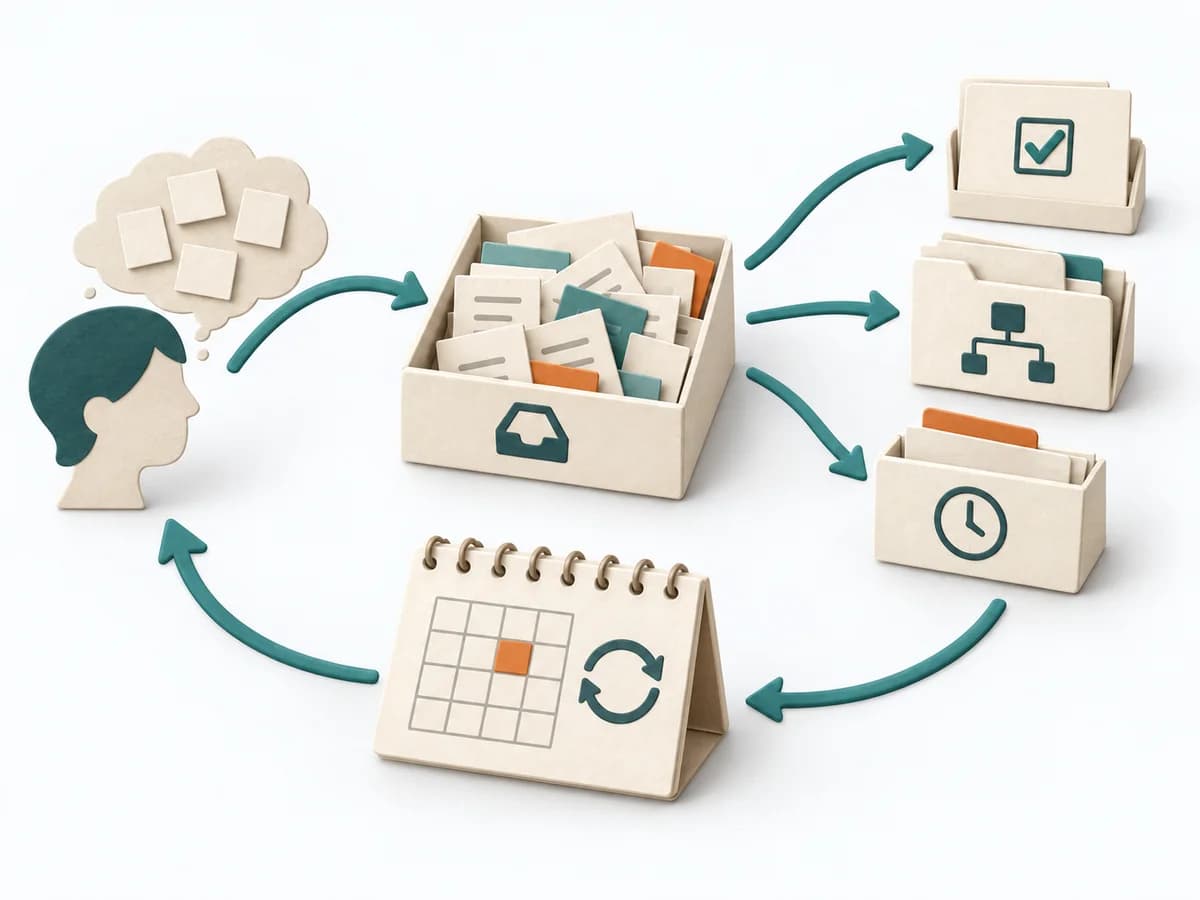 Operations Getting Things Done |
|---|---|---|---|---|
Purposedifferent | When experiences build up over days or weeks and a single session cannot capture them, Diary Study records the course of everyday life. Recurring triggers, moods, and habits become visible this way, beyond the sharpness of memory. | In a week with many open loops, the method creates distance from operational noise. It organizes commitments, calendar, and projects so the next week becomes workable. | For easily distracted solo work, the method sets clear time boundaries for concentrated work. It protects attention when large tasks would otherwise fall apart into small avoidance moves. | With many open commitments and ideas in daily life, a reliable external storage system emerges. The method relieves the mind so priority and context don't have to compete in memory. |
Complexitydifferent | Medium | Low | Low | Medium |
Timedifferent | 1-4 Wochen | 30-60 min | 25 min Zyklen | 1-2 h Setup, laufend |
Participantsdifferent | 5-20 | 1 | 1 | 1 |
Formatsame | Async | Async | Async | Async |
Outputdifferent | Diary Entries, Longitudinal Patterns, Experience Timeline | Updated Task System, Weekly Focus, Next Actions | Focus Sessions, Task Progress, Interruption Notes | Action Lists, Project List, Review Routine |
Tagsno overlap | UX researchTrackingBehavior | ProductivityExecutionPlanning | FocusTime managementProductivityExecution | ProductivityPlanningTasksExecution |