View methods side by side.
Choose up to four methods. Add them using the search and share the comparison by copying its link.
| Criterion |  UX Research Diary Study |  Operations Time Blocking | 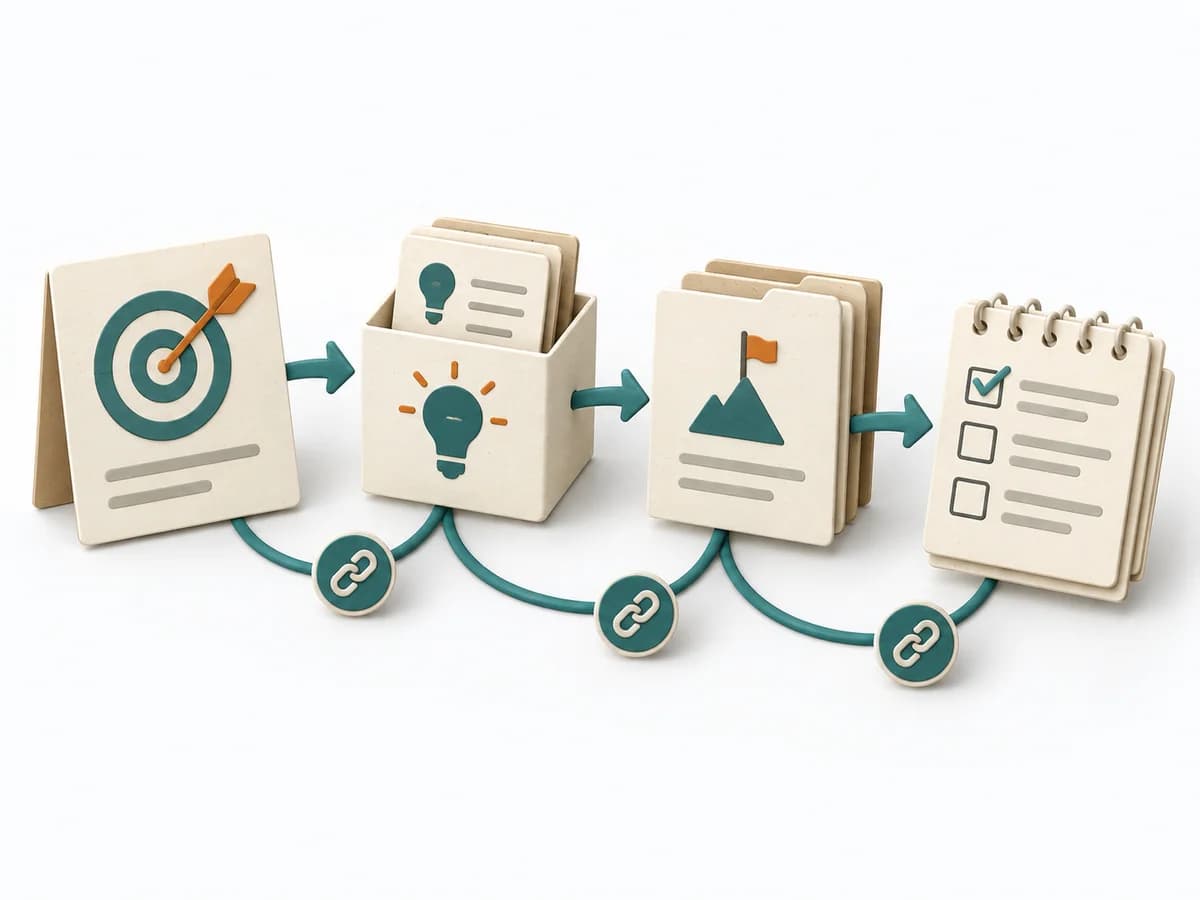 Product Strategy GIST Planning |  Operations Pomodoro Technique |
|---|---|---|---|---|
Purposedifferent | When experiences build up over days or weeks and a single session cannot capture them, Diary Study records the course of everyday life. Recurring triggers, moods, and habits become visible this way, beyond the sharpness of memory. | With a calendar that grows on request, the method makes available time explicit again. It combines appointments, focus work, and buffer into a more realistic day structure. | GIST Planning helps clarify target groups, value, goals, and priorities. It links customer value, product logic, and decision priorities, and captures the result as goals, an idea bank, and a step-project list. | For easily distracted solo work, the method sets clear time boundaries for concentrated work. It protects attention when large tasks would otherwise fall apart into small avoidance moves. |
Complexitydifferent | Medium | Low | Medium | Low |
Timedifferent | 1-4 Wochen | 15-30 min Planung, laufend | Wochen bis Monate je Goal | 25 min Zyklen |
Participantsdifferent | 5-20 | 1 | 3-10 | 1 |
Formatdifferent | Async | Async | Workshop + async | Async |
Outputdifferent | Diary Entries, Longitudinal Patterns, Experience Timeline | Blocked Calendar, Capacity View, Focus Plan | Goals, Idea bank, Step-project list, Tasks, Learning reports | Focus Sessions, Task Progress, Interruption Notes |
Tagsno overlap | UX researchTrackingBehavior | PlanningTime managementFocus | RoadmapOutcomesPlanningExperiments | FocusTime managementProductivityExecution |