View methods side by side.
Choose up to four methods. Add them using the search and share the comparison by copying its link.
| Criterion |  UX Research Diary Study | 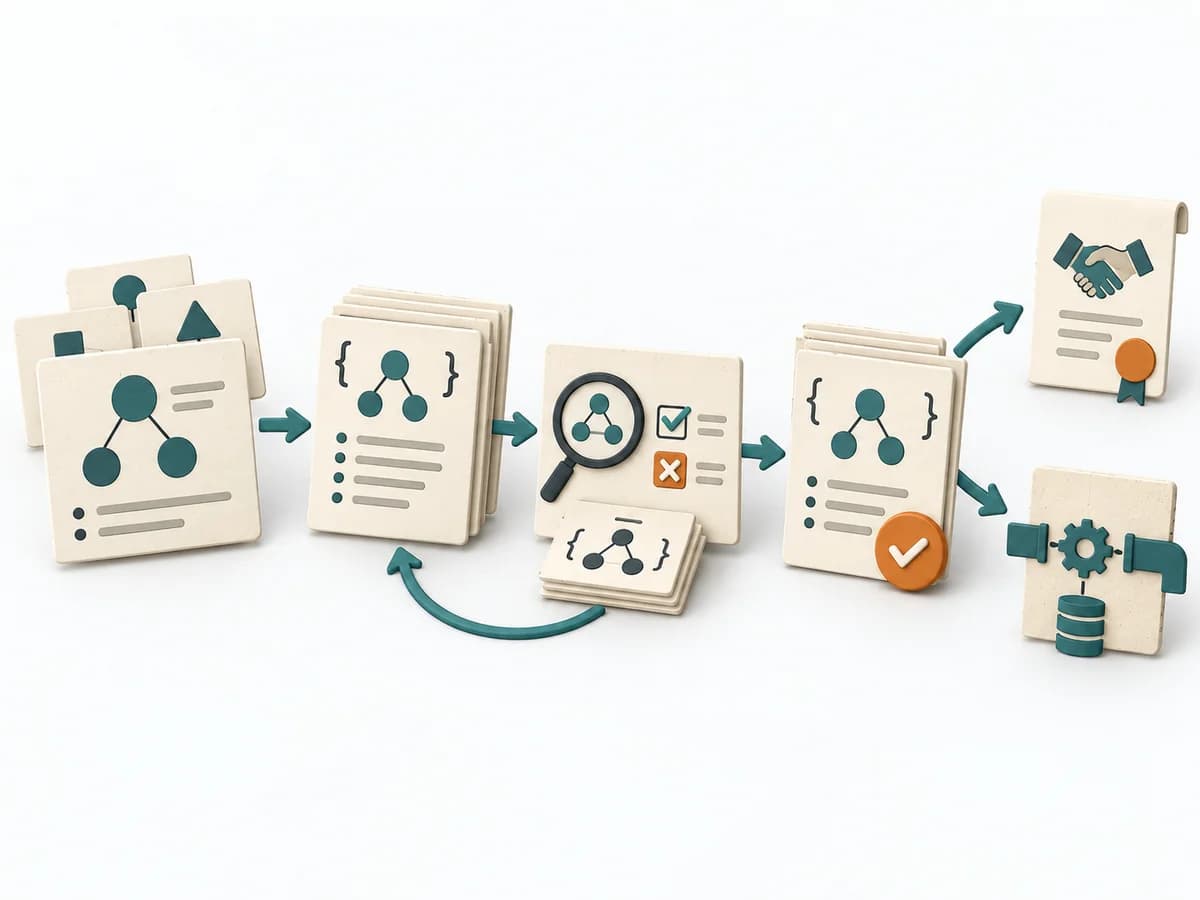 Knowledge Modeling Shape-First Modeling |  Product Discovery Test Card |  Product Discovery Fake Door Test |
|---|---|---|---|---|
Purposedifferent | When experiences build up over days or weeks and a single session cannot capture them, Diary Study records the course of everyday life. Recurring triggers, moods, and habits become visible this way, beyond the sharpness of memory. | Shape-First Modeling defines data quality through shapes before implementation or integration frays at the edges. The approach fits when validation and data contracts should be part of the design from the start. | The Test Card turns a critical assumption into a testable claim and specifies in advance which result counts as success. | When demand is still unclear, it measures interest in a feature before it is built. It separates real behavior from polite agreement and deliberately keeps build effort small. |
Complexitydifferent | Medium | Medium | Low | Medium |
Timedifferent | 1-4 Wochen | Halber Tag pro Domain Slice | 20-35 min | 1-5 Tage |
Participantsdifferent | 5-20 | 1-4 | 1-5 | Nutzertraffic |
Formatdifferent | Async | Workshop + async | Workshop + async | Async |
Outputdifferent | Diary Entries, Longitudinal Patterns, Experience Timeline | SHACL or ShEx Shapes, Validation Reports, Data Contracts, Shape Documentation | Test Card with a pre-set threshold | Click Data, Interest Signal, Learning Decision |
Tagsno overlap | UX researchTrackingBehavior | Knowledge graphValidationSemantic | ExperimentsValidationDiscoveryHypothesis | ValidationExperimentsDemandDiscovery |