View methods side by side.
Choose up to four methods. Add them using the search and share the comparison by copying its link.
| Criterion |  UX Research Diary Study |  Architecture Request for Comments | 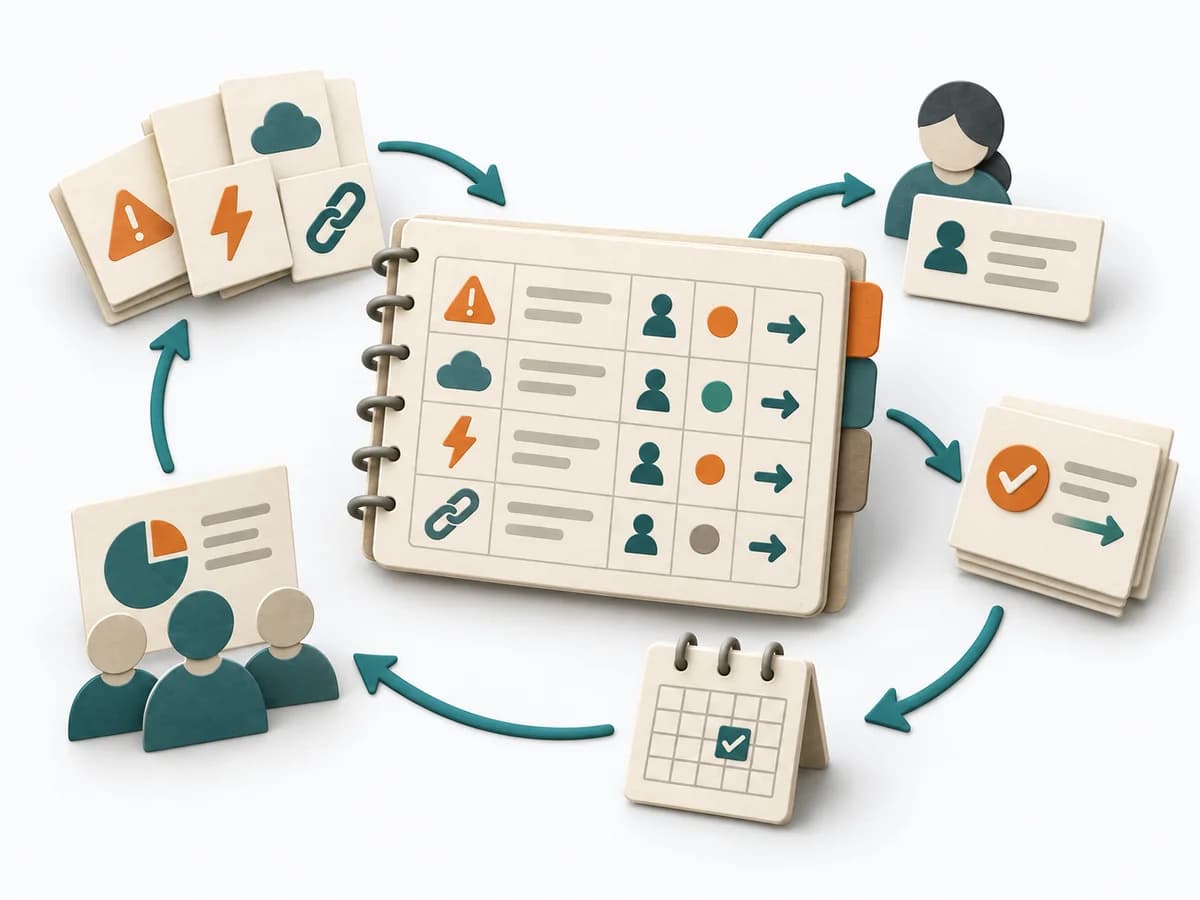 Delivery RAID Log |  Architecture Architecture Decision Record |
|---|---|---|---|---|
Purposedifferent | When experiences build up over days or weeks and a single session cannot capture them, Diary Study records the course of everyday life. Recurring triggers, moods, and habits become visible this way, beyond the sharpness of memory. | An RFC clarifies architecture context, options, and consequences. It structures technical context, alternatives, tradeoffs, open questions, and review feedback, and captures the result as an RFC document, reviewer comments, and a decision rationale. | Helps clarify scope, sequence, and delivery flow in concrete terms. It makes work, boundaries, and order steerable. The result is captured as a RAID Log and a source for status reporting. | An ADR permanently records an architecture decision with context, trade-offs, and consequence. It creates continuity for later changes because the decision path stays traceable. |
Complexitydifferent | Medium | Medium | Low | Low |
Timedifferent | 1-4 Wochen | 1-3 Wochen vom Draft bis zur Entscheidung | 30 min Setup, dann laufend | 15-45 min |
Participantsdifferent | 5-20 | 3-20 Reviewer | 1-3 maintaining, briefing for everyone | 1-3 |
Formatsame | Async | Async | Async | Async |
Outputdifferent | Diary Entries, Longitudinal Patterns, Experience Timeline | RFC document, Reviewer comments, Decision rationale, Follow-up ADR or tickets | RAID Log, Status Report Source | ADR File, Decision Log, Rationale |
Tagsno overlap | UX researchTrackingBehavior | ArchitectureDecisionAsyncGovernance | RiskTrackingStakeholdersGovernance | ArchitectureRationaleDocumentationGovernance |