View methods side by side.
Choose up to four methods. Add them using the search and share the comparison by copying its link.
| Criterion |  UX Research Diary Study |  Facilitation Mind Mapping | 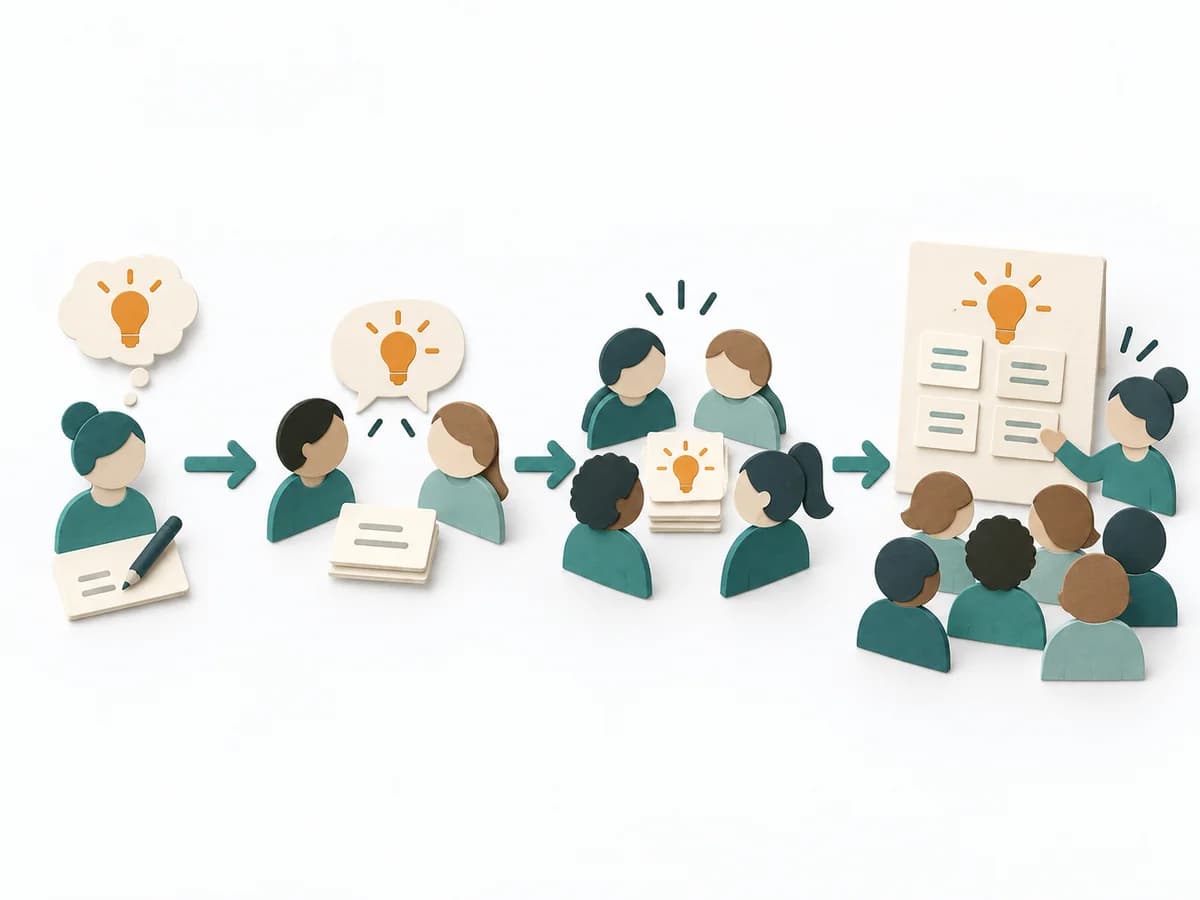 Facilitation 1-2-4-All | 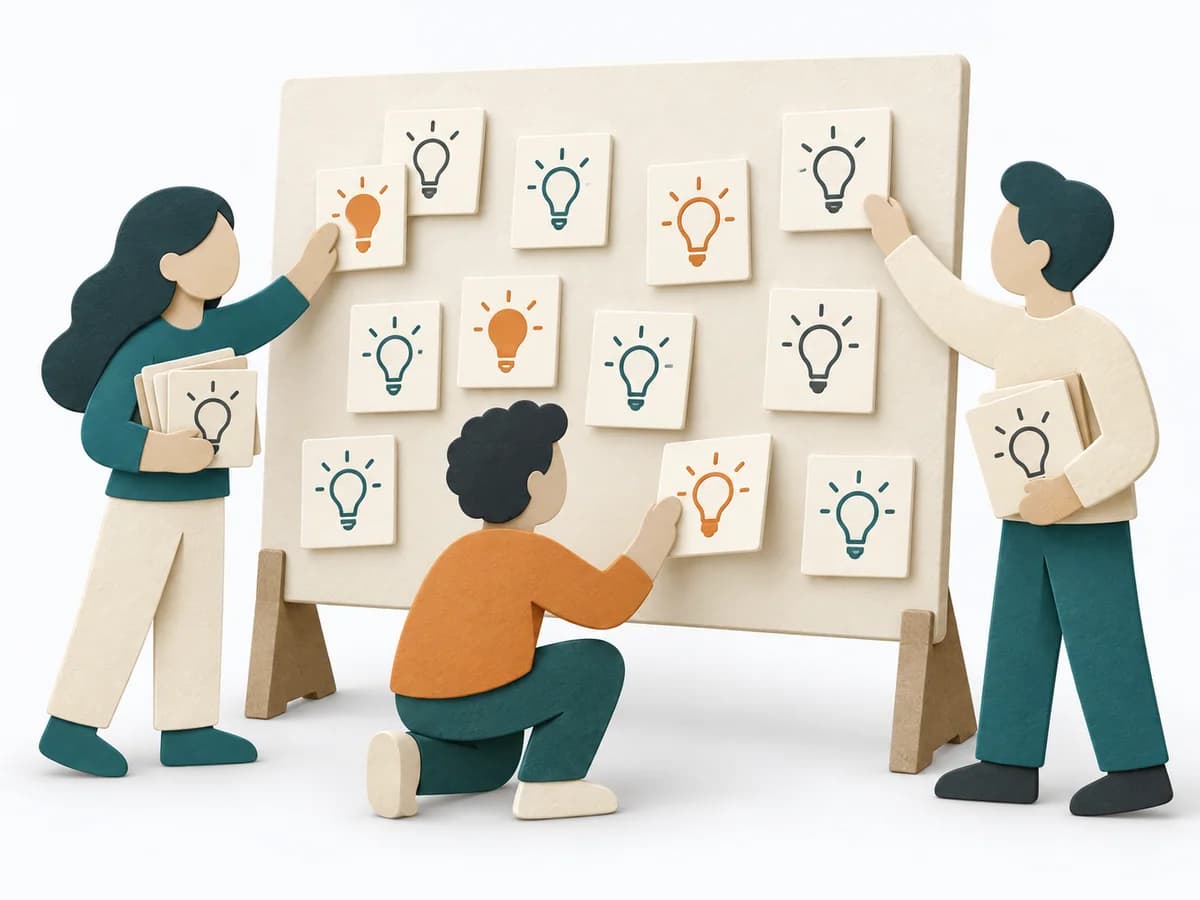 Innovation Brainstorming |
|---|---|---|---|---|
Purposedifferent | When experiences build up over days or weeks and a single session cannot capture them, Diary Study records the course of everyday life. Recurring triggers, moods, and habits become visible this way, beyond the sharpness of memory. | When a topic is still unclear and too many thoughts surface at once, Mind Mapping creates an open surface for ordering them. It makes connections, subtopics, and starting points visible without fixing them too early. | When many people in a group too rarely get to speak, 1-2-4-All distributes thinking time more fairly. The format builds participation step by step and makes quiet or still-unformed thoughts usable faster. | When a team faces an open question with many obvious directions, the method first creates breadth instead of premature commitment. It separates idea flow from evaluation and makes lines of thought visible, creating a pool for selection and further development. |
Complexitydifferent | Medium | Low | Low | Low |
Timedifferent | 1-4 Wochen | 15-45 min | 10-20 min | 30-60 min |
Participantsdifferent | 5-20 | 1-10 | 4-100+ | 4-12 |
Formatdifferent | Async | Workshop + async | Workshop | Workshop |
Outputdifferent | Diary Entries, Longitudinal Patterns, Experience Timeline | Mind Map, Topic Clusters, Open Questions | Idea List, Shared Insights, Emergent Themes | Idea pool, Theme clusters, Shortlist |
Tagsno overlap | UX researchTrackingBehavior | BrainstormingIdeasMappingStructureFacilitation | FacilitationInclusionIdeation | BrainstormingIdeationCreativityWorkshopDivergence |