View methods side by side.
Choose up to four methods. Add them using the search and share the comparison by copying its link.
| Criterion |  UX Research Diary Study |  Knowledge Modeling IBIS | 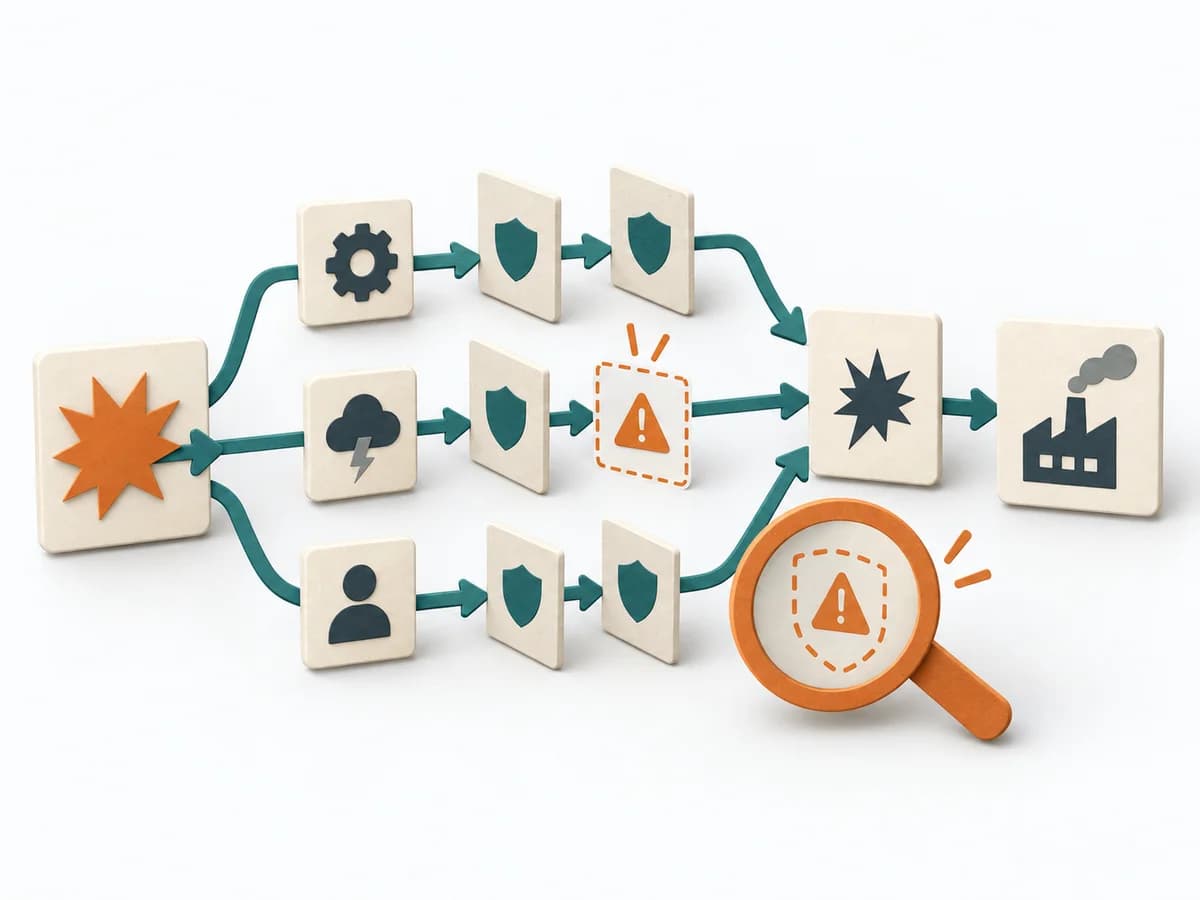 Engineering Failure Scenario Analysis |  Decision Making Assumption Surfacing |
|---|---|---|---|---|
Purposedifferent | When experiences build up over days or weeks and a single session cannot capture them, Diary Study records the course of everyday life. Recurring triggers, moods, and habits become visible this way, beyond the sharpness of memory. | IBIS structures thinking about complex questions as a sequence of issues, ideas, and arguments. The method keeps discussions open without forcing them into premature consensus. | In critical processes, it is not enough to plan only for the normal case. Failure Scenario Analysis looks at the path into failure and shows which failures, chains, and control gaps cause the most damage. | Plans often contain assumptions that were never openly stated and remain dangerous precisely because of that. Assumption Surfacing makes these silent premises visible and prioritizes which of them carry the initiative or could sink it. |
Complexitydifferent | Medium | Medium | Medium | Low |
Timedifferent | 1-4 Wochen | 1-3 h | 1-3 h | 45-90 min |
Participantsdifferent | 5-20 | 2-8 | 3-8 | 2-8 |
Formatdifferent | Async | Workshop + async | Workshop | Workshop + async |
Outputdifferent | Diary Entries, Longitudinal Patterns, Experience Timeline | Issue Map, Positions, Argument Notes | Failure Scenarios, Risk Notes, Control Gaps, Test and Response Actions | Assumption List, Critical Assumptions, Learning Plan |
Tagsno overlap | UX researchTrackingBehavior | RationaleKnowledgeDecision | FailureResilienceRisk | AssumptionsRiskDecisionDiscovery |