View methods side by side.
Choose up to four methods. Add them using the search and share the comparison by copying its link.
| Criterion |  UX Research Diary Study | 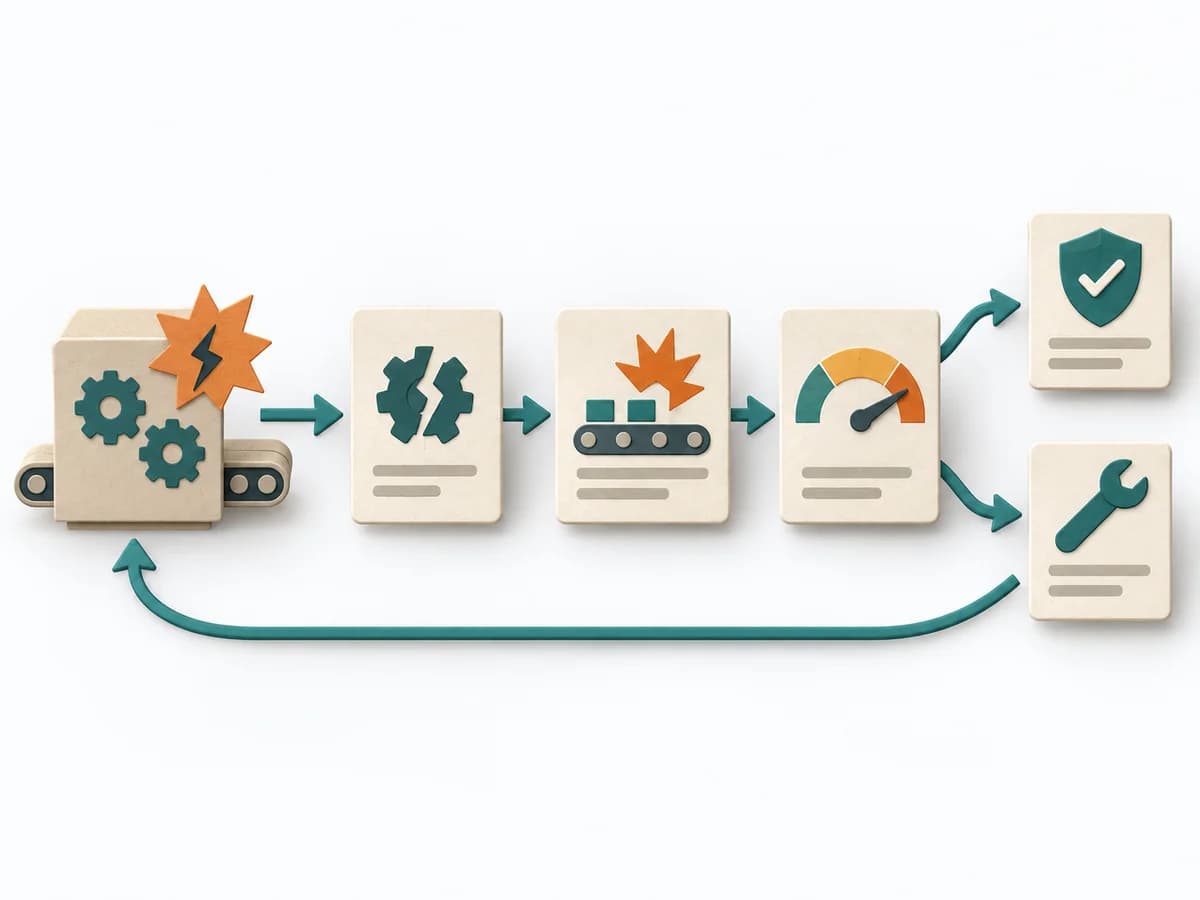 Operations Failure Mode and Effects Analysis |  Decision Making Assumption Surfacing | 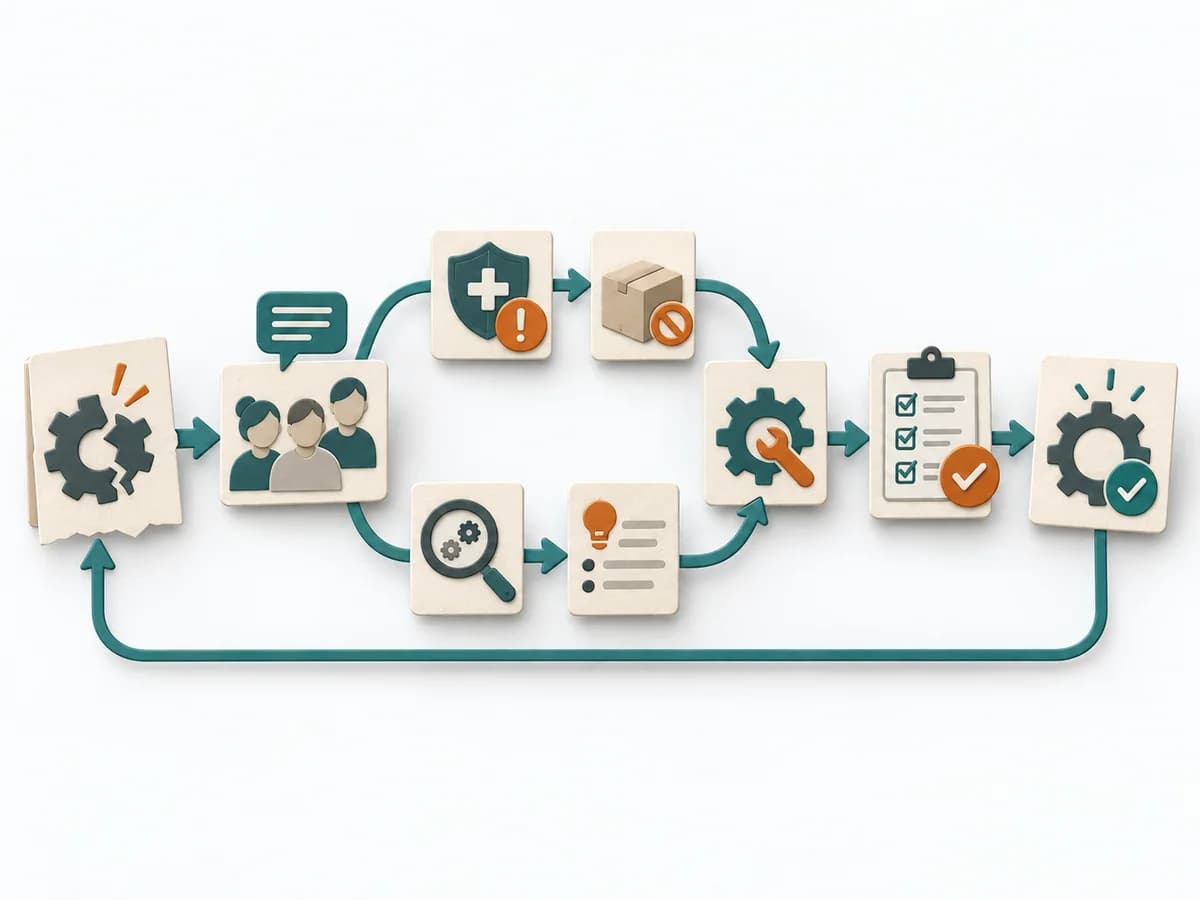 Operations 8D Problem Solving |
|---|---|---|---|---|
Purposedifferent | When experiences build up over days or weeks and a single session cannot capture them, Diary Study records the course of everyday life. Recurring triggers, moods, and habits become visible this way, beyond the sharpness of memory. | For a process, product, or service with noticeable failure risks, the method assesses possible failure modes in advance. It directs attention to combinations of occurrence, effect, and detectability. | Plans often contain assumptions that were never openly stated and remain dangerous precisely because of that. Assumption Surfacing makes these silent premises visible and prioritizes which of them carry the initiative or could sink it. | For an acute quality or delivery problem, the method structures immediate protection and root cause work together. It keeps the situation stable while the actual cause is investigated cleanly. |
Complexitydifferent | Medium | High | Low | High |
Timedifferent | 1-4 Wochen | 2-6 h | 45-90 min | 1-6 Wochen |
Participantsdifferent | 5-20 | 3-10 | 2-8 | 4-10 |
Formatdifferent | Async | Workshop | Workshop + async | Workshop + async |
Outputdifferent | Diary Entries, Longitudinal Patterns, Experience Timeline | FMEA Table, Risk Priority, Mitigation Actions | Assumption List, Critical Assumptions, Learning Plan | 8D Report, Containment Plan, Root Cause Evidence, Corrective Action Plan |
Tagsno overlap | UX researchTrackingBehavior | RiskQualityOperationsRoot cause | AssumptionsRiskDecisionDiscovery | QualityProblem solvingRoot cause |