View methods side by side.
Choose up to four methods. Add them using the search and share the comparison by copying its link.
| Criterion |  UX Research Diary Study |  Systems Thinking Causal Loop Diagram | 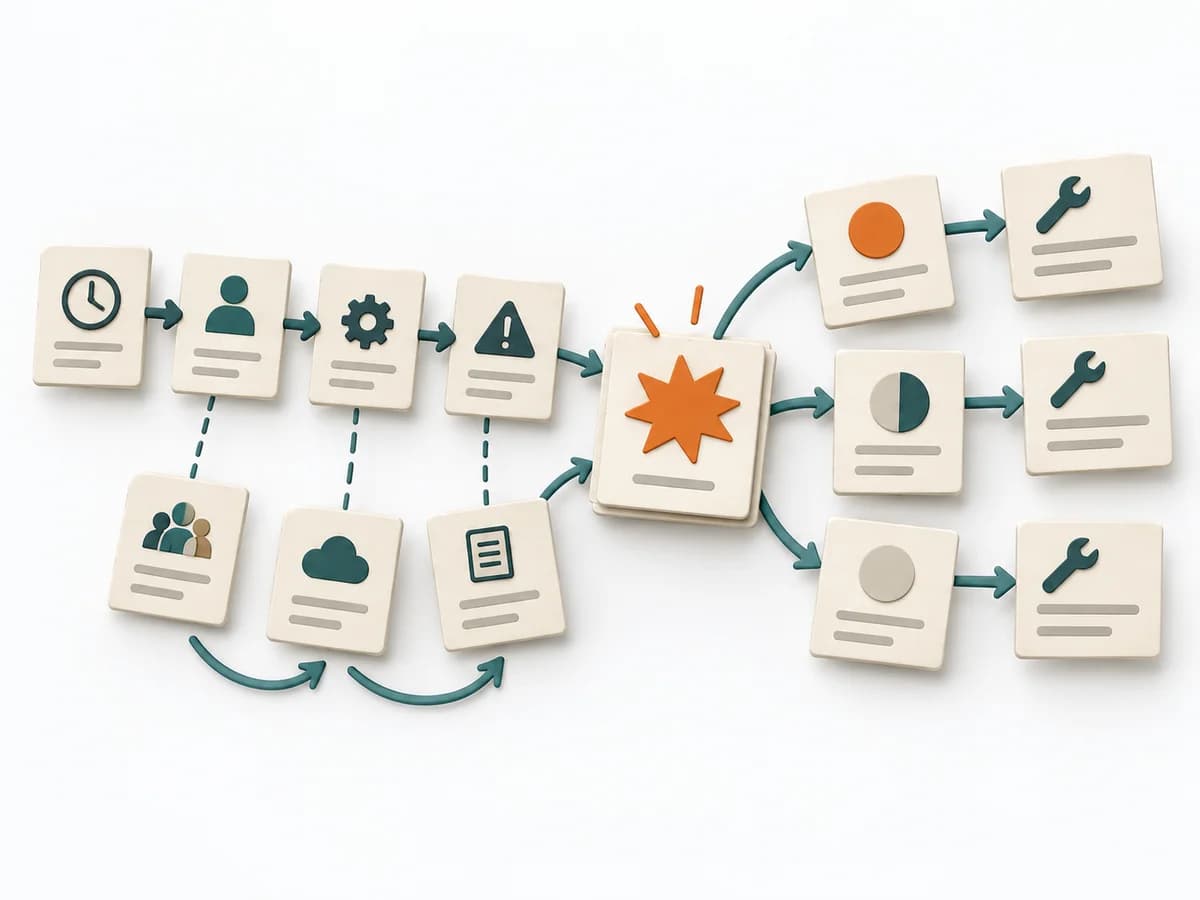 Operations Causal Factor Analysis |  Operations 5 Whys |
|---|---|---|---|---|
Purposedifferent | When experiences build up over days or weeks and a single session cannot capture them, Diary Study records the course of everyday life. Recurring triggers, moods, and habits become visible this way, beyond the sharpness of memory. | A Causal Loop Diagram makes feedback, reinforcement, and balance in a system legible. It uncovers side effects and self-reinforcement that stay hidden in linear explanations. | For an event with a complicated course, the method breaks down the contributing factors along the timeline. It shows how conditions, decisions, and reactions together produce a course of events. | For a single, hard-to-explain deviation, the method exposes the causal chain behind the visible symptom. It keeps the cause open until a controllable condition emerges instead of a mere description. |
Complexitydifferent | Medium | Medium | High | Low |
Timedifferent | 1-4 Wochen | 1-3 h | 2-6 h | 15-30 min |
Participantsdifferent | 5-20 | 2-8 | 3-10 | 2-6 |
Formatdifferent | Async | Workshop | Workshop + async | Workshop |
Outputdifferent | Diary Entries, Longitudinal Patterns, Experience Timeline | Causal Loop Diagram, Feedback Notes, Leverage Points | Event Timeline, Causal Factor Chart, Cause List, Corrective Actions | Root cause notes, Countermeasures |
Tagsno overlap | UX researchTrackingBehavior | FeedbackSystems thinkingCausalityDynamics | CausalityIncidentRoot causeTimeline | Root causeIncidentLeanProblem solving |