View methods side by side.
Choose up to four methods. Add them using the search and share the comparison by copying its link.
| Criterion |  UX Research Diary Study |  UX Research Card Sorting | 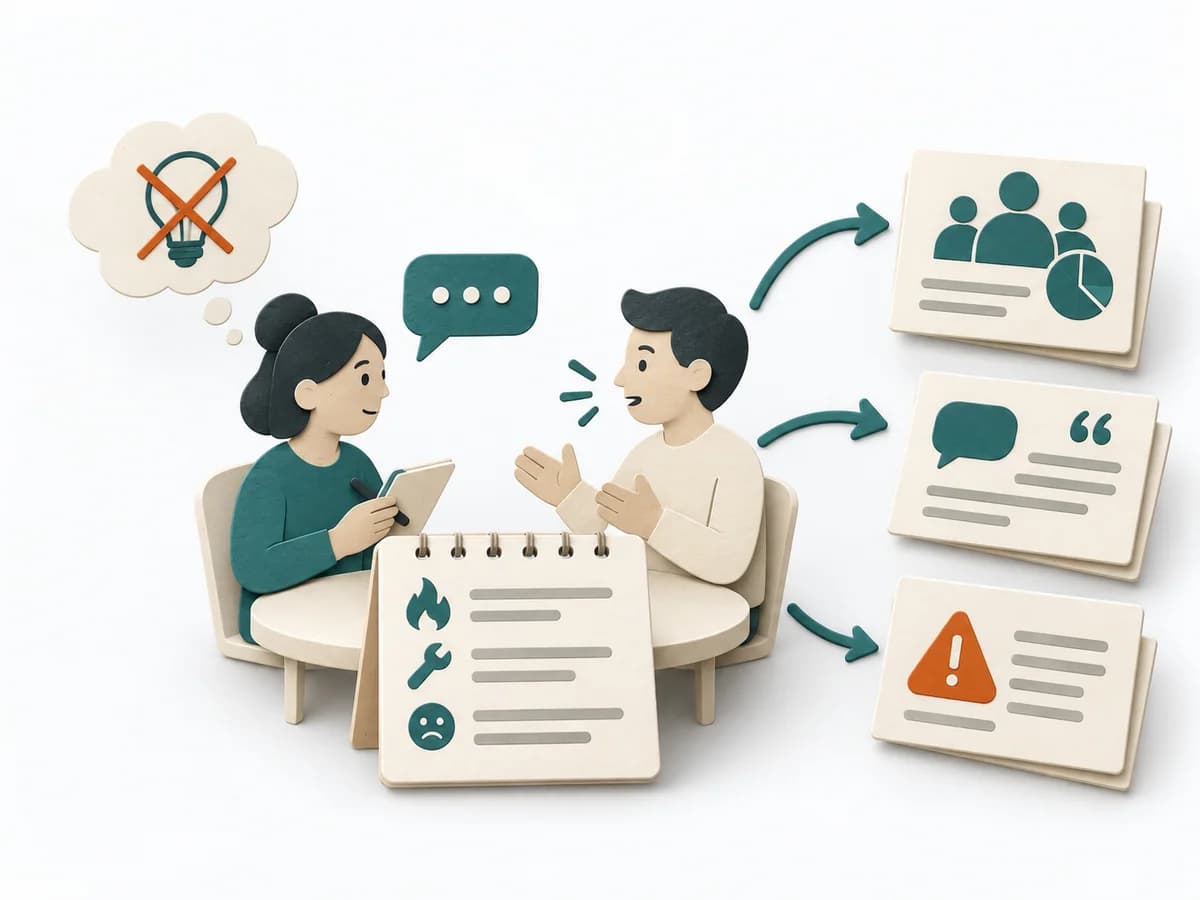 Product Discovery Problem Interview | 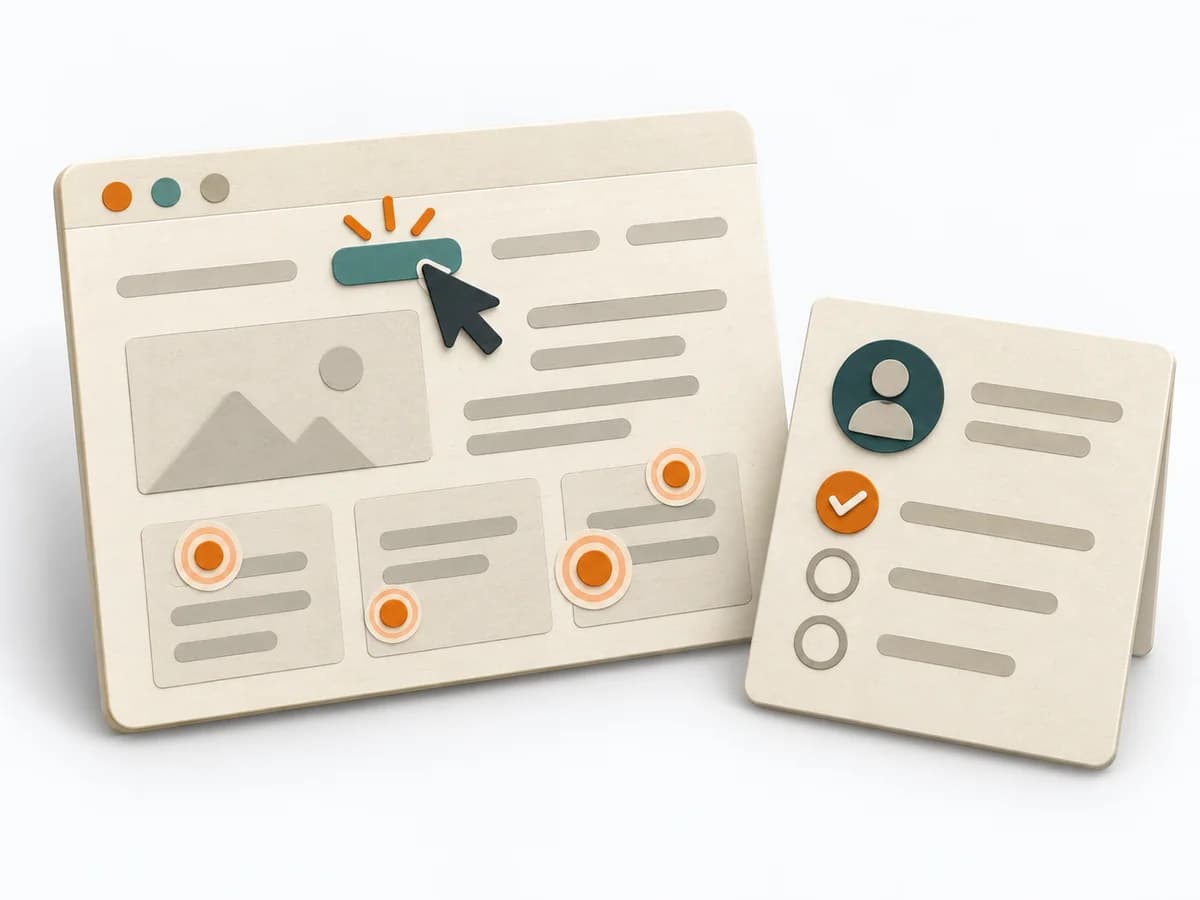 UX Research First-click Testing |
|---|---|---|---|---|
Purposedifferent | When experiences build up over days or weeks and a single session cannot capture them, Diary Study records the course of everyday life. Recurring triggers, moods, and habits become visible this way, beyond the sharpness of memory. | When content only makes sense internally and users can't find the structure again, card sorting exposes their mental order. Terms, groups, and naming are then aligned with the target group's expectations. | When the picture of the problem still needs to become solid, it asks about real situations and consequences. It separates genuine suffering from mere interest in a solution. | When users immediately turn the wrong way on a screen or wireframe, first click testing checks initial orientation at high speed. The first click shows early whether expectation, labeling, and wayfinding fit together. |
Complexitydifferent | Medium | Low | Medium | Low |
Timedifferent | 1-4 Wochen | 20-45 min | 30-60 min je Interview | 1-2 Tage |
Participantsdifferent | 5-20 | Based on research question | 5-12 Interviews | 10-30 |
Formatdifferent | Async | Workshop + async | Workshop + async | Async |
Outputdifferent | Diary Entries, Longitudinal Patterns, Experience Timeline | Content groups, Label set, IA hypotheses | Problem Evidence, Risk Notes, Customer Segments | Click Heatmap, Success Rate, Design Recommendations |
Tagsno overlap | UX researchTrackingBehavior | Information architectureNavigationStructure | DiscoveryInterviewsValidation | UXNavigationFindabilityValidation |