View methods side by side.
Choose up to four methods. Add them using the search and share the comparison by copying its link.
| Criterion |  Innovation Design Thinking | 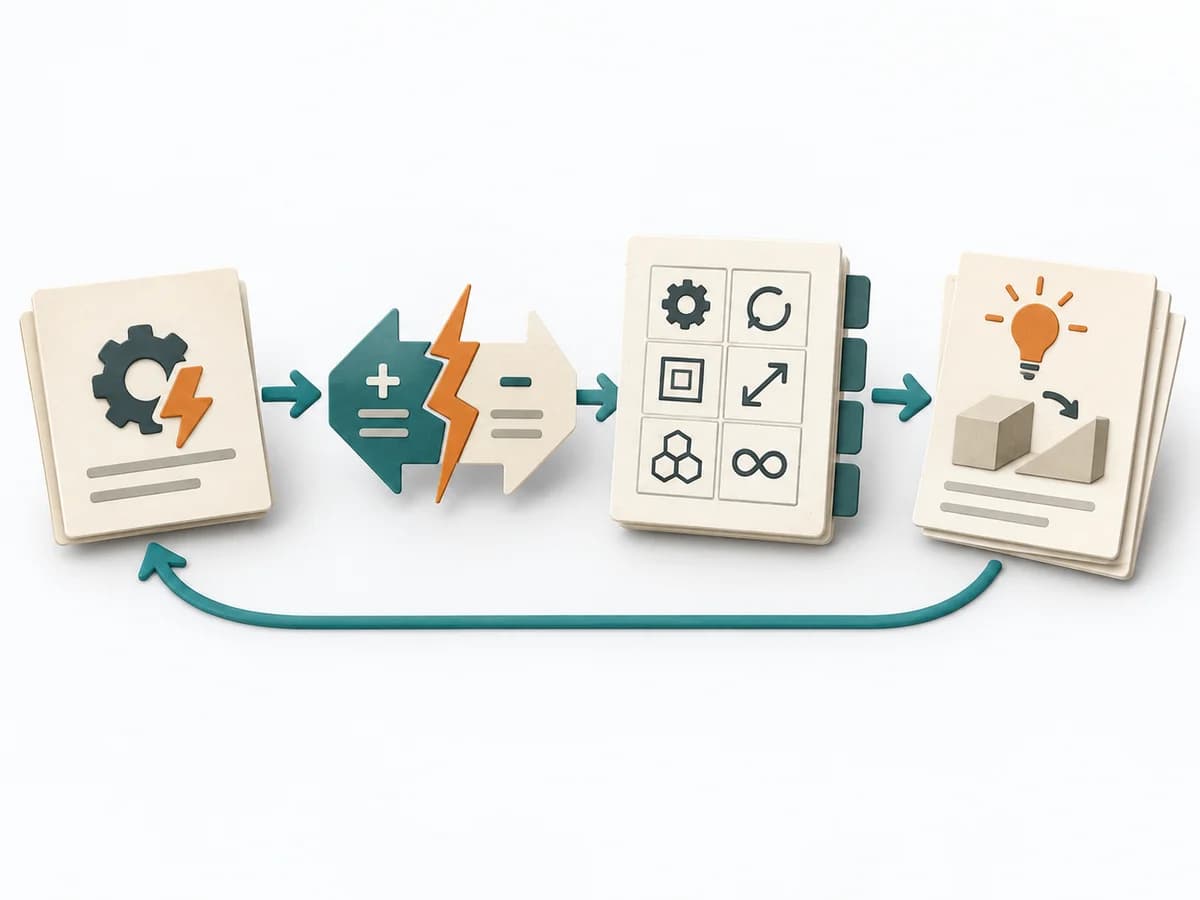 Innovation TRIZ | 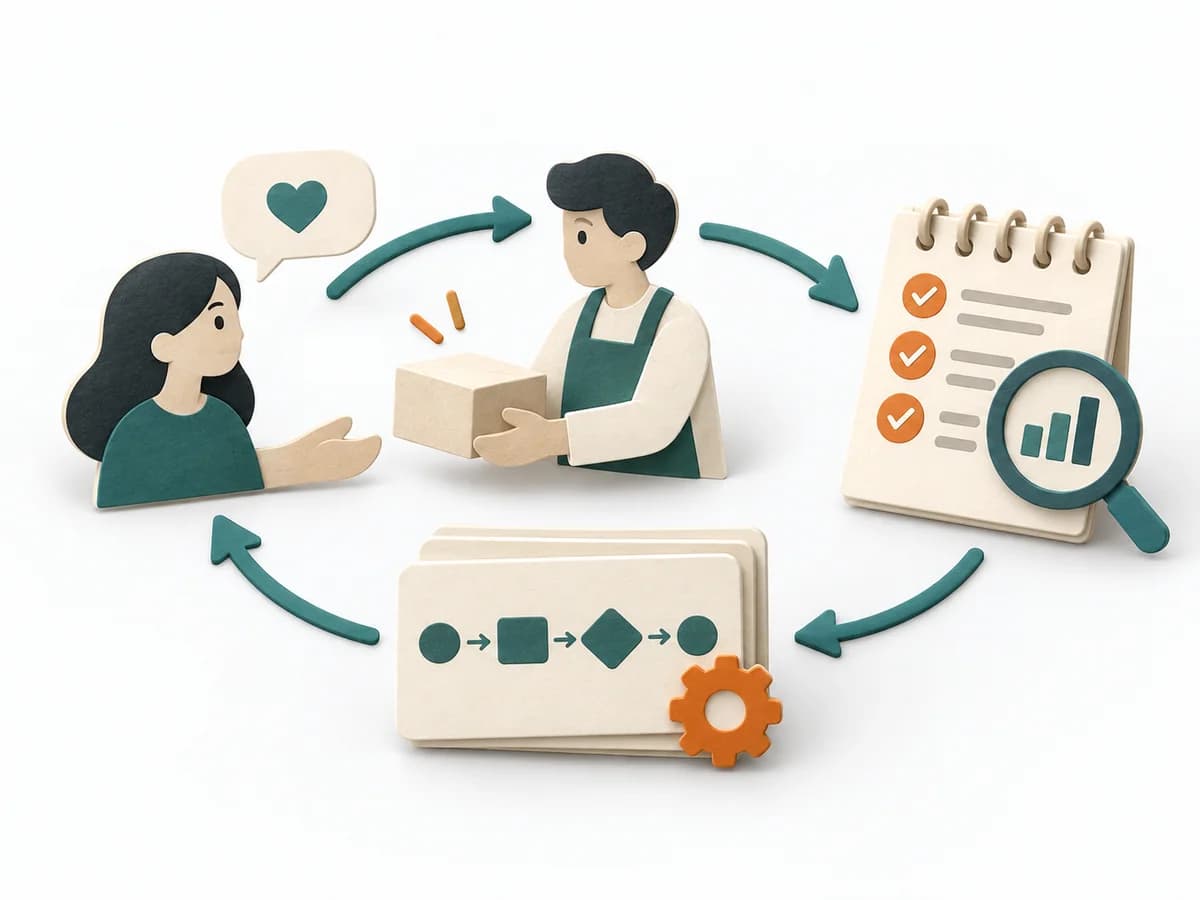 Product Discovery Concierge MVP |  Product Discovery Experiment Canvas |
|---|---|---|---|---|
Purposedifferent | For complex user problems with an uncertain cause, the method connects observation, interpretation, and experiment into a learning cycle. It keeps the focus on real needs and avoids premature solution language. This produces robust decisions for product and service. | For technical contradictions or trade-offs, the method looks for solutions that resolve opposing requirements at the same time. It translates limits into an explicit picture of conflict that becomes workable. This produces not just compromises but more elegant principles. | When an idea can first fail or grow through genuine hands-on support, it relies on manual work instead of automation. It shows whether user value holds up even under manual execution. | When experiments become unreadable after the fact, it arranges hypothesis, signal, and learning goal on a single canvas. It separates problem, assumption, solution, and evidence. The result is captured as a Completed Experiment Canvas and a Success Metric. |
Complexitydifferent | High | High | Medium | Low |
Timedifferent | 1 Tag bis mehrere Wochen | 1-4 h | 1-4 Wochen | 30-60 min |
Participantsdifferent | 4-10 | 2-8 | 3-10 Kunden | 1-5 |
Formatdifferent | Workshop | Workshop + async | Workshop + async | Workshop + async |
Outputdifferent | Problem Statement, Prototype, Test Learnings | Contradiction Statement, Inventive Principles, Solution Concepts | Concierge Learnings, Service Blueprint, MVP Risks | Completed Experiment Canvas, Success Metric |
Tagsno overlap | InnovationPrototypeResearch | InnovationProblem solvingContradictionsCreativity | MVPValidationServiceDiscovery | ExperimentsValidationDiscoveryHypothesis |