View methods side by side.
Choose up to four methods. Add them using the search and share the comparison by copying its link.
| Criterion |  Innovation Design Thinking | 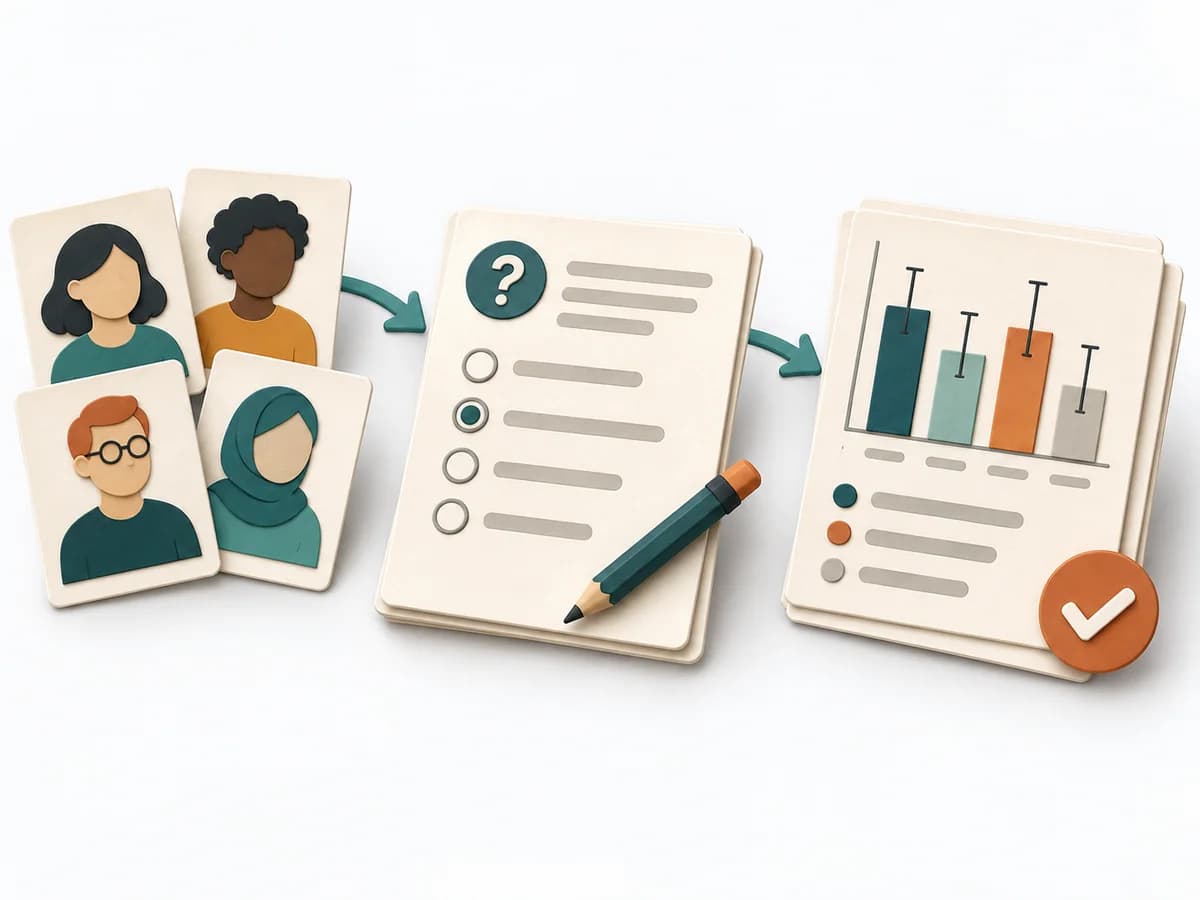 UX Research Surveys | 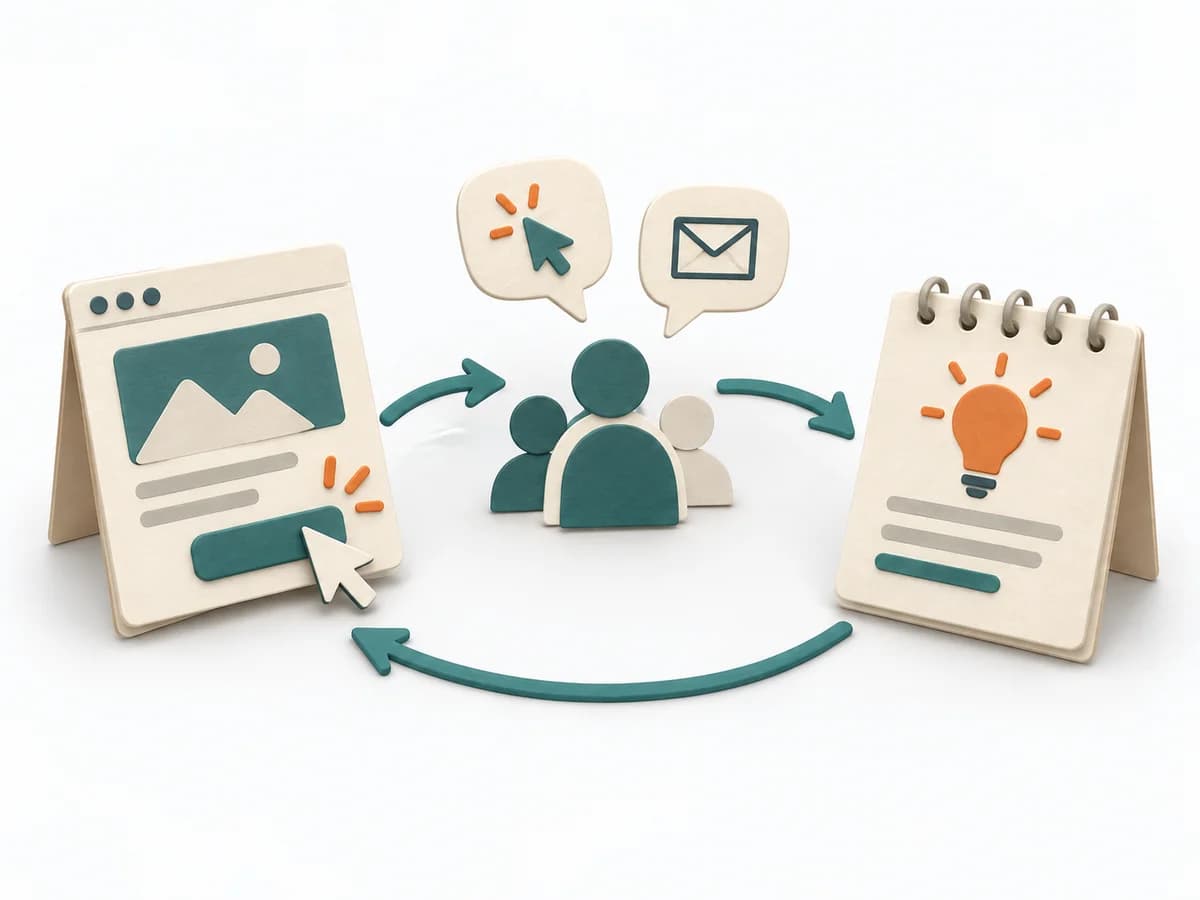 Product Discovery Smoke Test | 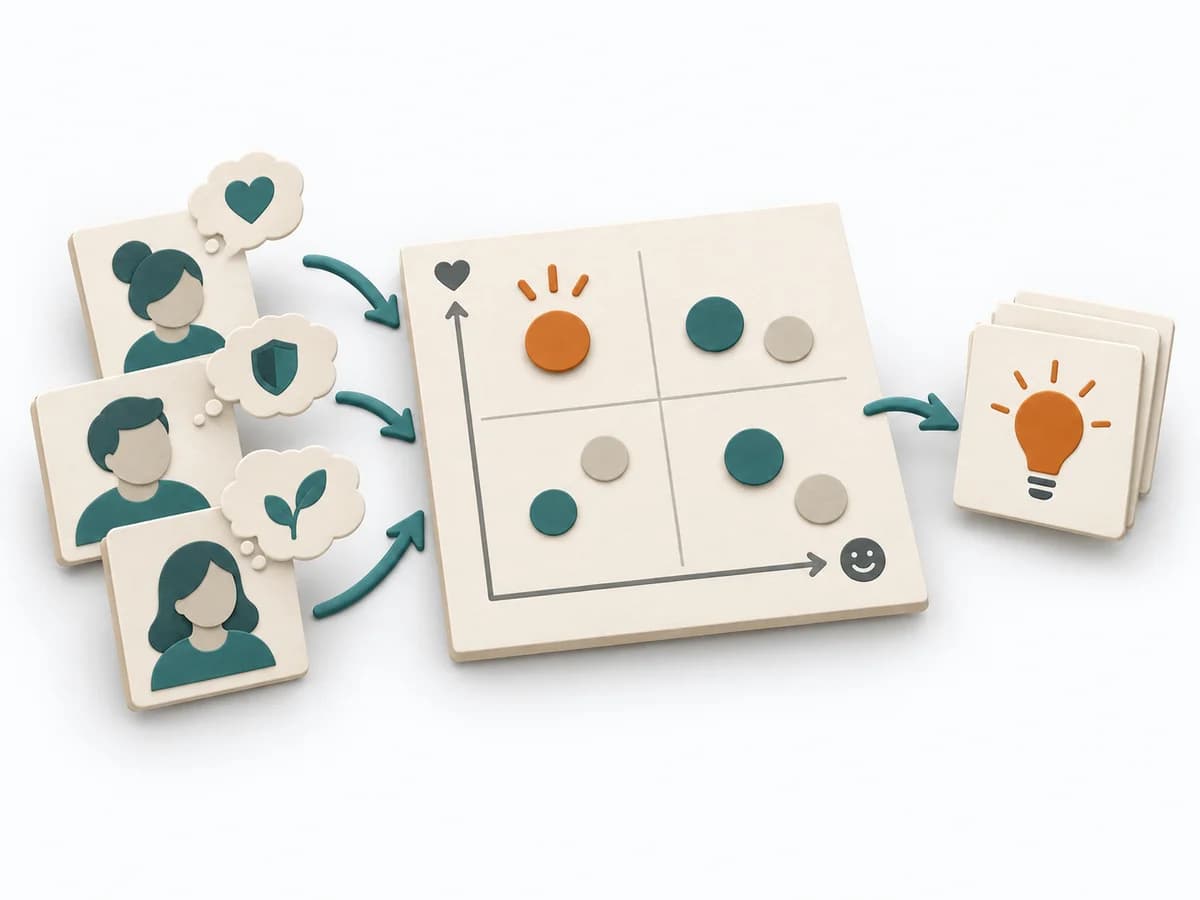 Product Discovery Outcome-Driven Innovation |
|---|---|---|---|---|
Purposedifferent | For complex user problems with an uncertain cause, the method connects observation, interpretation, and experiment into a learning cycle. It keeps the focus on real needs and avoids premature solution language. This produces robust decisions for product and service. | When a topic needs to be validated broadly and many people can answer the same question, surveys gather structured feedback in a scalable form. Answers become comparable and segmentable instead of remaining merely anecdotal. | When demand only needs to be roughly verified, it tests interest with minimal effort. It measures whether people would take a next step at all. | Outcome-Driven Innovation clarifies customer problems, solution opportunities, and evidence. It separates jobs, desired outcomes, importance, satisfaction, and opportunity, and captures results as desired outcome statements, an opportunity landscape, and segments by underserved needs. |
Complexitydifferent | High | Medium | Low | High |
Timedifferent | 1 Tag bis mehrere Wochen | 3-14 Tage | 1-5 Tage | Mehrere Wochen |
Participantsdifferent | 4-10 | 50+ | Nutzertraffic | 2-6 researchers plus sample |
Formatdifferent | Workshop | Async | Async | Workshop + async |
Outputdifferent | Problem Statement, Prototype, Test Learnings | Survey Results, Charts, Segment Insights | Interest Metrics, Conversion Signal, Learning Note | Desired outcome statements, Opportunity landscape, Segmentation by underserved needs, Innovation hypotheses |
Tagsno overlap | InnovationPrototypeResearch | QuantitativeResearchValidation | ValidationExperimentsDemandGrowth | OutcomesInnovationResearchQuantitative |