View methods side by side.
Choose up to four methods. Add them using the search and share the comparison by copying its link.
| Criterion |  Innovation Design Thinking | 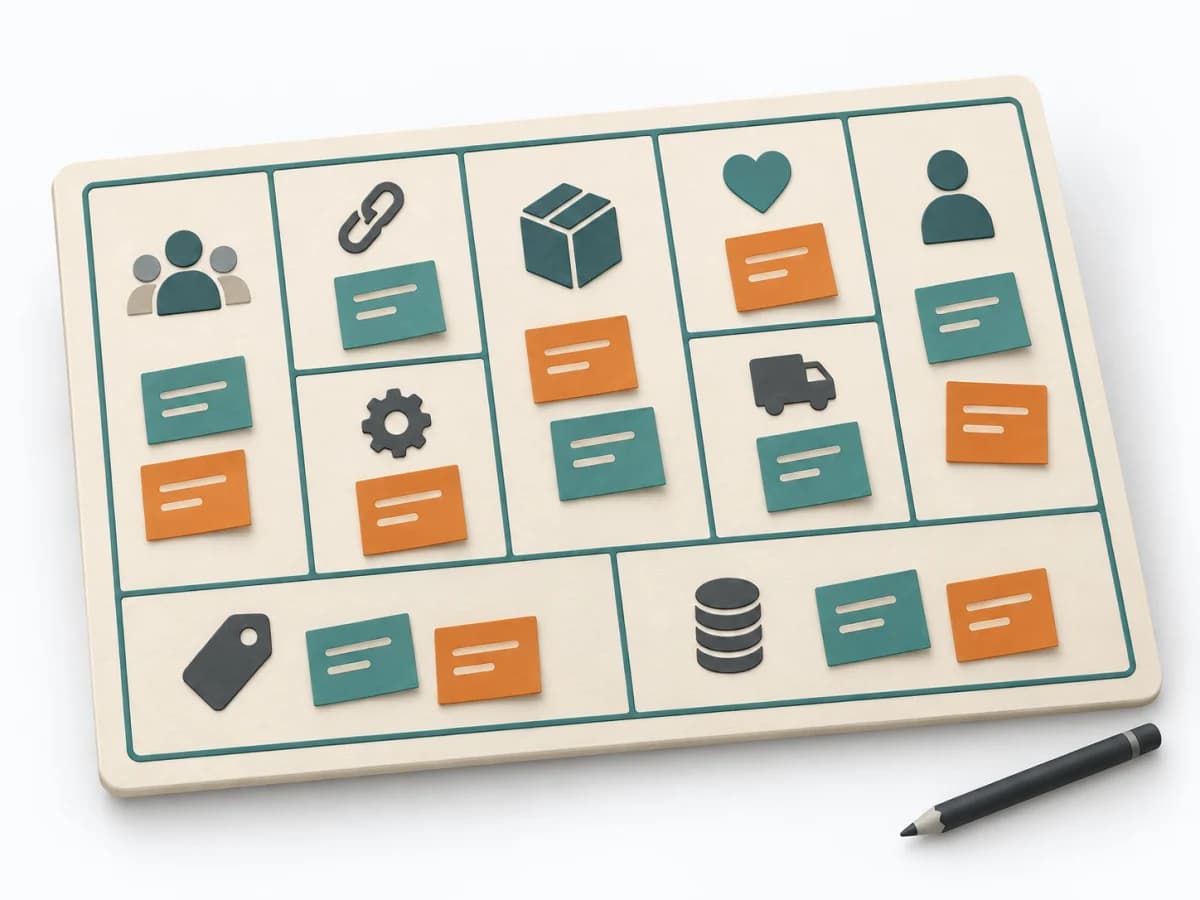 Business Strategy Business Model Canvas |  Business Strategy SWOT Analysis | 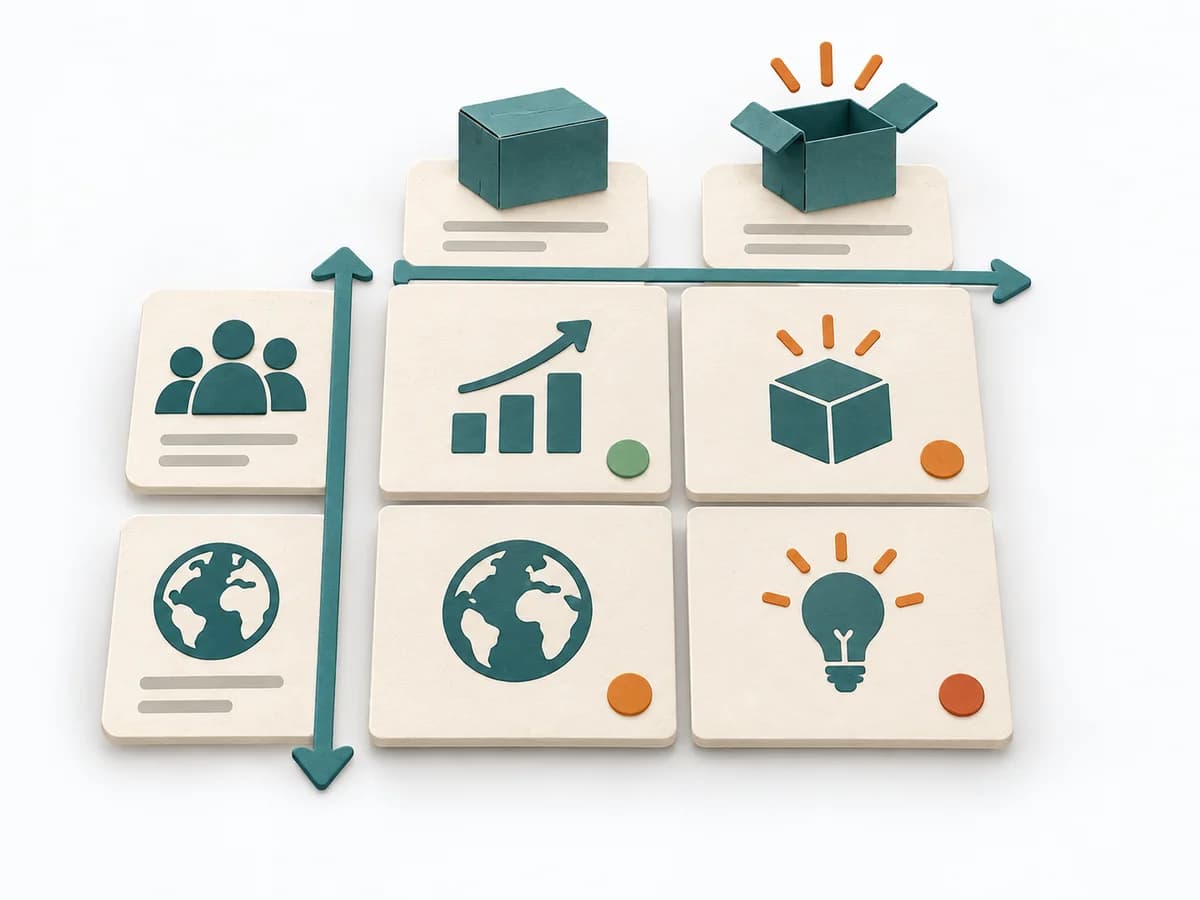 Business Strategy Ansoff Matrix |
|---|---|---|---|---|
Purposedifferent | For complex user problems with an uncertain cause, the method connects observation, interpretation, and experiment into a learning cycle. It keeps the focus on real needs and avoids premature solution language. This produces robust decisions for product and service. | The Business Model Canvas condenses a business model to its key building blocks and assumptions. It makes variants quickly comparable and reveals gaps before validation or implementation begins. | SWOT Analysis arranges strengths, weaknesses, opportunities, and threats into a compact picture of the situation. It keeps internal capabilities and external influences separate before strategic options emerge from them. | The Ansoff Matrix organizes growth options by market and product relation. It helps weigh expansion, diversification, and adaptation cleanly against each other. |
Complexitydifferent | High | Medium | Low | Low |
Timedifferent | 1 Tag bis mehrere Wochen | 1-2 h | 30-60 min | 45-90 min |
Participantsdifferent | 4-10 | 2-8 | 3-12 | 2-8 |
Formatdifferent | Workshop | Workshop + async | Workshop | Workshop + async |
Outputdifferent | Problem Statement, Prototype, Test Learnings | Business Model Canvas, Assumption List, Business Hypotheses | SWOT matrix, Strategic options, Action list | Ansoff Matrix, Growth Options, Risk Notes |
Tagsno overlap | InnovationPrototypeResearch | Business modelStrategyValueInnovation | StrategyAnalysisMarketPositioning | GrowthStrategyMarketPortfolio |