View methods side by side.
Choose up to four methods. Add them using the search and share the comparison by copying its link.
| Criterion | 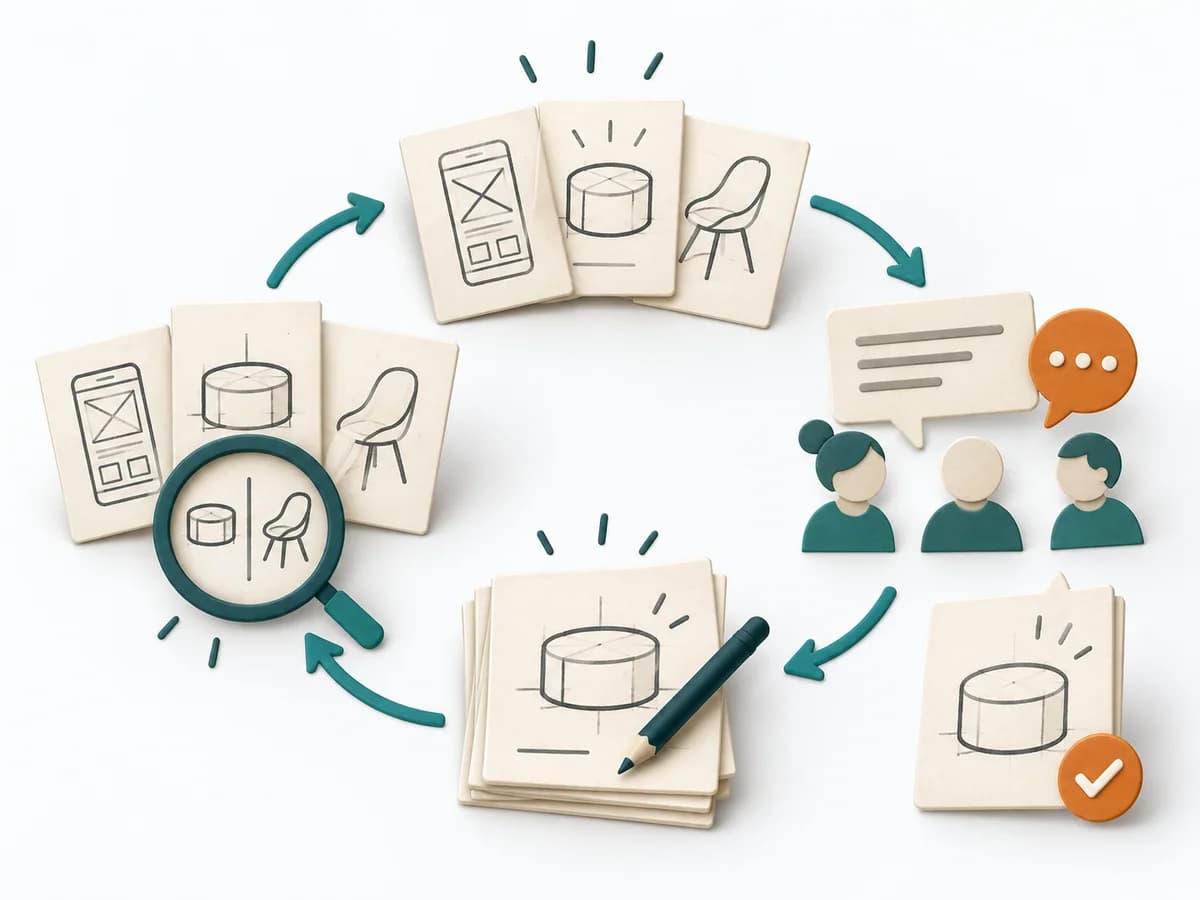 UX Design Design Studio | 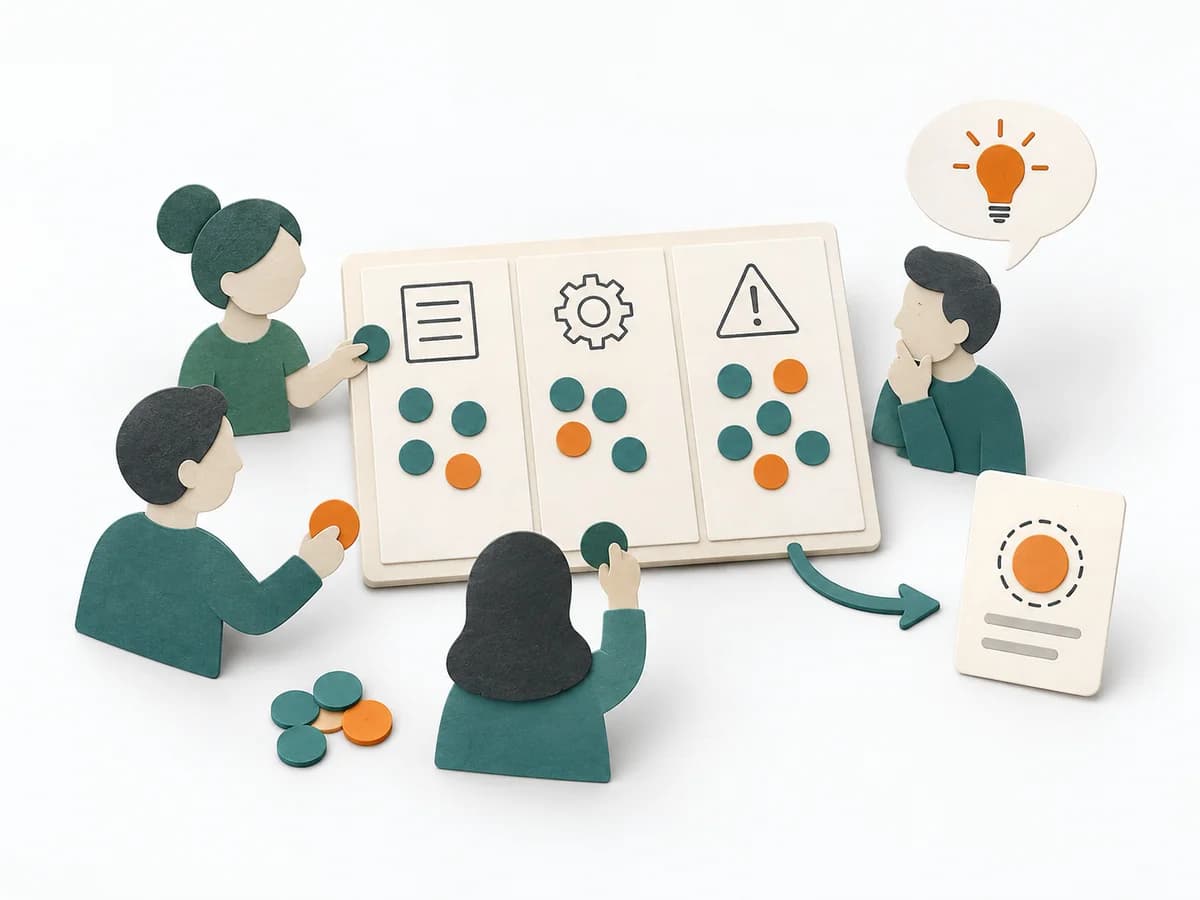 Facilitation Dot Estimation | 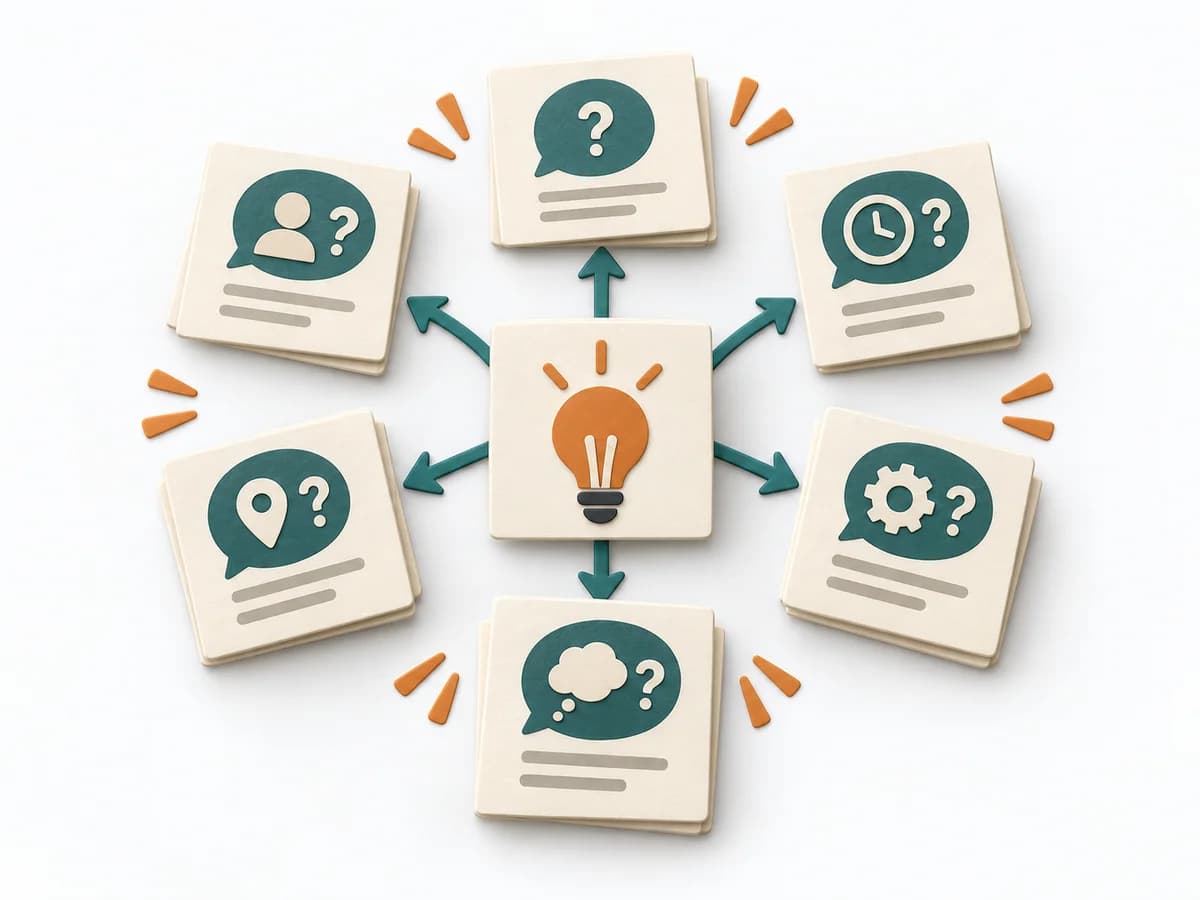 Innovation Starbursting |  Innovation Reverse Brainstorming |
|---|---|---|---|---|
Purposedifferent | When several designs need to be quickly put in relation to each other, it makes ideas visible and comparable. It encourages early variants instead of long upfront debates. | When size or effort can only be estimated roughly, Dot Estimation condenses the group's experience into a quick range. It turns individual contributions into a visible selection. The result is captured as an Effort Heatmap, Risk Signals, and Discussion Targets. | Helps clarify ideas, open questions, and testable next steps in concrete terms. It opens the thinking space, collects ideas, and leads to testable options. The result is captured as a star-shaped question map, question list, and assumption list. | For persistent errors or blockages, the method shifts the view to the opposite of the desired effect. It exposes the mechanics of failure and makes hidden causes easier to grasp. This makes improvement more concrete and the problem clearer. |
Complexitydifferent | Medium | Low | Low | Low |
Timedifferent | 1-3 h | 5-20 min | 30-60 min | 30-60 min |
Participantsdifferent | 3-8 | 3-20 | 3-10 | 3-12 |
Formatdifferent | Workshop | Workshop | Workshop + async | Workshop |
Outputdifferent | Sketches, Concept Directions, Design Decisions | Effort Heatmap, Risk Signals, Discussion Targets | Star-Shaped Question Map, Question List, Assumption List | Reverse Ideas, Risk Themes, Solution Ideas |
Tagsno overlap | SketchingCollaborationIdeation | EstimationEffortRisk | BrainstormingIdeationWorkshopDiscovery | BrainstormingIdeationCreativityRisk |