View methods side by side.
Choose up to four methods. Add them using the search and share the comparison by copying its link.
| Criterion |  Innovation Design Sprint |  Architecture Request for Comments |  Decision Making Decision Rights Mapping | 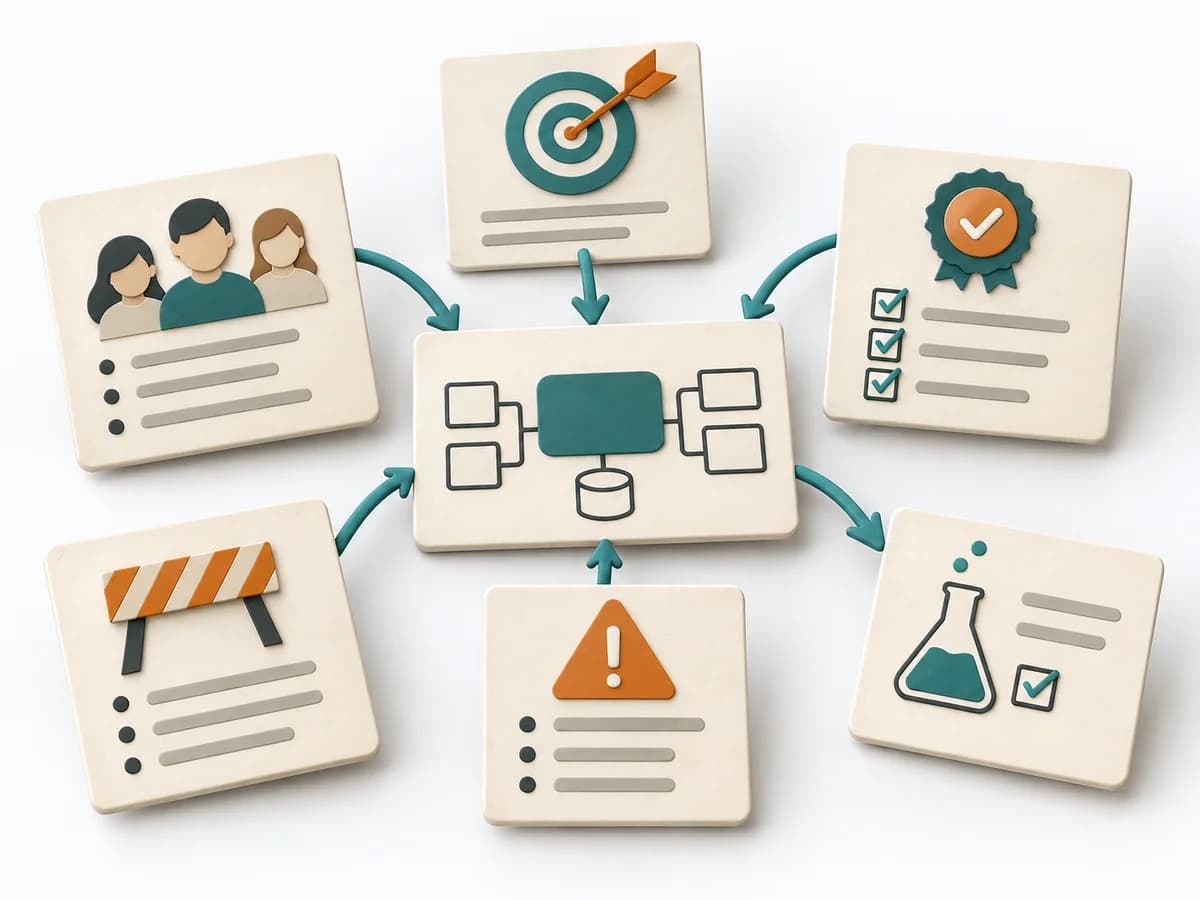 Architecture Architecture Inception Canvas |
|---|---|---|---|---|
Purposedifferent | When the product question is unclear and time pressure is high, the method takes a team from an open idea to a testable solution. It connects problem understanding, decision, and learning in one compact format, lowering the risk of spending a lot of energy on a mere guess. | An RFC clarifies architecture context, options, and consequences. It structures technical context, alternatives, tradeoffs, open questions, and review feedback, and captures the result as an RFC document, reviewer comments, and a decision rationale. | In organizations with many stakeholders, it often blurs who actually decides and who is merely consulted. It separates options, evaluation criteria, and open risks. The result is captured as a Decision Rights matrix and an agreement. | The Architecture Inception Canvas bundles the first architecture questions into a compact decision picture. It fits when an initiative is still in motion but still needs clear guardrails. |
Complexitydifferent | High | Medium | Medium | Low |
Timedifferent | 4-5 Tage | 1-3 Wochen vom Draft bis zur Entscheidung | 90-180 min | 1-2 h |
Participantsdifferent | 5-8 | 3-20 Reviewer | 4-12 | 3-8 |
Formatdifferent | Workshop | Async | Workshop | Workshop |
Outputdifferent | Prototype, Test Findings, Decision Rationale | RFC document, Reviewer comments, Decision rationale, Follow-up ADR or tickets | Decision Rights Matrix, Agreement | Inception Canvas, Risks, Goal List, Open Questions |
Tagsno overlap | Design sprintPrototypeValidationInnovation | ArchitectureDecisionAsyncGovernance | DecisionGovernanceAlignmentResponsibility | AlignmentArchitectureCanvas |