View methods side by side.
Choose up to four methods. Add them using the search and share the comparison by copying its link.
| Criterion |  Decision Making Delphi Method |  Systems Thinking System Dynamics Simulation |  Business Strategy GAP Analysis | 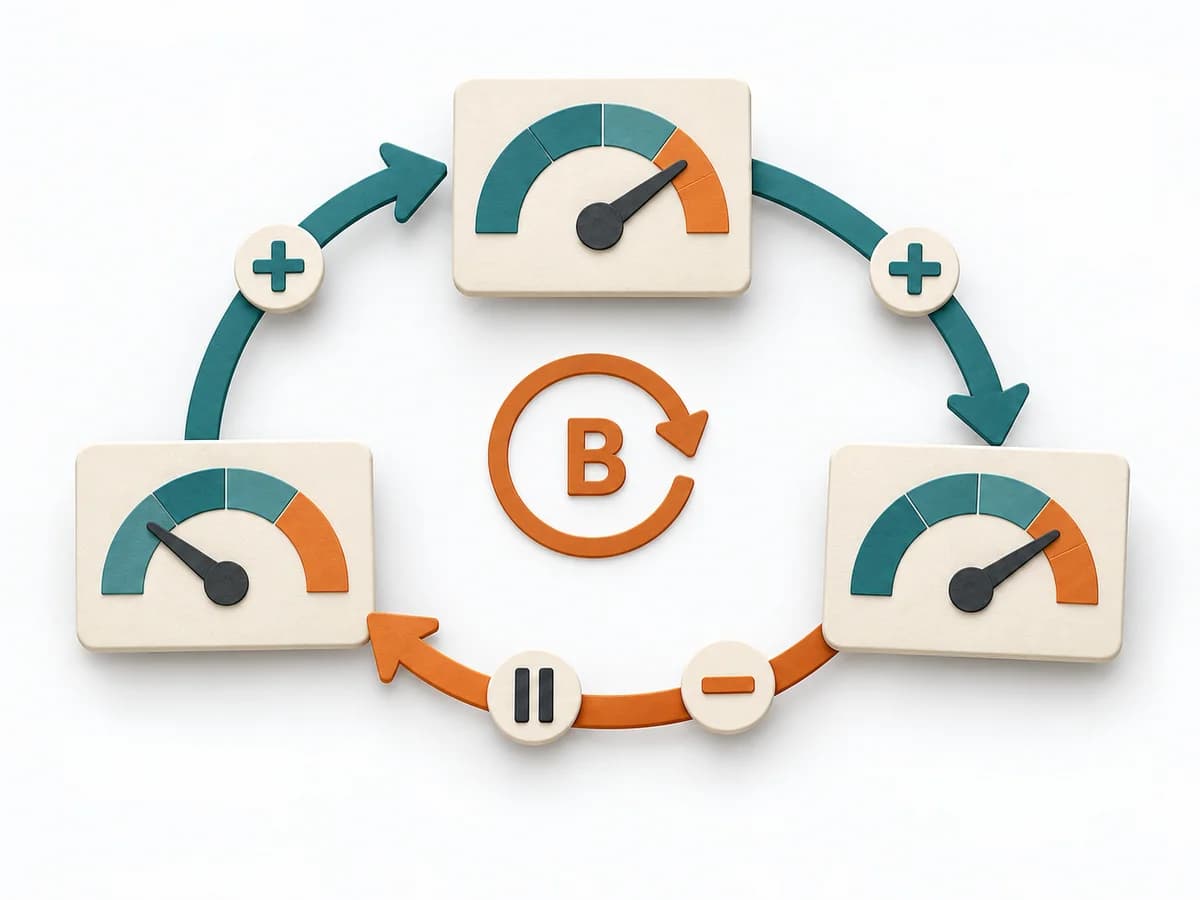 Systems Thinking Causal Loop Diagram |
|---|---|---|---|---|
Purposedifferent | When knowledge is distributed and direct dominance should be avoided, groups quickly fall under the sway of their opinion leaders. The Delphi Method gathers assessments iteratively and gradually brings expert judgments closer together. | System Dynamics Simulation makes assumptions about time, delay, and feedback testable through experiments. It draws relationships, patterns, and feedback loops. The result is captured as a simulation model and scenario reports. | GAP Analysis compares the current state with a target picture and makes the distance manageable. It becomes useful when, ahead of new initiatives, it must become clear which capabilities, processes, or resources are missing. | A Causal Loop Diagram makes feedback, reinforcement, and balance in a system legible. It uncovers side effects and self-reinforcement that stay hidden in linear explanations. |
Complexitydifferent | High | High | Medium | Medium |
Timedifferent | 1-4 Wochen | Mehrere Tage bis Wochen | 1-3 h | 1-3 h |
Participantsdifferent | 6-30 Experten | 1-5 Modellierende, Stakeholder asynchron | 2-8 | 2-8 |
Formatdifferent | Async | Async | Workshop + async | Workshop |
Outputdifferent | Expert Forecast, Consensus Range, Assumption Notes | Simulation Model, Scenario Reports | Gap Matrix, Action Plan, Risk Notes | Causal Loop Diagram, Feedback Notes, Leverage Points |
Tagsno overlap | ForecastingExpertsDecisionStrategy | Systems thinkingDynamicsSimulationAnalysis | StrategyAnalysisPlanning | FeedbackSystems thinkingCausalityDynamics |