View methods side by side.
Choose up to four methods. Add them using the search and share the comparison by copying its link.
| Criterion |  Decision Making Delphi Method | 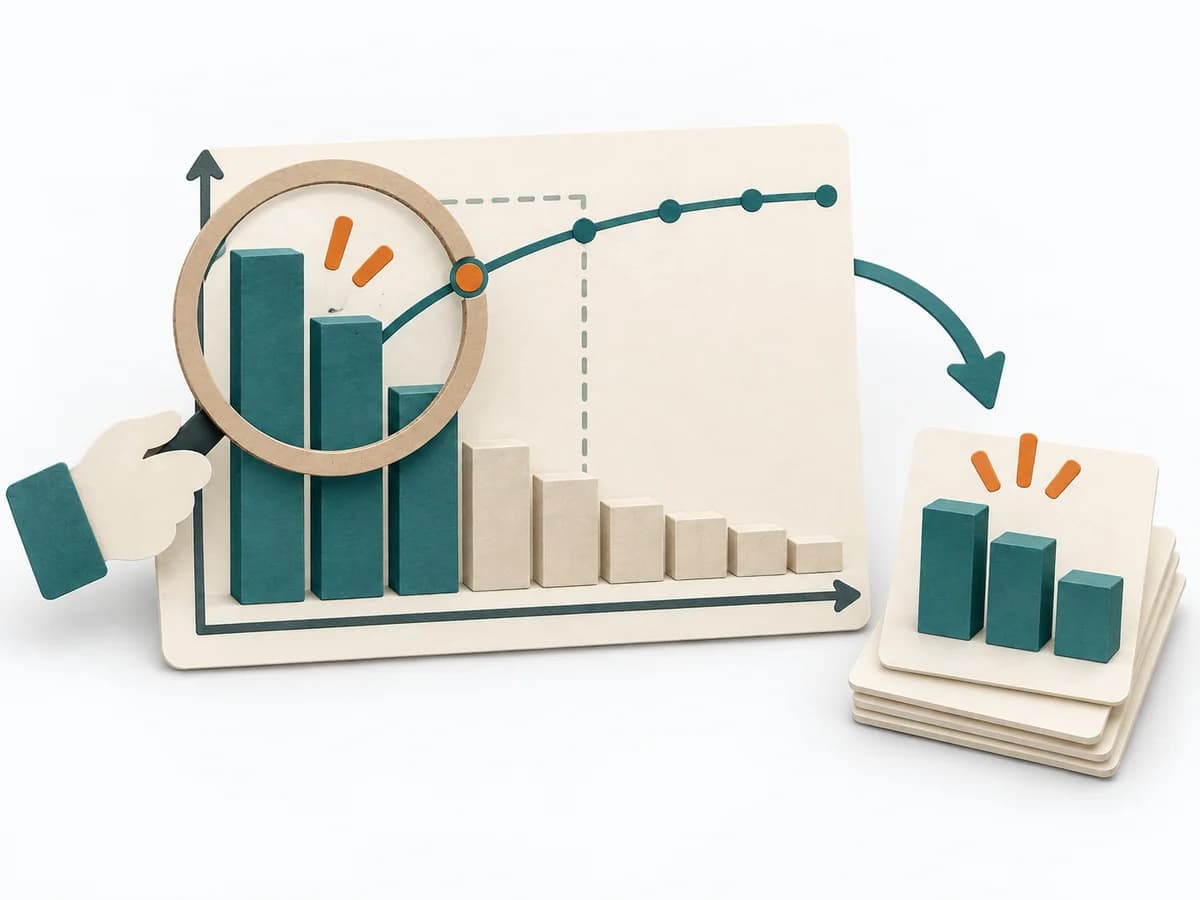 Decision Making Pareto Analysis |  Operations Change Analysis |  Decision Making Force Field Analysis |
|---|---|---|---|---|
Purposedifferent | When knowledge is distributed and direct dominance should be avoided, groups quickly fall under the sway of their opinion leaders. The Delphi Method gathers assessments iteratively and gradually brings expert judgments closer together. | In many problem situations, effect is distributed unequally across many causes. A Pareto Analysis separates the few drivers with high leverage from the long remainder and focuses attention on what measurably moves the needle. | For a deviation after a change, the method isolates the influence of the altered condition. It narrows down which differences are relevant and which are just accompanying noise. | In change initiatives, supporting and restraining forces sit at the table at the same time. Force Field Analysis makes these tensions explicit and shows where change can be pushed forward by strengthening or relieving. |
Complexitydifferent | High | Low | Medium | Low |
Timedifferent | 1-4 Wochen | 30-60 min | 45-120 min | 45-90 min |
Participantsdifferent | 6-30 Experten | 1-6 | 2-6 | 3-12 |
Formatdifferent | Async | Workshop + async | Workshop + async | Workshop |
Outputdifferent | Expert Forecast, Consensus Range, Assumption Notes | Pareto Chart, Top Causes, Focus List | Change Matrix, Cause Hypotheses, Validation Questions, Action List | Force Field Map, Change Levers, Risk Notes |
Tagsno overlap | ForecastingExpertsDecisionStrategy | PrioritizationQualityFocusRoot cause | ChangeRoot causeTroubleshootingComparison | ChangeDecisionStrategy |