View methods side by side.
Choose up to four methods. Add them using the search and share the comparison by copying its link.
| Criterion |  Decision Making Decision Tree |  Facilitation Six Thinking Hats | 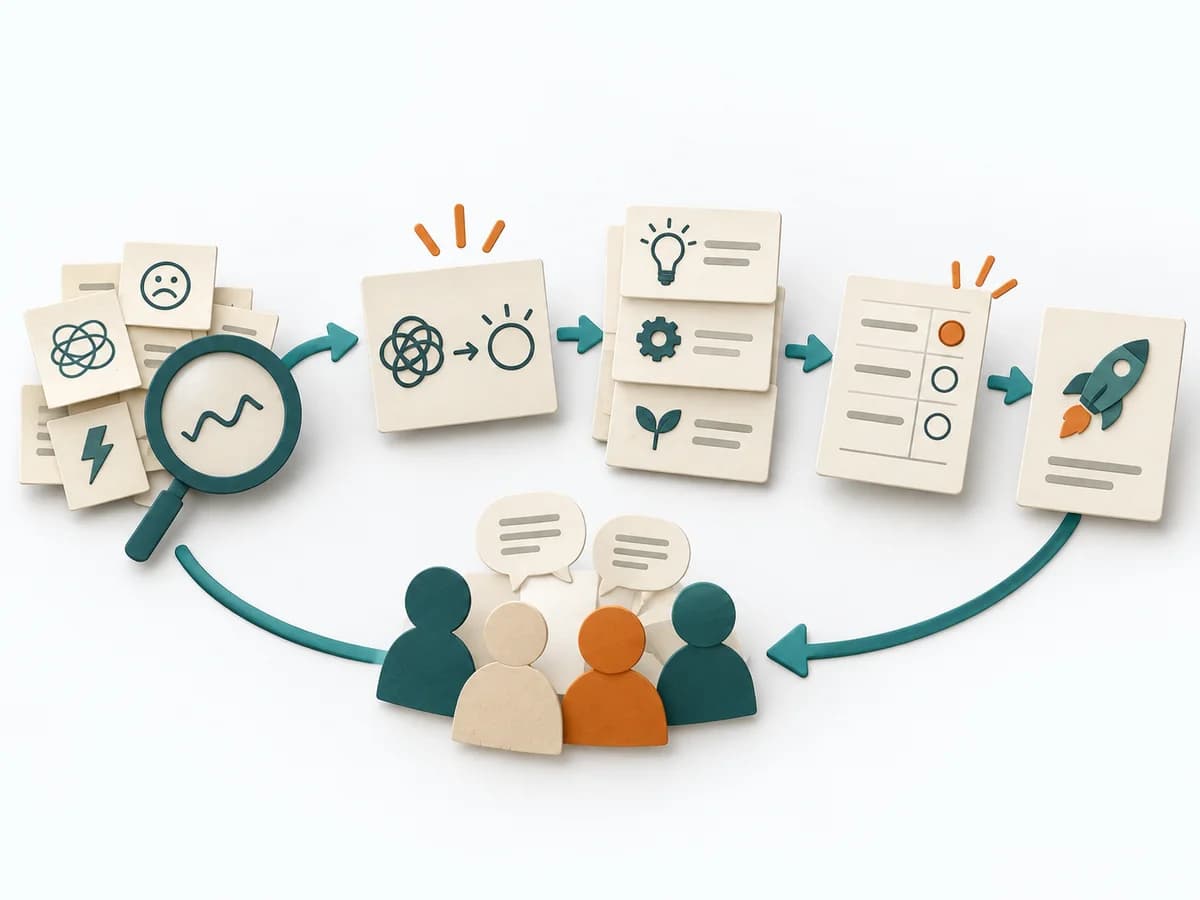 Facilitation Decision Jam |  Operations Kepner-Tregoe |
|---|---|---|---|---|
Purposedifferent | For decisions with follow-on paths and dependencies, a linear comparison is often not enough. A Decision Tree shows how options branch under conditions and which consequences hang on each branch. | When a topic gets stuck too quickly in the same thinking mode, Six Thinking Hats deliberately separates the perspectives. This means facts, risks, creativity, and emotional signals get worked through one after another instead of mixed together. | When a decision is stuck, Decision Jam loosens the knot through structured separation of problem, idea, and selection. The format creates movement without jumping prematurely at the first seemingly elegant answer. | For a disturbance that's hard to pin down, the method cleanly separates problem, cause, and decision. It reduces mixing when symptoms allow several interpretations. |
Complexitydifferent | Medium | Medium | Low | High |
Timedifferent | 30-90 min | 45-90 min | 60-90 min | 2-8 h |
Participantsdifferent | 1-6 | 4-12 | 4-10 | 2-8 |
Formatdifferent | Workshop + async | Workshop | Workshop | Workshop + async |
Outputdifferent | Decision Tree, Option Map, Assumption List | Perspective Notes, Decision Inputs, Action Items | Problem Cluster, Prioritized Challenge, Experiment | Problem Analysis, Decision Analysis, Risk Plan |
Tags1 shared | DecisionTreeOptions | FacilitationOptionsDecision | FacilitationDecisionProblem solvingWorkshop | Problem solvingRoot causeDecisionOperations |