View methods side by side.
Choose up to four methods. Add them using the search and share the comparison by copying its link.
| Criterion | 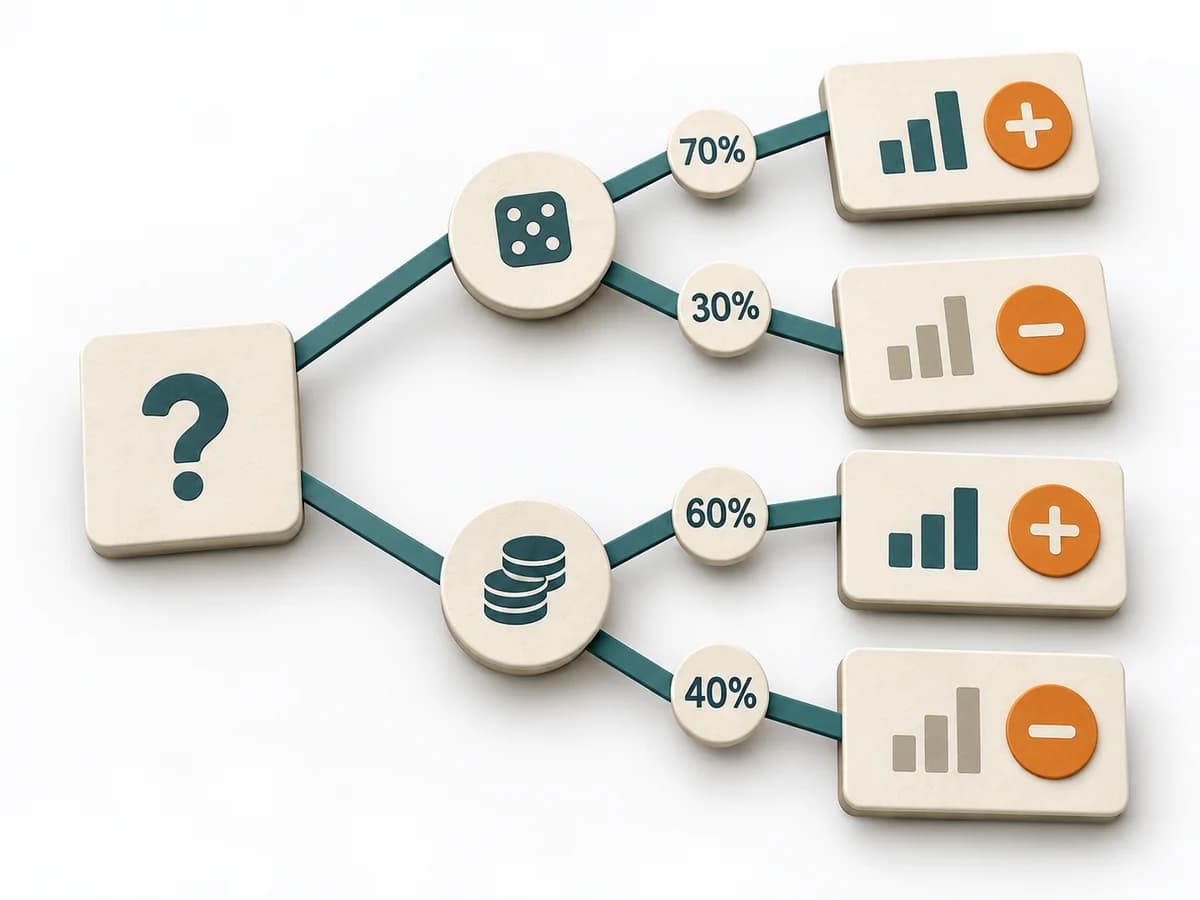 Decision Making Decision Tree | 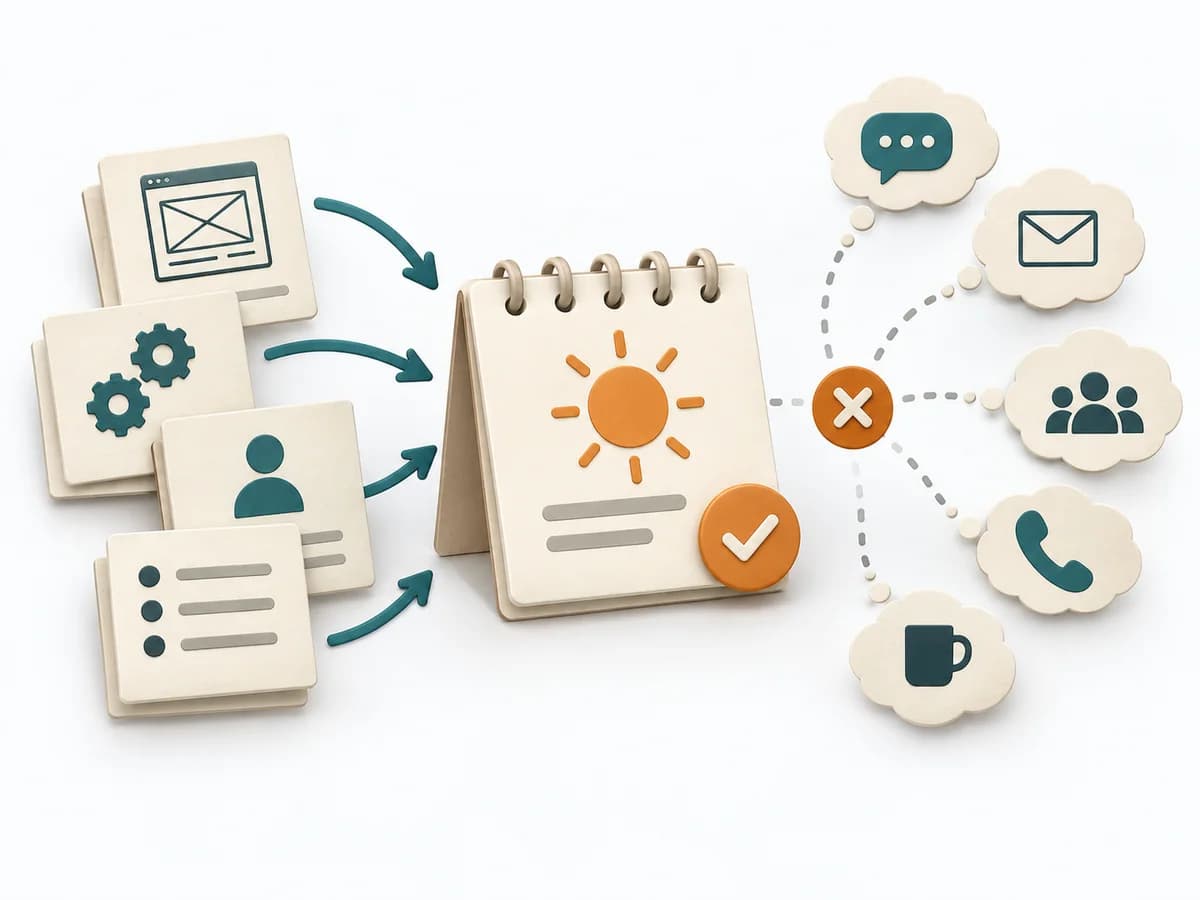 Agile Ideal Days |  Facilitation Six Thinking Hats | 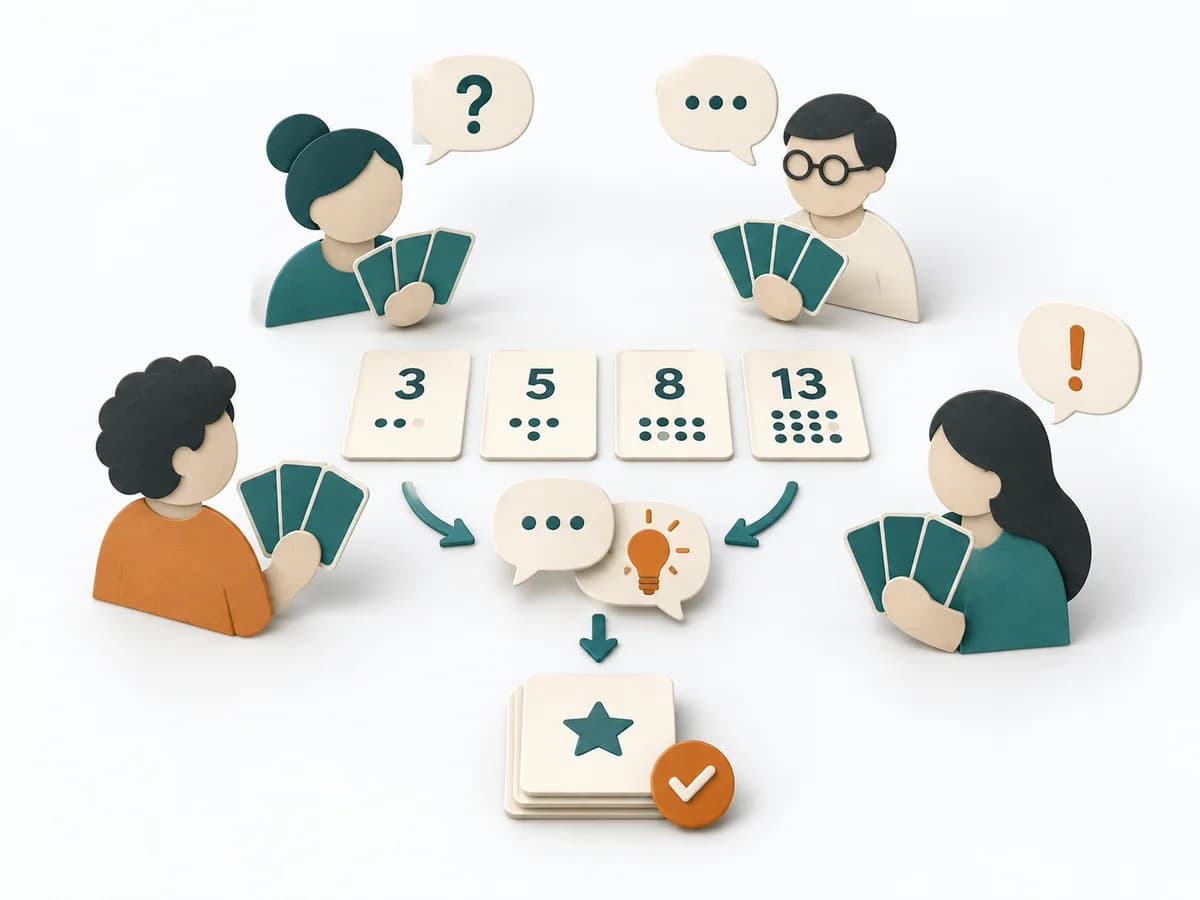 Agile Planning Poker |
|---|---|---|---|---|
Purposedifferent | For decisions with follow-on paths and dependencies, a linear comparison is often not enough. A Decision Tree shows how options branch under conditions and which consequences hang on each branch. | When effort needs to be thought of as real working time, it offers a simple common denominator for comparison. It sorts work by value, risk, and delivery ability. The result is captured as Ideal Day Estimates, Assumption Notes, and Capacity Caveats. | When a topic gets stuck too quickly in the same thinking mode, Six Thinking Hats deliberately separates the perspectives. This means facts, risks, creativity, and emotional signals get worked through one after another instead of mixed together. | When estimates within the team diverge too much, it puts differing expectations on a common test bench. It separates rough complexity from unspoken assumptions. |
Complexitydifferent | Medium | Low | Medium | Low |
Timedifferent | 30-90 min | 15-60 min | 45-90 min | 2-5 min je Item |
Participantsdifferent | 1-6 | 2-9 | 4-12 | 3-9 |
Formatdifferent | Workshop + async | Workshop + async | Workshop | Workshop + async |
Outputdifferent | Decision Tree, Option Map, Assumption List | Ideal Day Estimates, Assumption Notes, Capacity Caveats | Perspective Notes, Decision Inputs, Action Items | Relative Estimates, Assumption Notes, Split Candidates |
Tagsno overlap | DecisionTreeOptions | EstimationEffortAgile | FacilitationOptionsDecision | EstimationAgileRelative sizingTeam |