View methods side by side.
Choose up to four methods. Add them using the search and share the comparison by copying its link.
| Criterion | 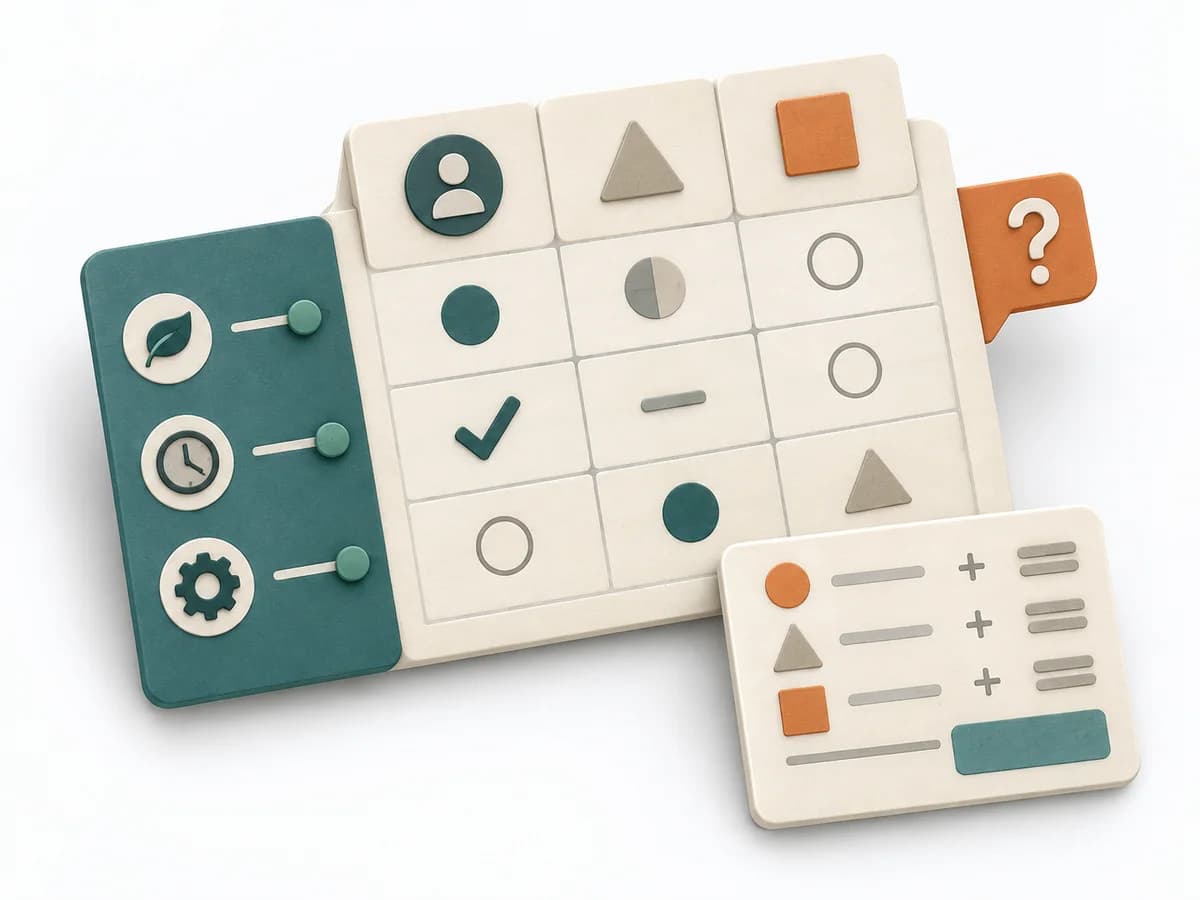 Decision Making Decision Matrix |  UX Research User Interviews | 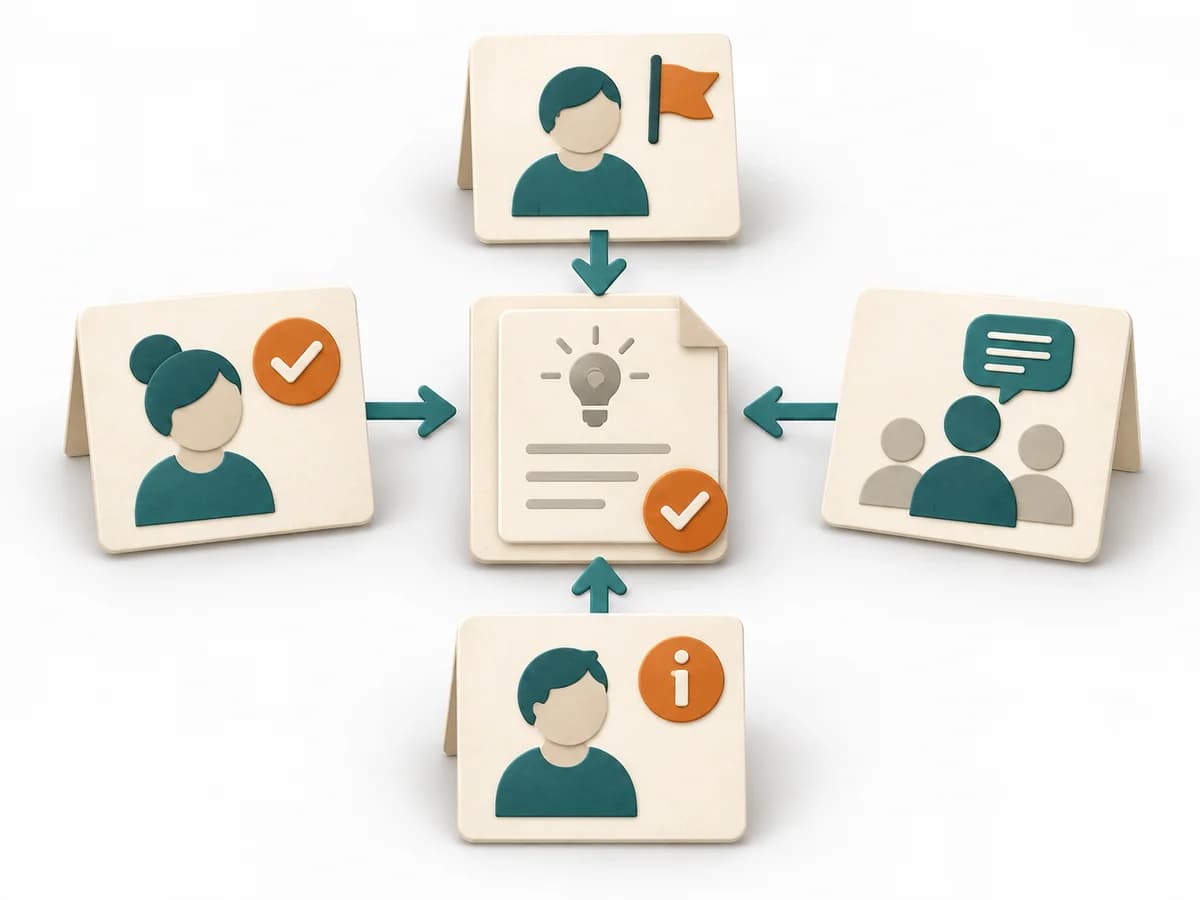 Decision Making DACI | 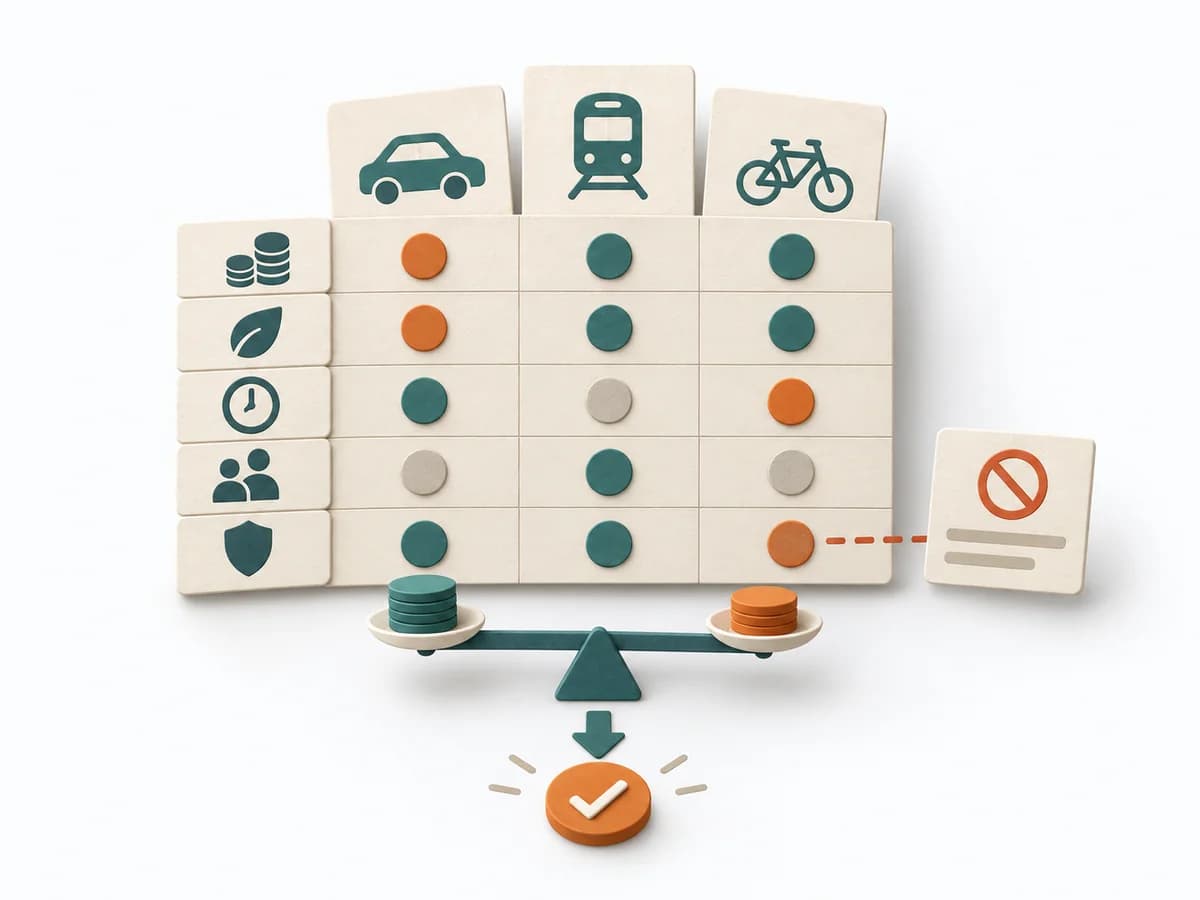 Decision Making Trade-off Analysis |
|---|---|---|---|---|
Purposedifferent | When several options collide with several criteria, comparison quickly becomes subjective. A Decision Matrix makes the trade-off visible and brings weighting, criteria, and options into a shared logic. | When teams derive needs only from assumptions and real motives are missing, user interviews give direct access to behavior and meaning. Conversations from the target group's everyday life make patterns, tensions, and open questions solidly visible. | In cross-functional decisions, responsibilities quickly blur between approval, influence, and execution. DACI arranges these roles so decision pressure, contribution, and information stay cleanly separated. | With limited resources, quality, speed, cost, and risk almost always compete with each other. Trade-off Analysis makes these tensions explicit and prevents decisions from producing hidden side effects. |
Complexitydifferent | Medium | Low | Low | Medium |
Timedifferent | 45-90 min | 30–60 min per interview | 30-60 min | 45-120 min |
Participantsdifferent | 2-8 | 1 participant per interview | 2-10 | 2-8 |
Formatsame | Workshop + async | Workshop + async | Workshop + async | Workshop + async |
Outputdifferent | Decision Matrix, Scoring Rationale, Selected Option | Interview Notes, Themes, Insight Summary | DACI Matrix, Decision Owner, Decision Log | Trade-off Matrix, Criteria List, Decision Rationale, Accepted Downsides |
Tagsno overlap | DecisionCriteriaScoringTradeoffs | QualitativeResearchCustomerDiscovery | DecisionRolesGovernanceAlignment | TradeoffsDecisionCriteriaOptions |