View methods side by side.
Choose up to four methods. Add them using the search and share the comparison by copying its link.
| Criterion |  Decision Making Decision Framing Workshop |  Decision Making RAPID |  Architecture Request for Comments | 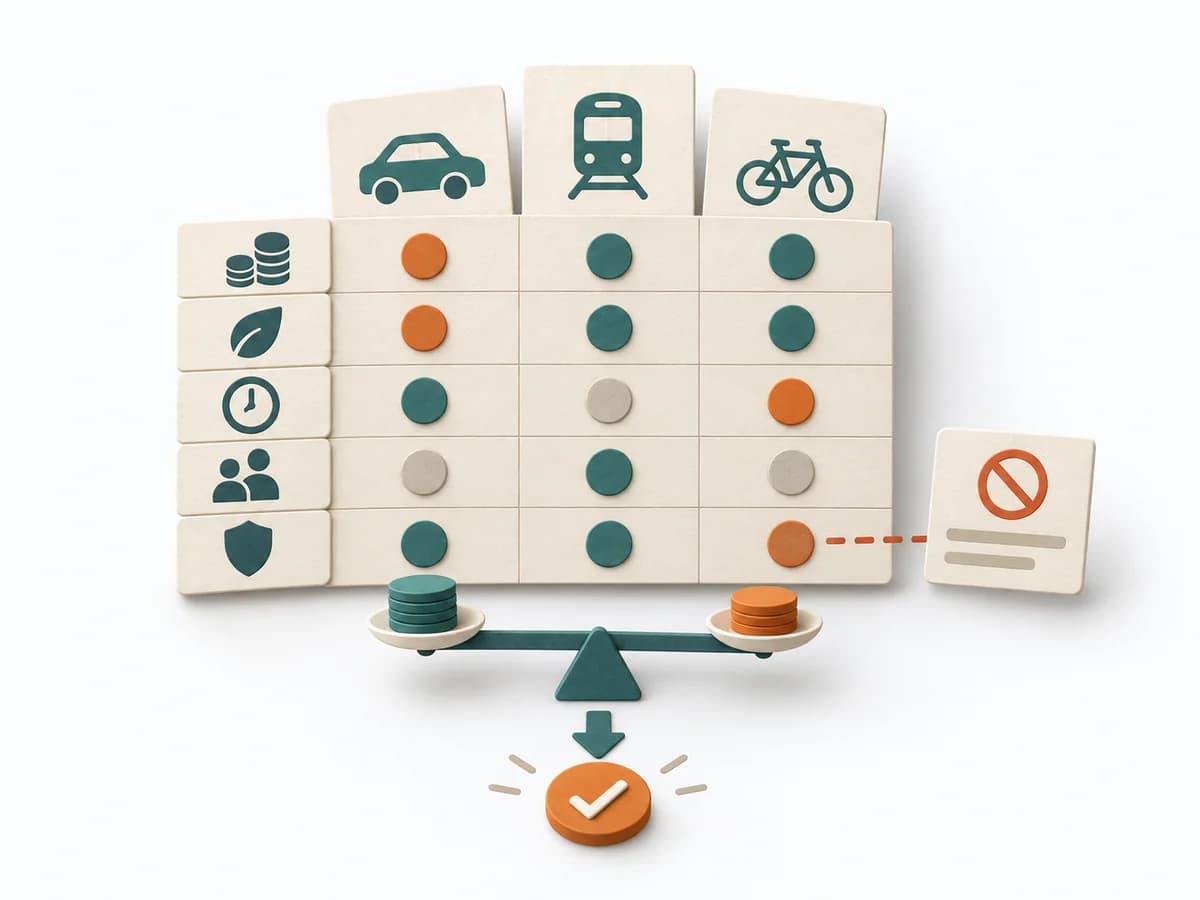 Decision Making Trade-off Analysis |
|---|---|---|---|---|
Purposedifferent | When a decision is poorly framed, even good answers deliver little value. A Decision Framing Workshop sharpens the problem, goal, and boundaries before the actual weighing begins. | In complex management decisions, clarity is often missing about who recommends, who agrees, and who makes the decision. RAPID creates this assignment and stabilizes decisions across several levels. | An RFC clarifies architecture context, options, and consequences. It structures technical context, alternatives, tradeoffs, open questions, and review feedback, and captures the result as an RFC document, reviewer comments, and a decision rationale. | With limited resources, quality, speed, cost, and risk almost always compete with each other. Trade-off Analysis makes these tensions explicit and prevents decisions from producing hidden side effects. |
Complexitysame | Medium | Medium | Medium | Medium |
Timedifferent | 60-120 min | 45-90 min | 1-3 Wochen vom Draft bis zur Entscheidung | 45-120 min |
Participantsdifferent | 4-10 | 3-12 | 3-20 Reviewer | 2-8 |
Formatdifferent | Workshop | Workshop + async | Async | Workshop + async |
Outputdifferent | Decision Frame, Decision Question, Criteria List, Evidence Plan | RAPID Role Map, Recommendation, Decision Log | RFC document, Reviewer comments, Decision rationale, Follow-up ADR or tickets | Trade-off Matrix, Criteria List, Decision Rationale, Accepted Downsides |
Tagsno overlap | Decision framingAlignmentCriteriaOptions | DecisionRolesGovernance | ArchitectureDecisionAsyncGovernance | TradeoffsDecisionCriteriaOptions |