View methods side by side.
Choose up to four methods. Add them using the search and share the comparison by copying its link.
| Criterion | 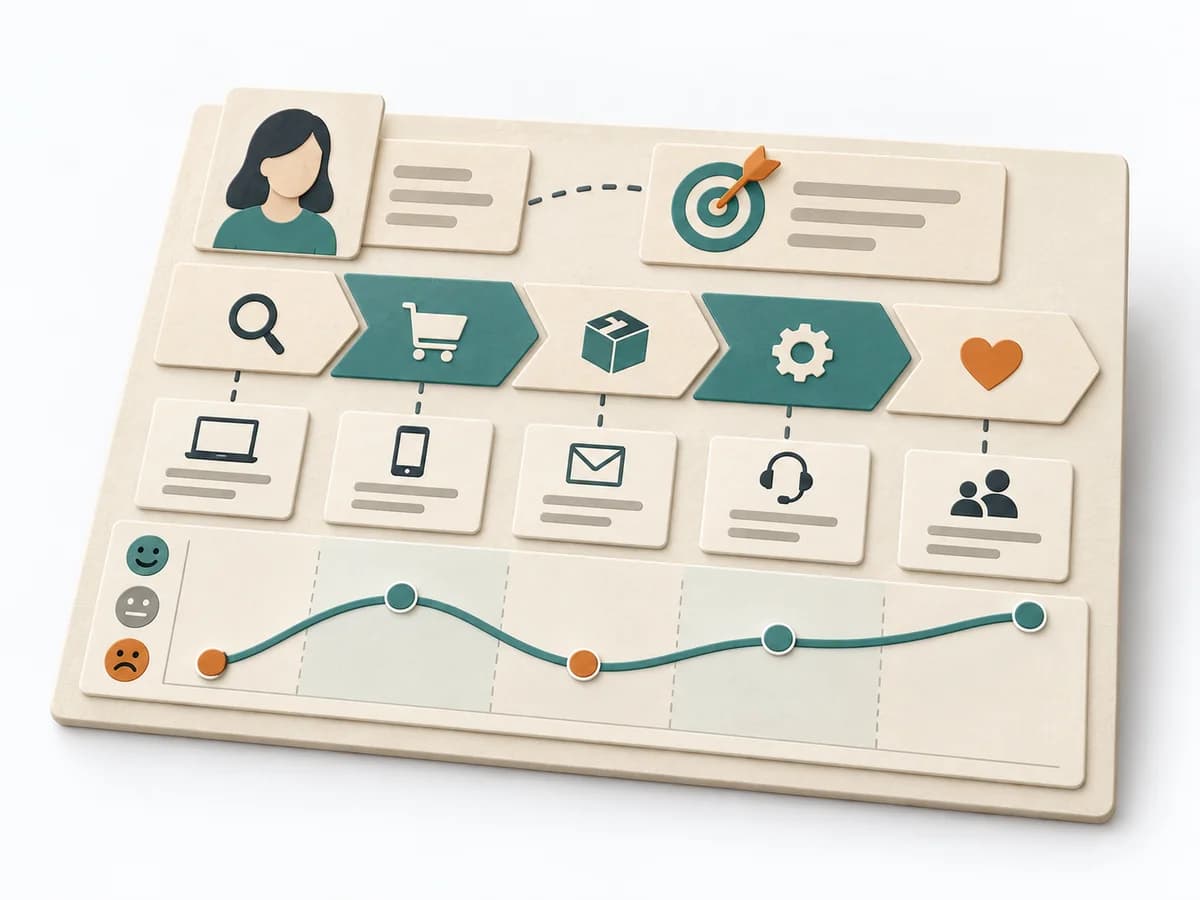 UX Design Customer Journey Canvas |  Innovation Brainstorming |  Innovation Crazy 8s |  Innovation Reverse Brainstorming |
|---|---|---|---|---|
Purposedifferent | When a journey needs to be understood across several phases, it arranges experience, touchpoints, and opportunities into one picture. It makes gaps and friction along the user path clear. | When a team faces an open question with many obvious directions, the method first creates breadth instead of premature commitment. It separates idea flow from evaluation and makes lines of thought visible, creating a pool for selection and further development. | With only a few minutes available and a still-fuzzy solution search, the method forces a wide range of variants. It produces fast sketches before the first idea can settle in, making different directions directly comparable and open to further development. | For persistent errors or blockages, the method shifts the view to the opposite of the desired effect. It exposes the mechanics of failure and makes hidden causes easier to grasp. This makes improvement more concrete and the problem clearer. |
Complexitydifferent | Medium | Low | Low | Low |
Timedifferent | 1-3 h | 30-60 min | 8-15 min | 30-60 min |
Participantsdifferent | 3-10 | 4-12 | 1-10 | 3-12 |
Formatsame | Workshop | Workshop | Workshop | Workshop |
Outputdifferent | Customer Journey Canvas, Pain Points, Experience Opportunities | Idea pool, Theme clusters, Shortlist | Sketch Set, Idea Shortlist, Direction Options | Reverse Ideas, Risk Themes, Solution Ideas |
Tagsno overlap | JourneyCustomerService designCanvas | BrainstormingIdeationCreativityWorkshopDivergence | BrainstormingSketchingSpeedDivergenceDesign sprint | BrainstormingIdeationCreativityRisk |