View methods side by side.
Choose up to four methods. Add them using the search and share the comparison by copying its link.
| Criterion |  UX Design Customer Journey Canvas |  UX Research Affinity Diagramming | 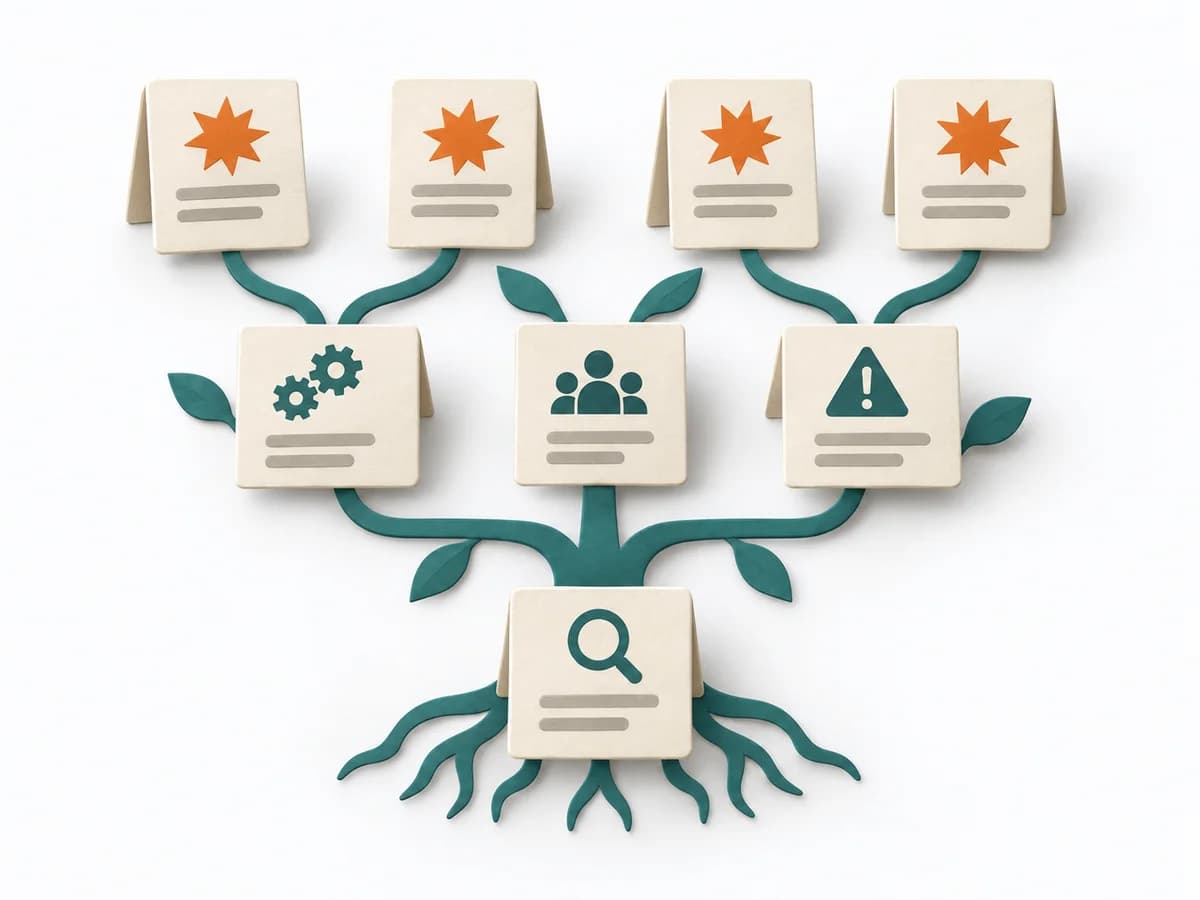 Operations Family Tree Analysis |  Operations 5 Whys |
|---|---|---|---|---|
Purposedifferent | When a journey needs to be understood across several phases, it arranges experience, touchpoints, and opportunities into one picture. It makes gaps and friction along the user path clear. | When research notes, feedback, or observations sit unconnected side by side, affinity diagramming sorts the raw material into solid themes. Many individual points turn into patterns that make decisions and opportunities clearer. | For a series of incidents with a similar pattern, the method arranges individual events as branches of a common origin. It makes visible which conditions keep recurring. | For a single, hard-to-explain deviation, the method exposes the causal chain behind the visible symptom. It keeps the cause open until a controllable condition emerges instead of a mere description. |
Complexitydifferent | Medium | Low | Medium | Low |
Timedifferent | 1-3 h | 45–90 min | 2-4 h | 15-30 min |
Participantsdifferent | 3-10 | 3-10 | 2-6 | 2-6 |
Formatdifferent | Workshop | Workshop | Workshop + async | Workshop |
Outputdifferent | Customer Journey Canvas, Pain Points, Experience Opportunities | Theme clusters, Insight statements, Opportunity areas | Family Tree Diagram, Pattern Notes, Systemic Measures | Root cause notes, Countermeasures |
Tagsno overlap | JourneyCustomerService designCanvas | SynthesisQualitativeRoot cause | Root causePatternsIncidentSystemic | Root causeIncidentLeanProblem solving |