View methods side by side.
Choose up to four methods. Add them using the search and share the comparison by copying its link.
| Criterion | 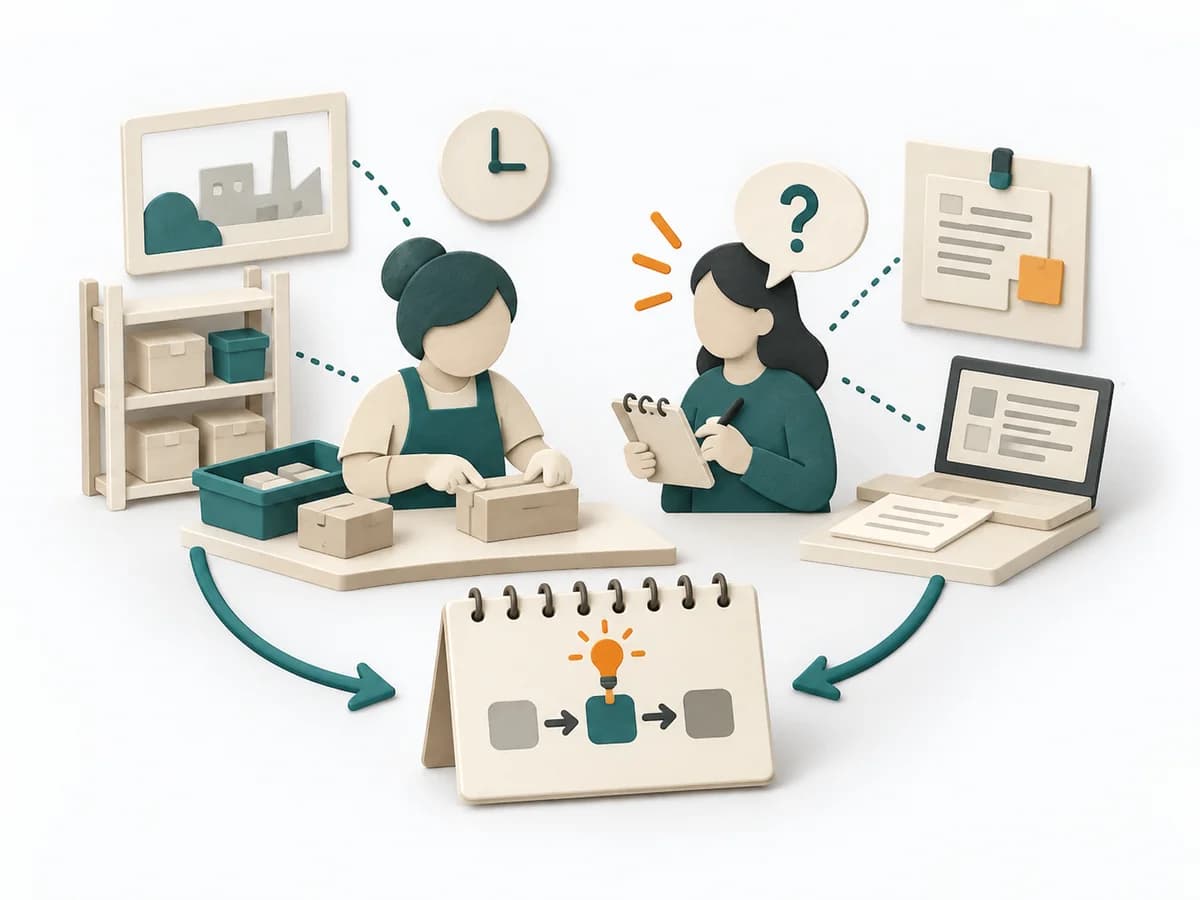 UX Research Contextual Inquiry |  Operations Kepner-Tregoe |  Decision Making Argument Mapping |  Operations 8D Problem Solving |
|---|---|---|---|---|
Purposedifferent | When work processes are known only from accounts and the real context stays hidden, Contextual Inquiry makes behavior at the workplace visible. Observation and follow-up questions together show how people actually work, get interrupted, and improvise. | For a disturbance that's hard to pin down, the method cleanly separates problem, cause, and decision. It reduces mixing when symptoms allow several interpretations. | When statements, evidence, and counterarguments get mixed up, a debate quickly loses its structure. Argument Mapping breaks a thesis down into its reasoning and makes visible what it really rests on. | For an acute quality or delivery problem, the method structures immediate protection and root cause work together. It keeps the situation stable while the actual cause is investigated cleanly. |
Complexitydifferent | Medium | High | Medium | High |
Timedifferent | 1-3 Wochen | 2-8 h | 1-3 h | 1-6 Wochen |
Participantsdifferent | 4-12 Beobachtungen | 2-8 | 1-8 | 4-10 |
Formatsame | Workshop + async | Workshop + async | Workshop + async | Workshop + async |
Outputdifferent | Field Notes, Workflow Insights, Pain Points | Problem Analysis, Decision Analysis, Risk Plan | Argument Map, Evidence Gaps, Decision Rationale | 8D Report, Containment Plan, Root Cause Evidence, Corrective Action Plan |
Tagsno overlap | UX researchObservationContext | Problem solvingRoot causeDecisionOperations | SensemakingDecisionRationale | QualityProblem solvingRoot cause |