View methods side by side.
Choose up to four methods. Add them using the search and share the comparison by copying its link.
| Criterion |  Product Discovery Context Canvas |  Knowledge Modeling Competency Questions | 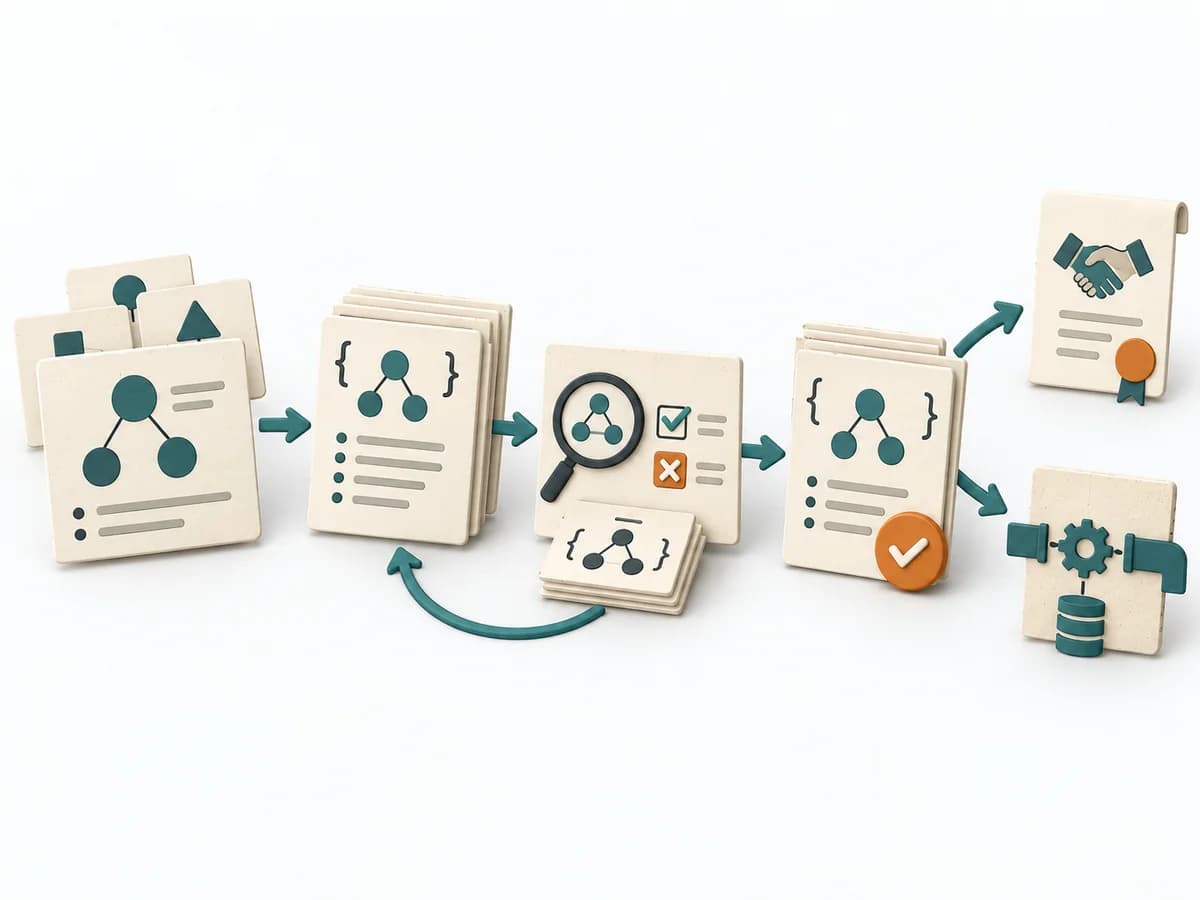 Knowledge Modeling Shape-First Modeling | 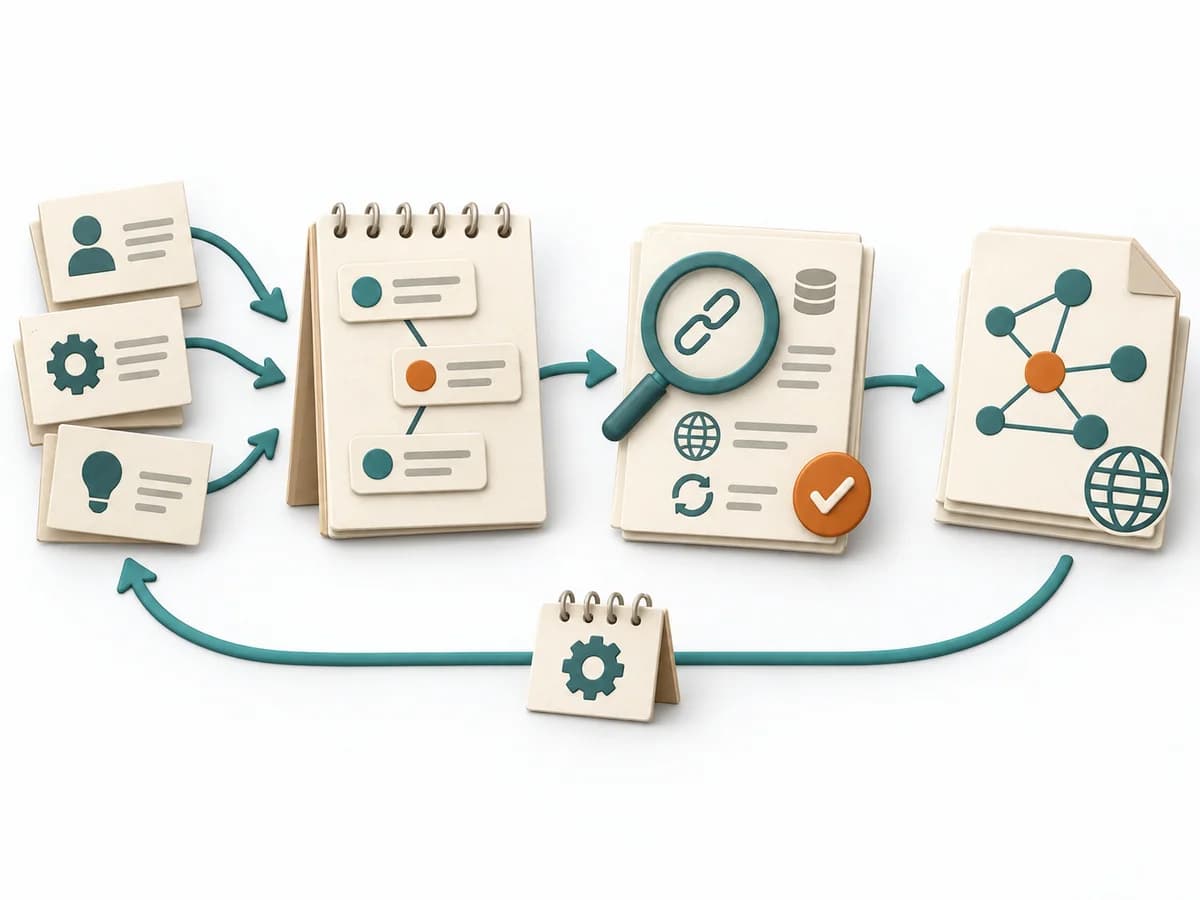 Knowledge Modeling Linked Open Terms |
|---|---|---|---|---|
Purposedifferent | When an environment of users, systems, and constraints is hard to grasp, it puts the context compactly on the table. It creates a clear reading of influence, boundary, and dependency. | Competency Questions translate a domain model into concrete questions that it must be able to answer. The method keeps the model's scope clean and prevents pretty but useless structures. | Shape-First Modeling defines data quality through shapes before implementation or integration frays at the edges. The approach fits when validation and data contracts should be part of the design from the start. | Linked Open Terms connects terminology work with linked-data thinking and makes terminology technically connectable. Vocabulary, meanings, and references can thereby be maintained consistently. |
Complexitydifferent | Low | Medium | Medium | Medium |
Timedifferent | 45-90 min | 2-4 h | Halber Tag pro Domain Slice | Wochen bis Monate |
Participantsdifferent | 3-10 | 2-8 | 1-4 | 2-8 |
Formatdifferent | Workshop | Workshop + async | Workshop + async | Workshop + async |
Outputdifferent | Context canvas, Open questions, Shared context notes | Competency Question Set, Required Concepts, Test Queries, Coverage Matrix | SHACL or ShEx Shapes, Validation Reports, Data Contracts, Shape Documentation | Ontology Requirements, Conceptual Model, Published Ontology, Documentation, Maintenance Plan |
Tagsno overlap | ContextFramingRequirementsCanvas | OntologyKnowledge graphScopeRequirementsSemantic | Knowledge graphValidationSemantic | OntologyMethodologyAgileSemantic |