View methods side by side.
Choose up to four methods. Add them using the search and share the comparison by copying its link.
| Criterion |  Product Discovery Context Canvas |  Facilitation Barcamp |  Facilitation Consensus Workshop | 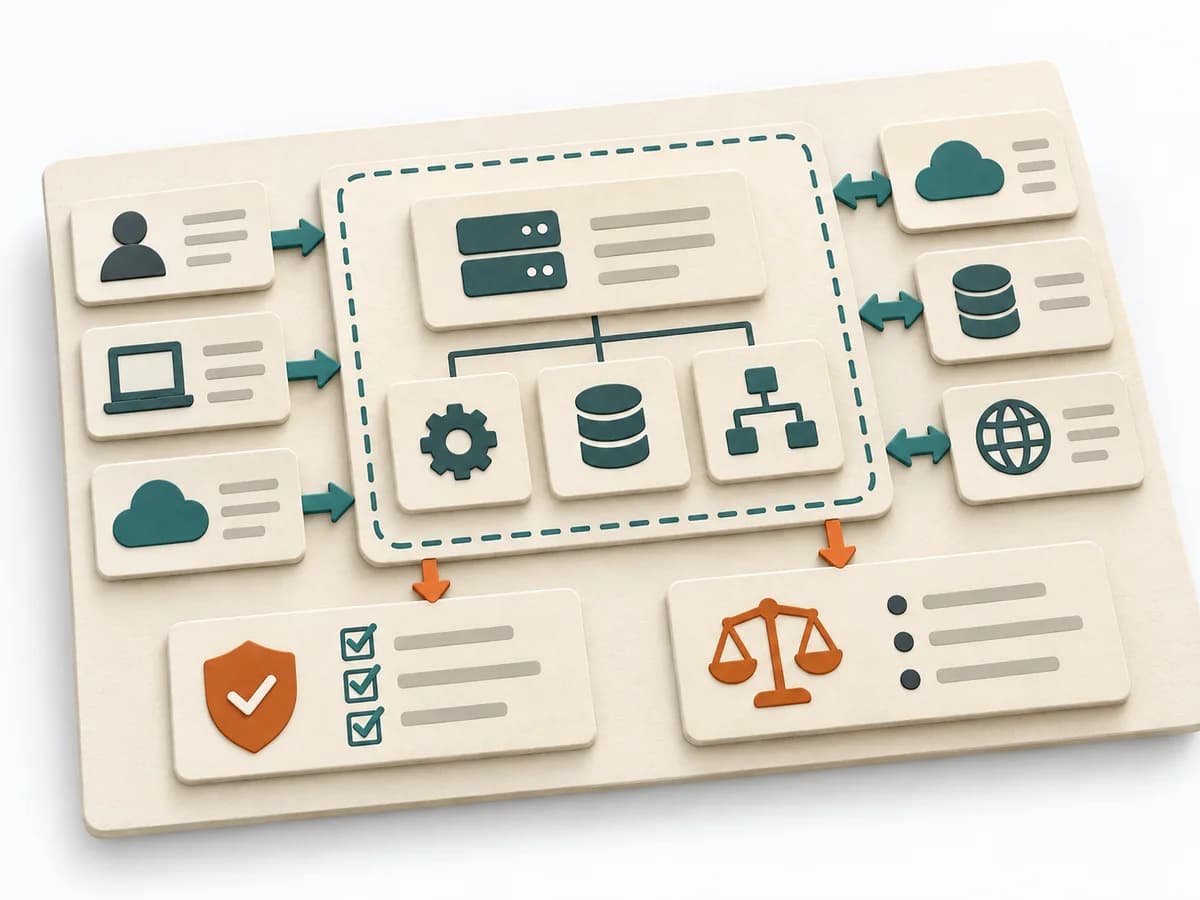 Architecture Software Architecture Canvas |
|---|---|---|---|---|
Purposedifferent | When an environment of users, systems, and constraints is hard to grasp, it puts the context compactly on the table. It creates a clear reading of influence, boundary, and dependency. | When many people can contribute knowledge and the flow should stay open, Barcamp provides a framework for self-organized sessions. The format channels energy without defining the content too narrowly in advance. | When a group needs a solid decision without outvoting individual factions, a Consensus Workshop creates a negotiable common ground. It makes agreement, reservations, and open tensions discussable at the same time. | The Software Architecture Canvas reduces a system to the most important architecture decisions, constraints, and interfaces. It is useful when teams need a resilient overall picture quickly. |
Complexitydifferent | Low | Medium | Medium | Low |
Timedifferent | 45-90 min | Halber Tag bis 2 Tage | 1-3 h | 1-2 h |
Participantsdifferent | 3-10 | 15-200 | 5-30 | 3-10 |
Formatsame | Workshop | Workshop | Workshop | Workshop |
Outputdifferent | Context canvas, Open questions, Shared context notes | Session Board, Session Notes, Community Learnings | Consensus Clusters, Theme Titles, Priority Areas | Architecture Canvas, Goals, Constraints, Quality Attributes |
Tagsno overlap | ContextFramingRequirementsCanvas | FacilitationLarge groupLearning | FacilitationConsensusWorkshopAlignment | CanvasArchitectureAlignmentWorkshop |